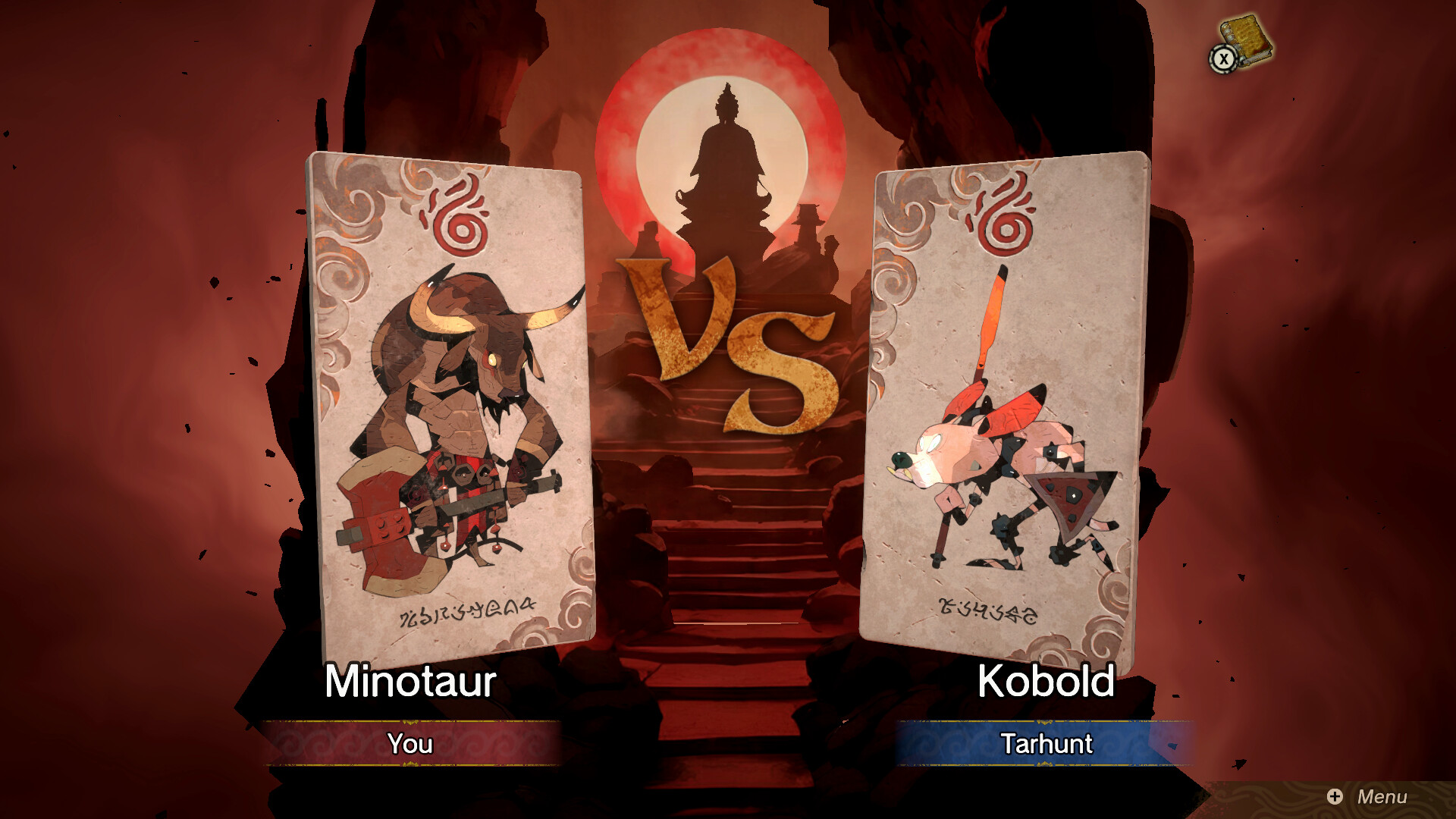


What happens when you take Monopoly and Magic: The Gathering and smoosh them together? Culdcept. Culdcept is what happens. It’s perhaps a marriage between two very different genres of board game that no one really asked for, but the series has been around since 1997 and the Sega Saturn, so it clearly has some kind of audience (me, I’m the audience).
Culdcept Begins is, potentially, the biggest push the series has ever had in the West. After several Japan-only titles, games released on second-tier consoles (sorry, Dreamcast and Saturn fans, but the truth hurts), an exclusive on the Xbox 360 (a console everyone went to for Japanese games, right), and a 3DS title that released after the Nintendo Switch, Culdcept Begins might just be the first English-localised game in the series, that is also on a console that fans of Japanese games buy, and which hasn’t been superseded by more modern hardware.
Which is a long-winded way of saying if Culdcept Begins is the first time you’ve come across the Culdcept series, don’t feel bad. The developers and publishers involved in the series over the years really haven’t done it any favours.

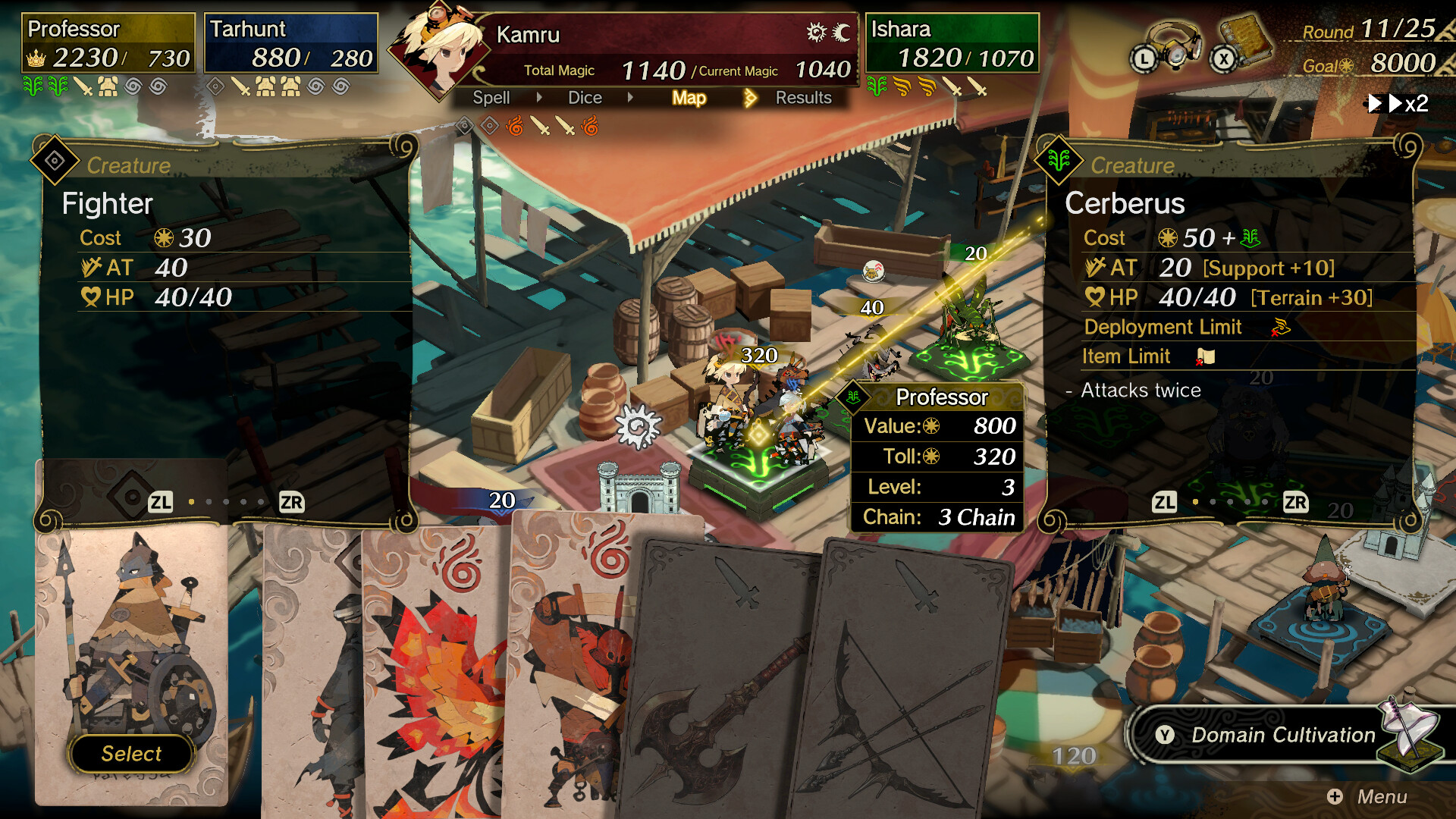
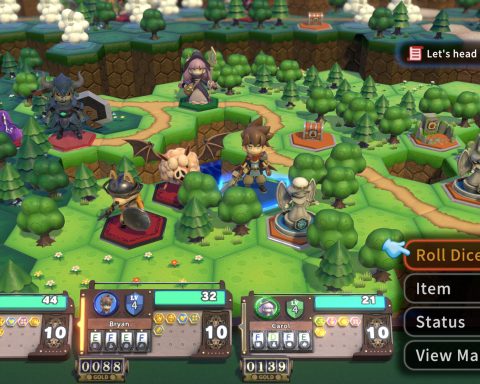
So what, exactly, is it? Well, it really is like what would happen if you took Magic and Monopoly and combined them. You roll a die, move your avatar around a board, and when you land on squares, you can purchase them. Then, when opponents land on your spaces, they pay you a toll. The difference is that in Culdcept, you also have a deck of cards, and when you purchase a space in Culdcept, rather than putting houses down on that space, like you would in Monopoly, instead you drop a monster from your hand onto the space. When an opponent lands on that space, they can try to battle your monster and, if they win the battle, they get to take over the space and place their monster on it instead.
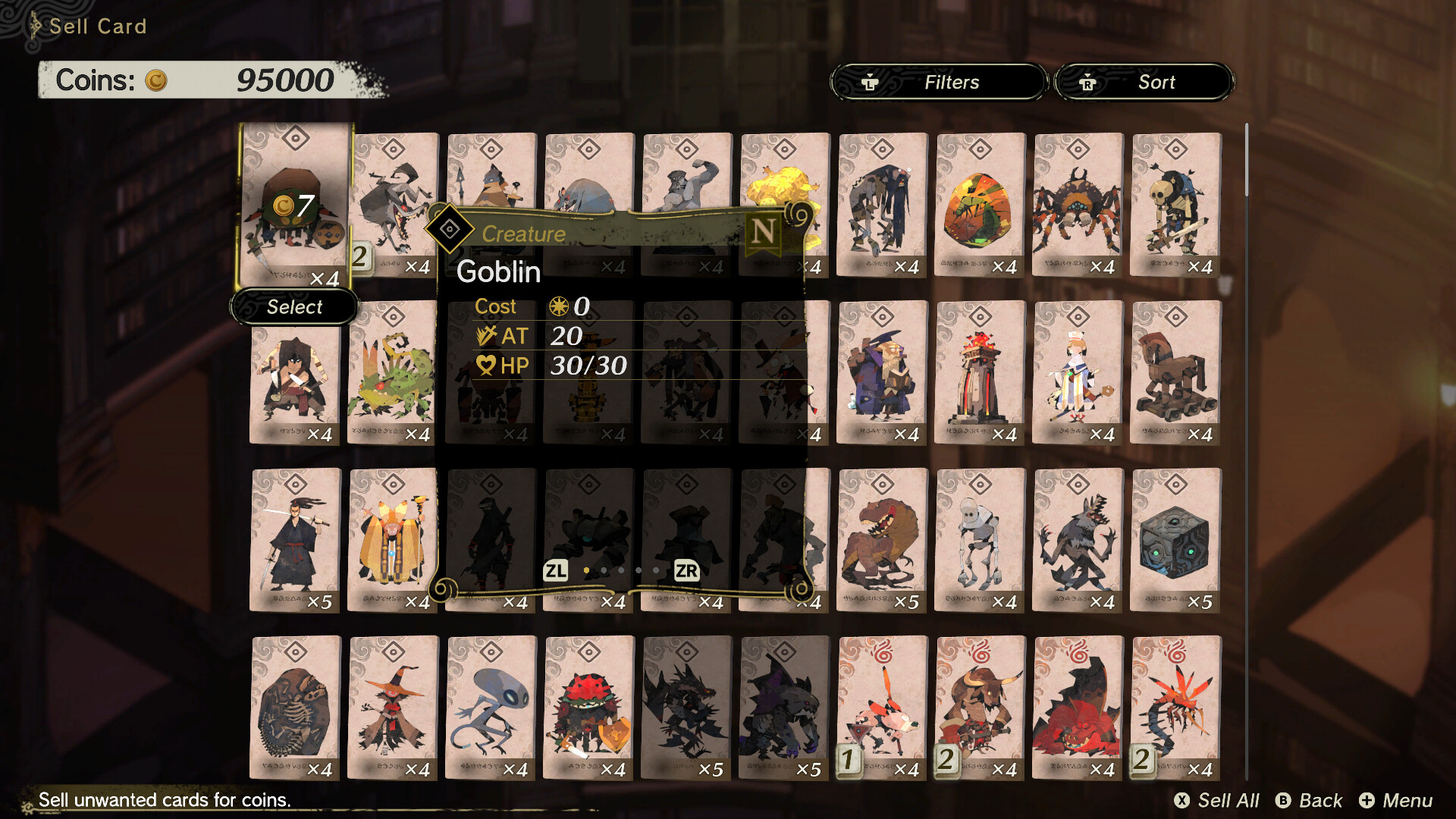
There are ways to influence said battles, by giving your monster armour or boosting your attacking monster with weapons. The deck of cards also features cards that can affect how fast you move around the board (or slow your opponent down). You’ll start off with a very simple deck of cards, but by winning matches you’ll earn (in-game) currency to purchase additional packs of cards, and then you’ll get to do some Magic: The Gathering-style deck management.
The mechanics of these systems brought together are initially a little strange because it won’t feel like Monopoly + Monster Battling should work, but within a game or two you’ll realise that it really does work, and works well. Defending spaces is easier, overall, making it something of a risk to try to fight for ownership of the space, but that just makes winning a battle all the more rewarding.
You can also increase the tolls earned by investing in spaces once you have a monster on them. The benefits to doing so are obvious, as it becomes increasingly expensive for opponents to land on the squares. But there’s also risk involved because if an opponent wins a battle for that space, they then get to benefit from the investment that you put into it. So you’ll want to make sure that the spaces you plan on investing in have the very best monsters for the job of defending them.
As you invest in squares, win battles, collect tolls, and complete laps of the board, the overall value of your portfolio grows. Once you hit a certain level, all you need to do is get back to the starting point to claim victory. All of this might sound simple, but there are many strategic decisions to make along the way, and many of the boards do allow for players to take different paths around them, so while there is some luck involved in who wins, it’s not the same as Monopoly (which is almost all luck). Strategy in both deck-building before the game, and plotting your way around the board, is core to victory in Culdcept.
Culdcept Begins is supported by a simple art style, but a highly effective one. Monsters have some fun designs, and each has its own attack animations. There are certainly enough of them for visual variety too, as there are some 400 cards to collect. Boards, meanwhile, are simple but clear, and there are plenty of them too.
Really, the only downside to the entire experience is the single-player story mode, which is just horrible. Culdcept Begins’ story mode is essential to play through because that’s how you unlock maps and cards, but the characters are not memorable in the slightest (I genuinely cannot remember the name of the protagonist, let alone any of the allies or villains), the narrative arcs aren’t interesting, and you’ll quickly find yourself glossing over it all while waiting for it to get on to the next map. The main narrative focuses on some kind of barrier around the world that is threatened by some kind of magic or something, but while the game looks like it could be from a Square Enix JRPG, it really struggles to hook you into its narrative. It’s not even reasonable to chalk the story mode up as a “tutorial” for the multiplayer, because you’ll have learned everything you need to play Culdcept by the end of the second map. It’s just a grind to unlock all the good stuff after that.
Multiplayer is as good as any board game available on Switch, however. You can play with Gamechat, but it’s better if everyone has their own copy of the game so you can pit your deckbuilding skills against one another. The variety in monster skills and abilities, coupled with the varying on-board strategies (do you use a lot of cheap monsters to try and claim as many spaces, do you try and move around the board and complete laps quickly, or do you just aim to overwhelm opponents with powerful monsters and equipment?) Allow for an endlessly entertaining competitive play experience.
Culdcept Begins is so very difficult to put down. A game only takes around half an hour to play, but one game is never going to be enough. Between players of equal skill, victories will always come down to the thinnest of margins, and then you’ll want to choose a different deck and try a different playstyle to counter your friend the next time. Blissfully microtransaction-free (it would have been very easy to make Culdcept very expensive), Culdcept Begins is everything a good digital board game should be.


Hey Matt, I noticed you didn’t mention any kind of local multiplayer, neither does the steam page. Please tell me that’s an oversight… You can play local with friends right?
There isn’t local multiplayer, unfortunately. You can play over GameShare with a Switch 2 player who doesn’t have a copy of the game (so you could do that in a local multiplayer setting as long as you both have consoles), but otherwise the only offline option is to play against the AI.