

The origins of the Rhythm Heaven series are noble. One of the legends of Japanese music, Tsunku, got involved with Nintendo and produced the first game in an effort to develop the player’s rhythm skills. You might assume that all rhythm games do that, but in reality, most rhythm games are highly visual, and players rely as much, if not more, on their eyes to play those games as on their ears. Rhythm Heaven was different in that the game doesn’t rely on visual input at all. The graphics are there, but all the cues and inputs are delivered through the music.
The series has never really swayed from that mission, and Rhythm Paradise Groove is no different.
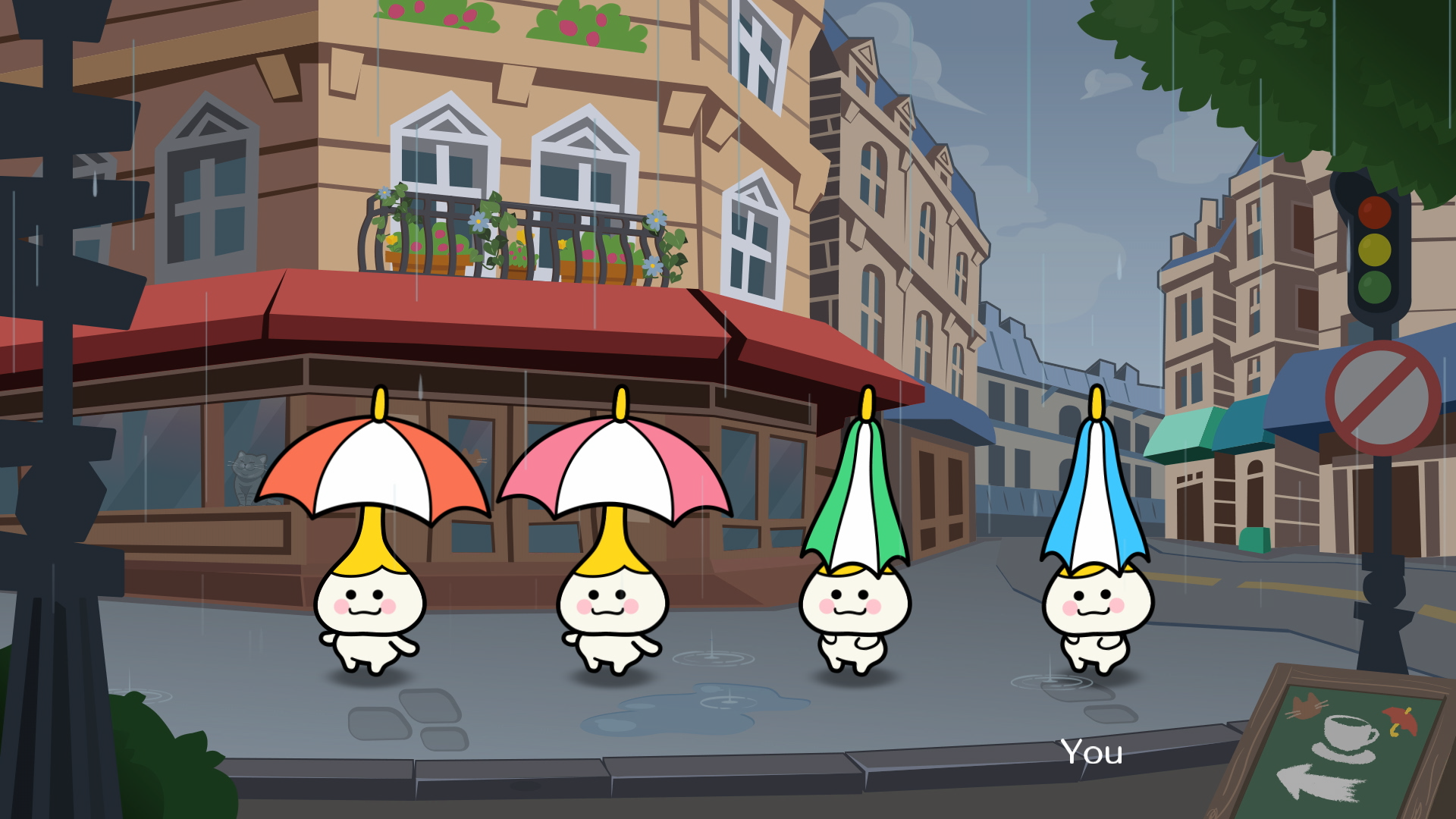
It follows exactly the same format as previous Rhythm Heaven games: You choose one of 80 mini-games, with each mini-game being a short rhythm game with its own piece of music. You’re scored based on how accurate you are with the timing. And then you play the next one.

What makes Rhythm Heaven titles so appealing is how charming each of the minigames is. Every single one of them features wacky, colourful, twee characters doing silly things to the music. The creative energy that goes into them is truly mesmerising, and the first few hours of the game are a delight as you unlock one minigame at a time and have to keep on playing because you’re going to want to see what the next one is.
Cute as it is – overwhelmingly cute, at times – Rhythm Paradise also takes its responsibilities as a teacher of rhythm seriously and is more than willing to fail you. Getting a perfect score on any one mini-game requires the kind of absolute precision that you’d expect from actual musical artists, and again, there are no nice, neat icons flying around the screen to make it clear when the exact right moment for a button press is. This is a game where, if you use wireless headphones, you’re going to need a 2.4Ghz wireless connection rather than Bluetooth, because the tiny lag inherent in a Bluetooth connection is going to utterly mess with the game’s demanding timing.
Yet it’s never frustrating, and that comes down to the difficultly being relentlessly fair and, importantly, this is a very real skill that you’re having trained into you with Rhythm Paradise. It is possibly the most entertainingly colourful textbook I’ve ever seen.
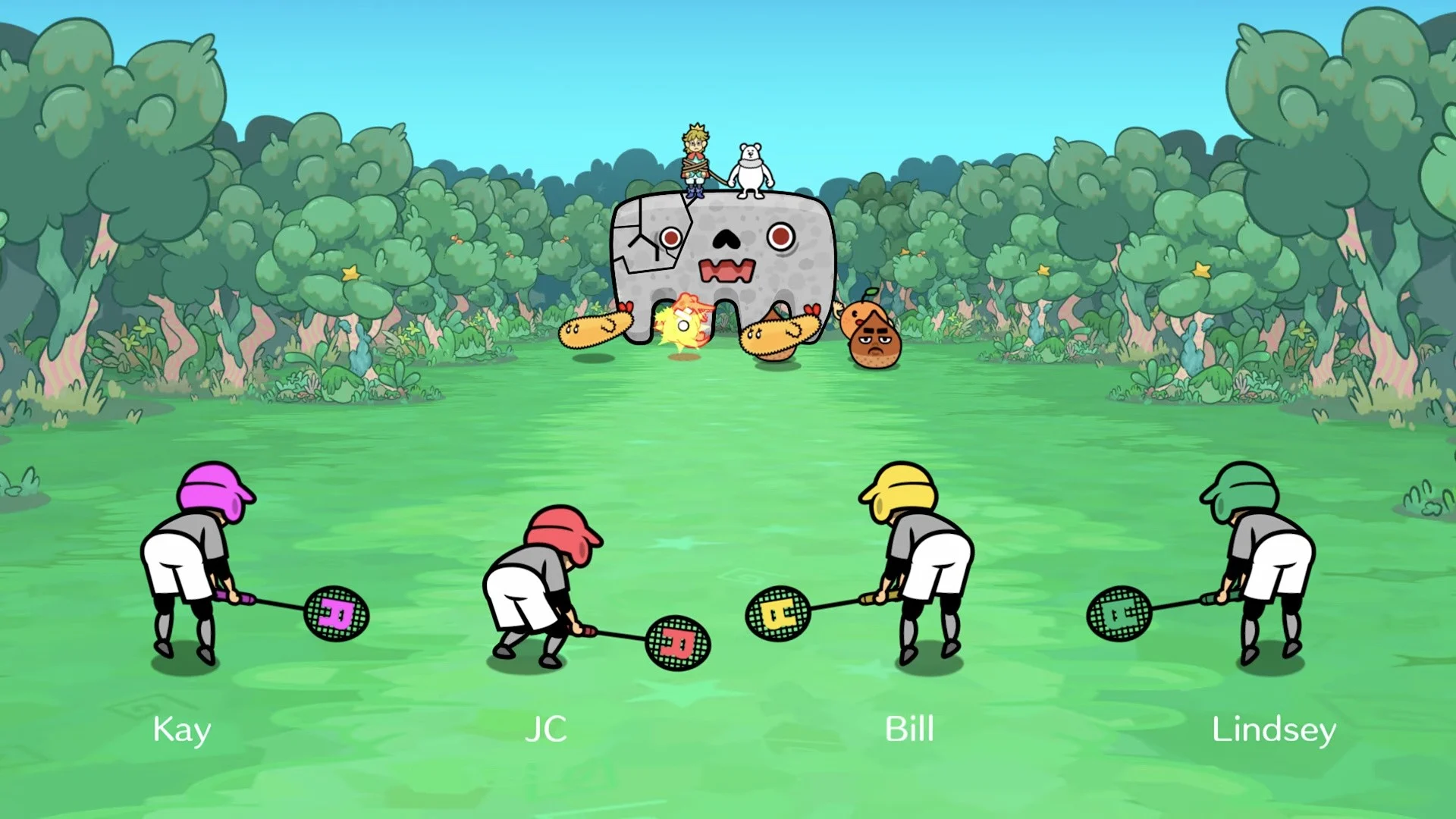
In addition to the 80 all-new minigames – which I believe is a record for the series (or at the very least it comes close), there are so many features in Rhythm Paradise that need to be mentioned. The first is the multiplayer minigames. There are 30-odd of those, and they’re a mixture of competitive and co-operative in nature, for up to four people. Rhythm Paradise is an absolute hoot in multiplayer because a person’s rhythmical skills are a prime target for trash talk. Is that a cruel thing to say? Well, whatever. No one is going to take the game too seriously because the aesthetics are so charming and light, and you’ll be laughing along with it enough that everyone’s rhythm is going to be messed up at some point or another.
It’s also the kind of multiplayer that anyone can pick up and have a blast with immediately, and the individual games are short, making it ideal for party play with groups of any size.
The other great “bonus” feature is an “RPG mode”, where you play as a character battling enemies through the power of rhythm. Attacks are strengthened by tapping the controller in metronomic time with the rhythm, and there are plenty of combinations to learn that do different things, allowing you to exploit enemy weaknesses as you would in any standard RPG.
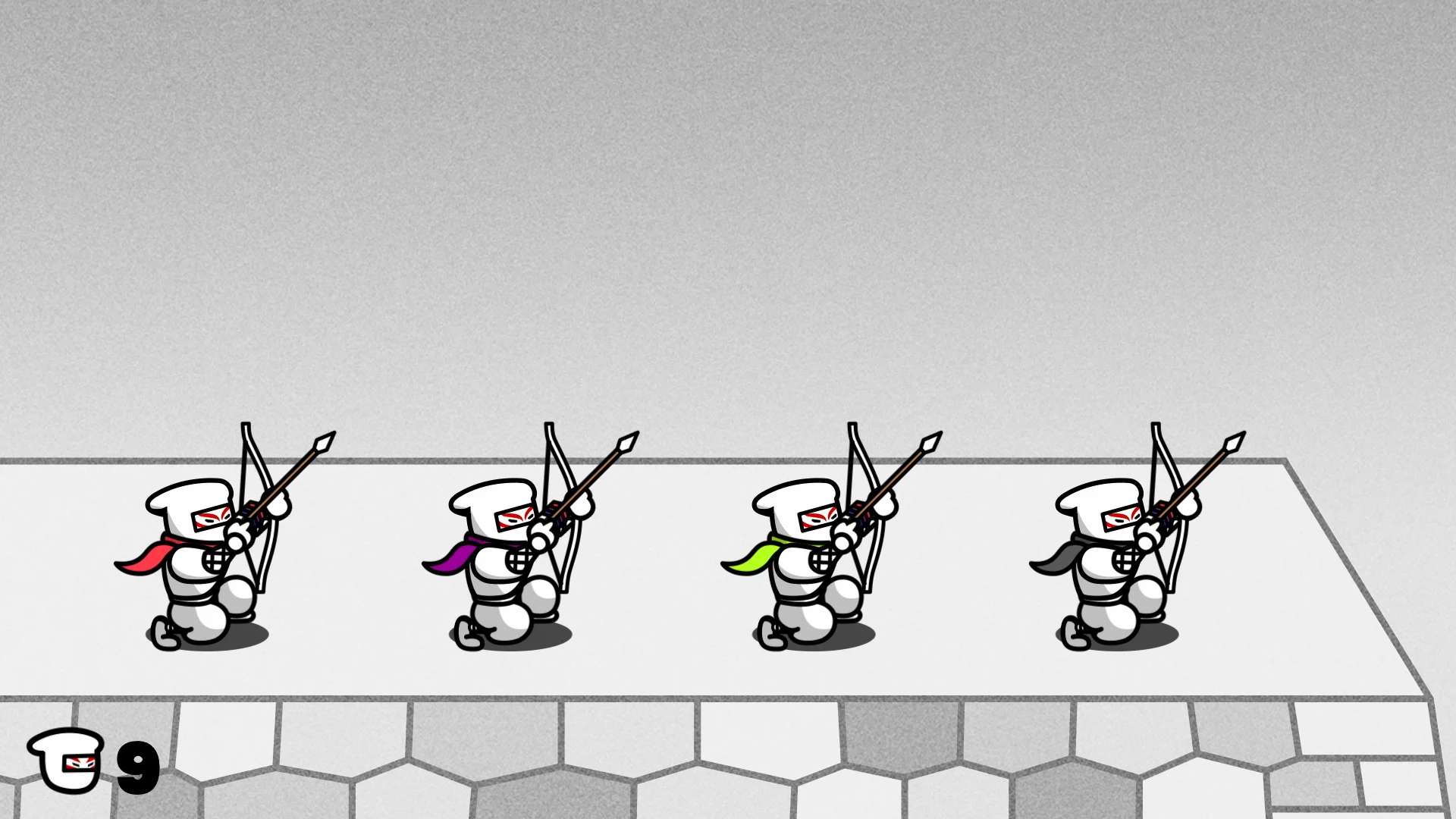
What this mode reminded me of most strongly is Patapon, which likewise asks players to tap along to the music to unleash attacks and defeat enemies. Patapon is a far deeper and more nuanced game than this, of course, but as a bonus feature, this adds even more value to an already feature-packed game.
There are a bunch of smaller rhythm toys to play around with too, like a drum kit (which is a fun nod to the original development project that led to the creation of the Rhythm Heaven series), and a “café” to chill out in between jam sessions. It’s been more than a decade since the last title in the series, and this package really feels like it’s an effort to make up for lost time with a collection that has multiple ideas for sequels all jammed into one.
Rhythm Heaven is fundamentally different to other rhythm games, and Rhythm Paradise Groove is no different. It might seem both whimsical and bonkers from the aesthetics and general energy of the game, and it is that, but it’s also an enormously clever project that subtly helps you develop very real rhythm skills. I love it when games entertain while also teaching like this.