

The Touhou Project continues to be one of the most interesting experiments in the video game industry. It’s been going since 1997, and that means it’s on the cusp of 30 years. In that time it’s had more than a game released every year… and that’s just the “main” titles, developed by the one-man band behind Team Shanghai Alice. There are what feels like countless derivative works, all officially sanctioned by the creator with very loose requirements on IP licensing, other than, essentially, that the series remain dōjin, community-orientated and not allow commercial interests to overtake people’s ability to create within its universe.
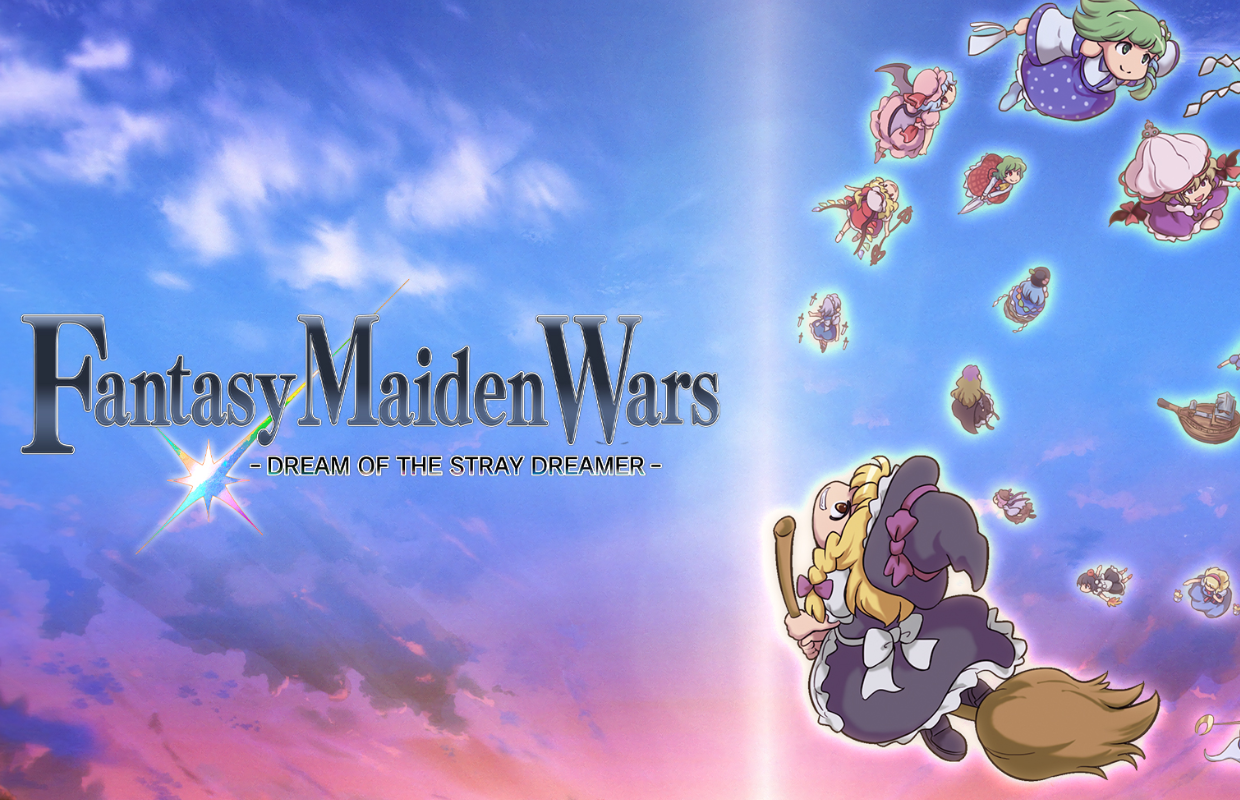
Touhou has been right at the centre of amateur, enthusiast and consumer-driven game (and art, music etc etc) media in Japan for quite some time now. As I’m terrible at SHMUPs I’ve always struggled to get along with the “main” games, but there are plenty of spin-offs I’ve been able to enjoy, and the latest of these is Fantasy Maiden Wars – DREAM OF THE STRAY DREAMER.
Fantasy Maiden Wars is when you throw Touhou and Fire Emblem in a blender, and to be clear, this is not some quick spin-off. This game aims for real depth, featuring more than 70 characters drawn from the Touhou universe and a depth of customisation that people who aren’t satisfied with the depth that most tactics games offer.

However, the limited resources and size of the developer team make it clear that this is a game of ambition over execution. While it does play well enough (it’s possible to “break” the game with several overly powerful combinations and characters, though the game itself encourages you to break it, so that’s a clever way to pretend that a normally game-breaking issue is a feature!), the narrative pacing and writing is amateurish, and the localisation is almost painful to read. Accurate, perhaps, but there’s none of the editorial refinement to polish the experience and make it pleasant to read.
There’s also the inherent flaw that comes from being a game in a series that numbers dozens upon dozens of games; there’s so much lore and in-knowledge to parse that it’s going to be overwhelming if this is your first (or one of your first) Touhou titles. There is an in-depth encyclopaedia to save you having to Google around to fill in the gaps, but then we bump up against that localisation issue again. Personally, I threw my hands in the air after a few hours and just decided to enjoy the tactics gameplay in isolation, as though I were playing a board game rather than anything strung together with a narrative. A pity, because my love of tactics RPGs is typically linked to how I enjoy the characters and storytelling, but Fantasy Maiden Wars was never going to let me into its treehouse on that count.
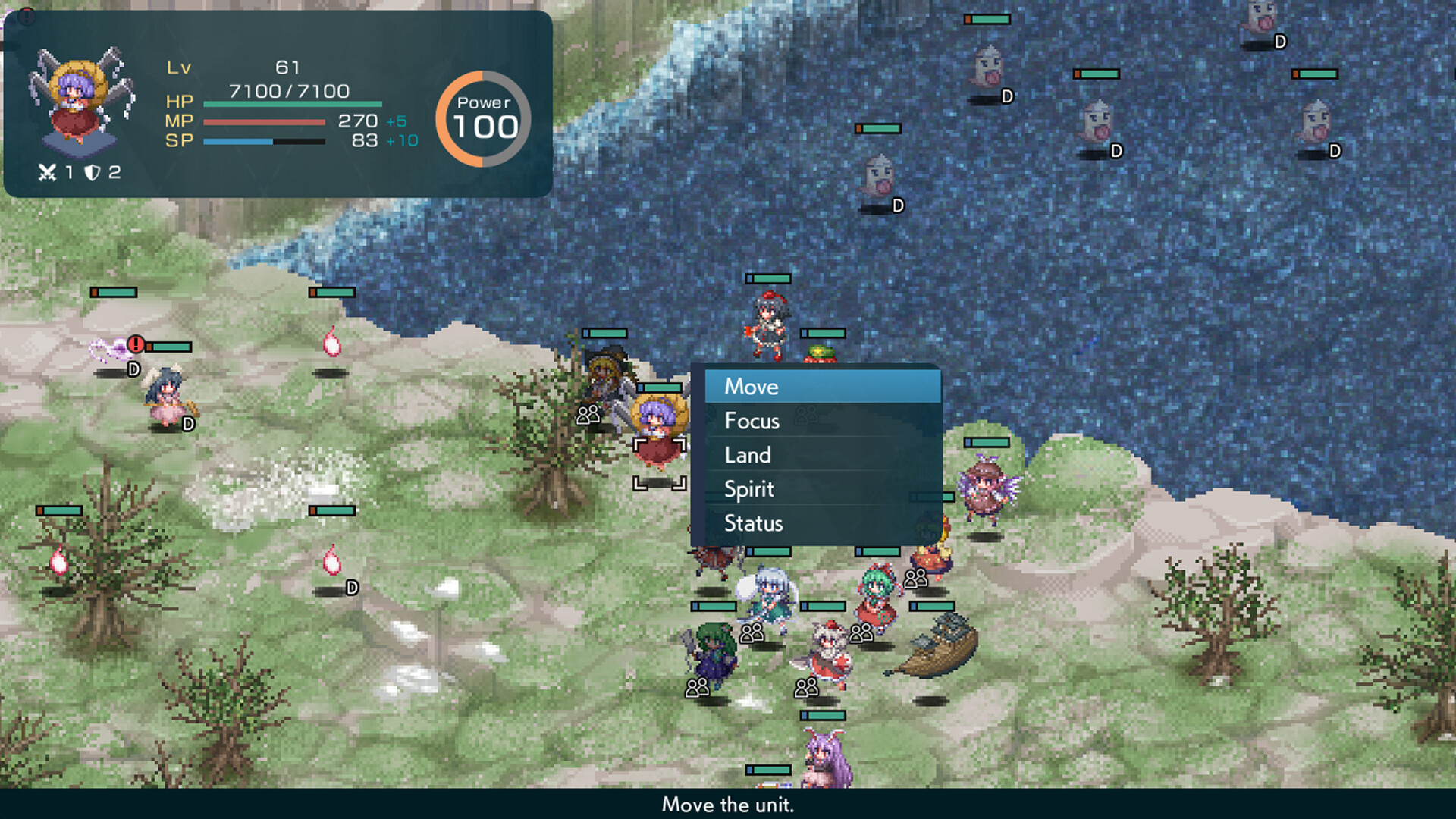
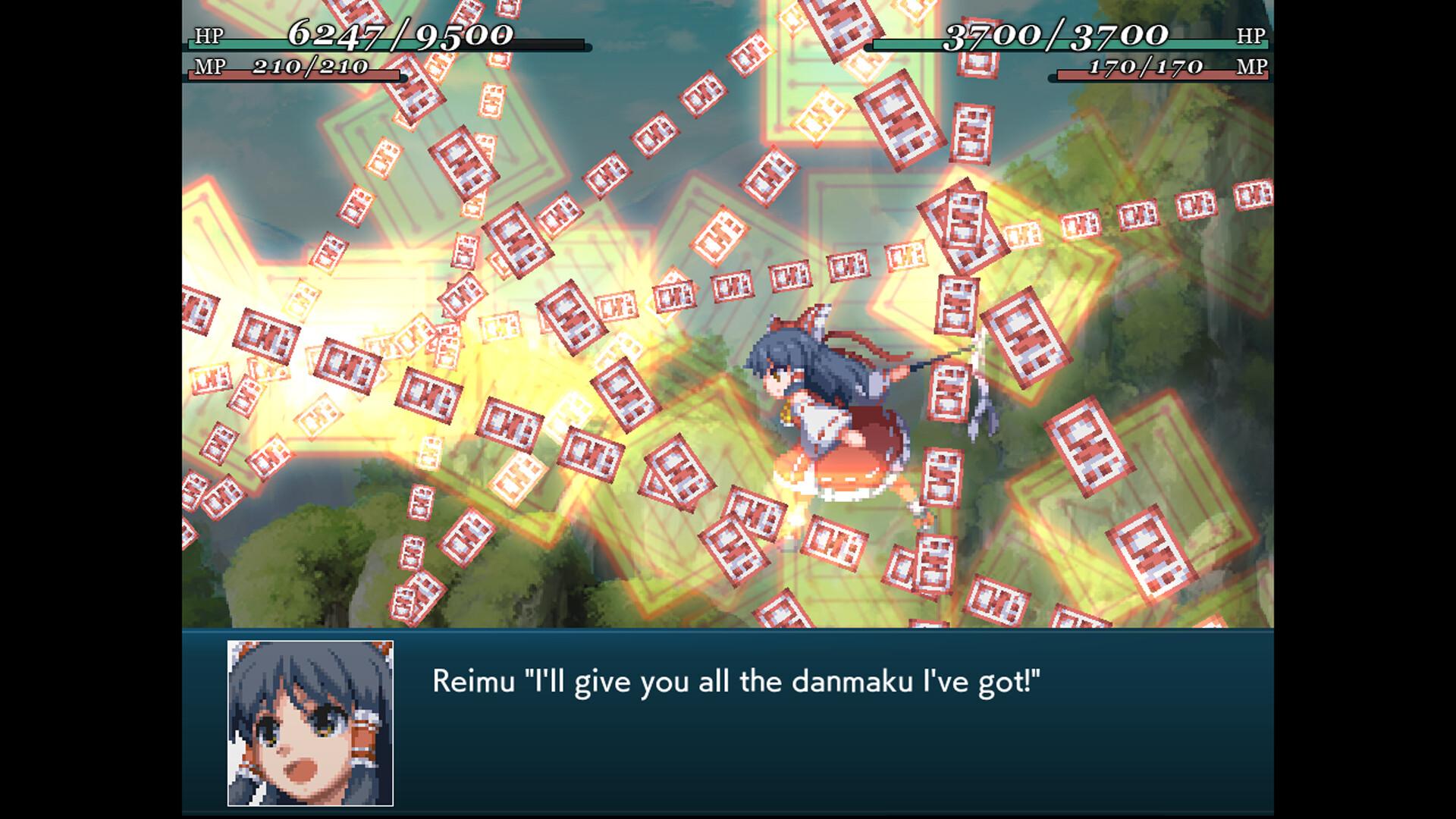
The roller-coaster of uneven quality with the narrative applies to the art, too. A lot of it is really good, with lovely pixel work in the sprites and some visual fireworks in the combat cut scenes that I never got sick of. At other times, particularly when looking at the maps themselves, I thought I was playing the kind of demo a developer produces while they’re still waiting for the final art assets… or something like The Battle for Wesnoth, which is a project that really is made by pure enthusiasts. There’s nothing wrong with that, except that Fantasy Maiden Wars is actually pretty expensive and it’s not like the Switch 2 lacks for visually interesting tactics games.
Meanwhile, the music is absolutely lovely, and it is the kind of composition that I would buy a CD soundtrack of to listen to outside of the game. That would be an expensive purchase as there are like 200 pieces of music in the game, but it would be worth it.
Not that this game was ever going to be destined for mainstream success, but the niche that looks past the inconsistencies in the art and narrative is likely to get along far better with the combat than, say, a Fire Emblem fan that sees this on the storefront and decides they need more tactics in their lives. The game is generous with the tutorials, but it doesn’t take long for the systems to start piling up in a way that tests your ability to manage multiple character statuses, positioning on the map, timing and essentially what becomes a turn-based SHMUP. The depth here is excellent, and clearly Fantasy Maiden Wars was made by hardcore genre fans for hardcore genre fans. But it’s not accessible and is probably going to need a half dozen “gateway drugs” into the tactics JRPG before you’re going to be able to enjoy its own structures and rhythms.
And to be clear, this game has a not-insignificant number of reviews on Steam, and those reviews are overwhelmingly positive (we’re talking 98% positive ratings here). Within its very specific audience, it resonates, and that audience is going to love the fact that it’ll easily run past 100 hours of play time.
It’s just not accessible, and the lack of refinement makes enjoying the game a pretty hefty wall to climb over. There are other Touhou titles that are better places to go for newcomers to both Touhou and the tactics genre, but once you’re ready for it, Fantasy Maiden Wars will reward you in kind for the effort you put into it.