

There are two versions of Rugby: Rugby Union, and Rugby League. Rugby Union has grown to become a truly world sport, with a World Cup that is drawing growing interest for how competitive it is – including by nations outside the top couple of traditional “Rugby nations”. Rugby League, meanwhile, has remained far smaller in scale. There are only four nations with professional teams, and outside of England and France, the sport is really very localised to the Oceania region. It does have a World Cup, but there’s a general lack of interest in it (the next Rugby League World Cup had two host nations pull out), and the generally poor quality of teams outside of the core has meant that this World Cup is reducing the number of teams from 16 to 10.
The point is (and Rugby League fans, who are infamously not a casual lot, are already typing furious comments at me as they read this) that Rugby League is an incredibly niche sport. It’s similar enough to Rugby League in the way the ball moves up and down the field, and the way that attack (passes back and forth across a line) and defence (tackles) work. But in the details, the differences show themselves.
Union is a sport of rolling power, with a team able to theoretically hold the ball for however long it takes to eventually get it over their opponent’s try line. This leads to a slightly slower pace of the game as teams spend a lot of time trying to literally throw their player’s weight into creating momentum through more frequent scrums, as well as rucks and mauls – unique to Union. League, meanwhile, favours exchanges of explosive power, as players try to crash through the opponent’s line, one-on-one (or two), and try and take as much territory as they can in a half dozen tackles before they’re forced to kick the ball down the field for the other team to claim. In this way League somewhat vaguely shares a flow of play with American Gridiron.

What all of this means (and yes I was getting to the video game) is that Rugby League has a more “arcade-like” quality to it over Rugby Union. Where developers (including Big Ant, the developers of Rugby League 26) have at times struggled to properly articulate the physics and more intricate mechanics and rules of Union, with League – and with Rugby League 26 – there has been the opportunity to focus less on button inputs and the various ways a referee would blow a whistle, and more on the simple, yet visceral, thrill of seeing 100kg machine of heavy muscle crash into one another.
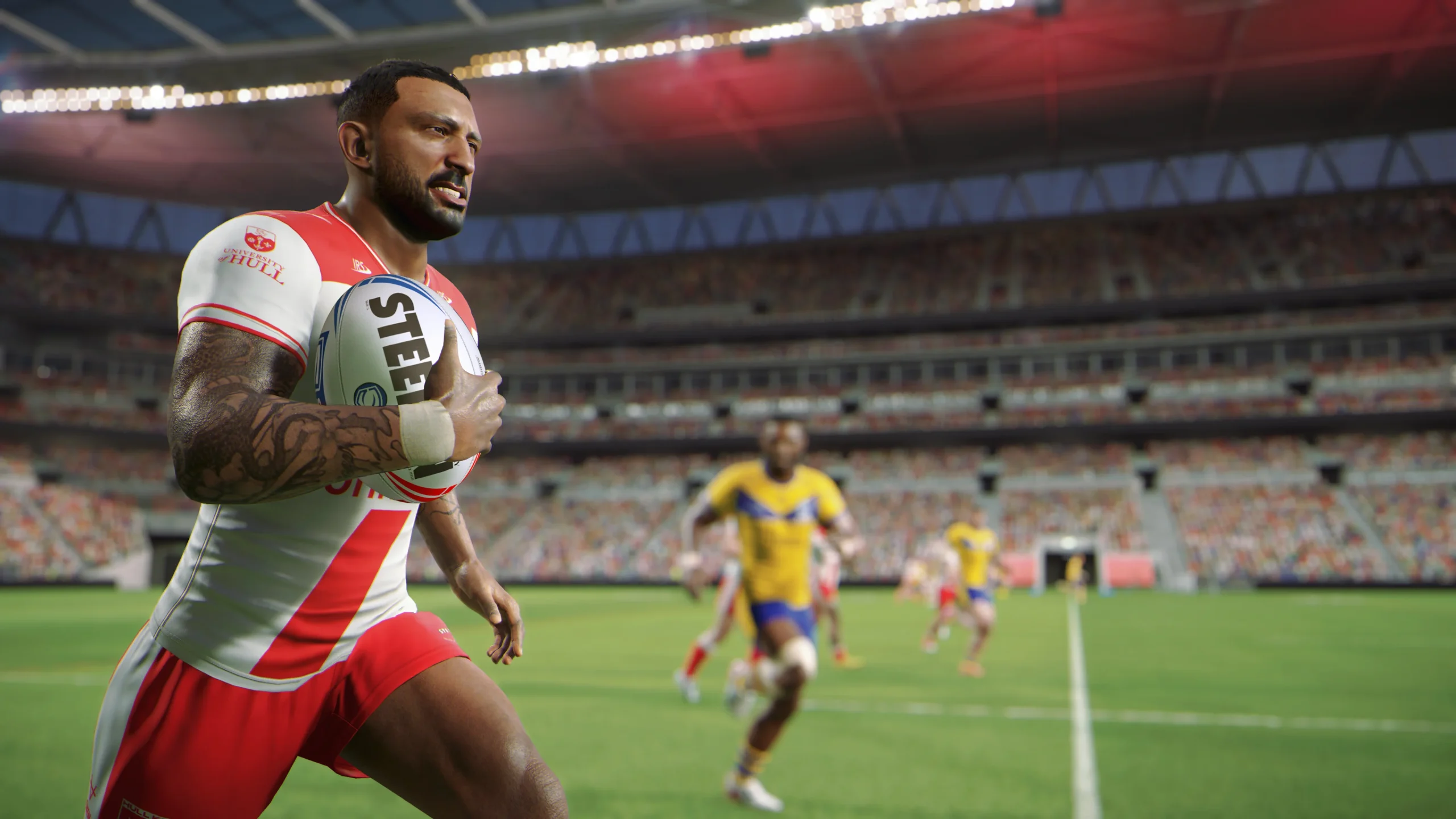
Big Ant has done a good job of capturing the fundamental flow of Rugby League. There’s some good impact with tackles, and when your player does manage to find a gap or break through the line, it is genuinely exciting. This is supported by a quality art engine that offers a good level of detail in terms of both players and stadia. As usual with Big Ant, this is something of a façade – player models are all basically the same, and the details are only in the faces and tattoos, which have been captured and imported into the game via photogrammetry. They do look like a very high-quality take on their real-life counterparts… aside from the few players that were too lazy to show up for their photo session, that is (and would later throw a tantrum at Big Ant over, despite the issue being entirely with them). The stadia look good on the ground – having played sport at a couple of the venues it Big Ant has captured the feel nicely. However, there is a decided lack of detail in some of the more minor secondary details. These facades are all understandable for such a niche sport and matching development budget, though. In fact, that’s underselling it: Big Ant really punches significantly above its weight when it comes to the visual assets and aesthetics.
There are some issues with the implementation of some of the rules, such as when penalties are given, and the behaviour of the AI. Or at least I think they’re issues. Very occasionally, something weird would happen on the field, and while I’ve not followed Rugby League closely for many years, I assume that I still know the rules well enough to know that shouldn’t have happened. I do fully expect the issues with the rules to be addressed. Big Ant games always release with a laundry list of issues, and Big Ant is always diligent in addressing those. The game’s already in a substantially better state than when it launched, and I expect that to continue to improve.
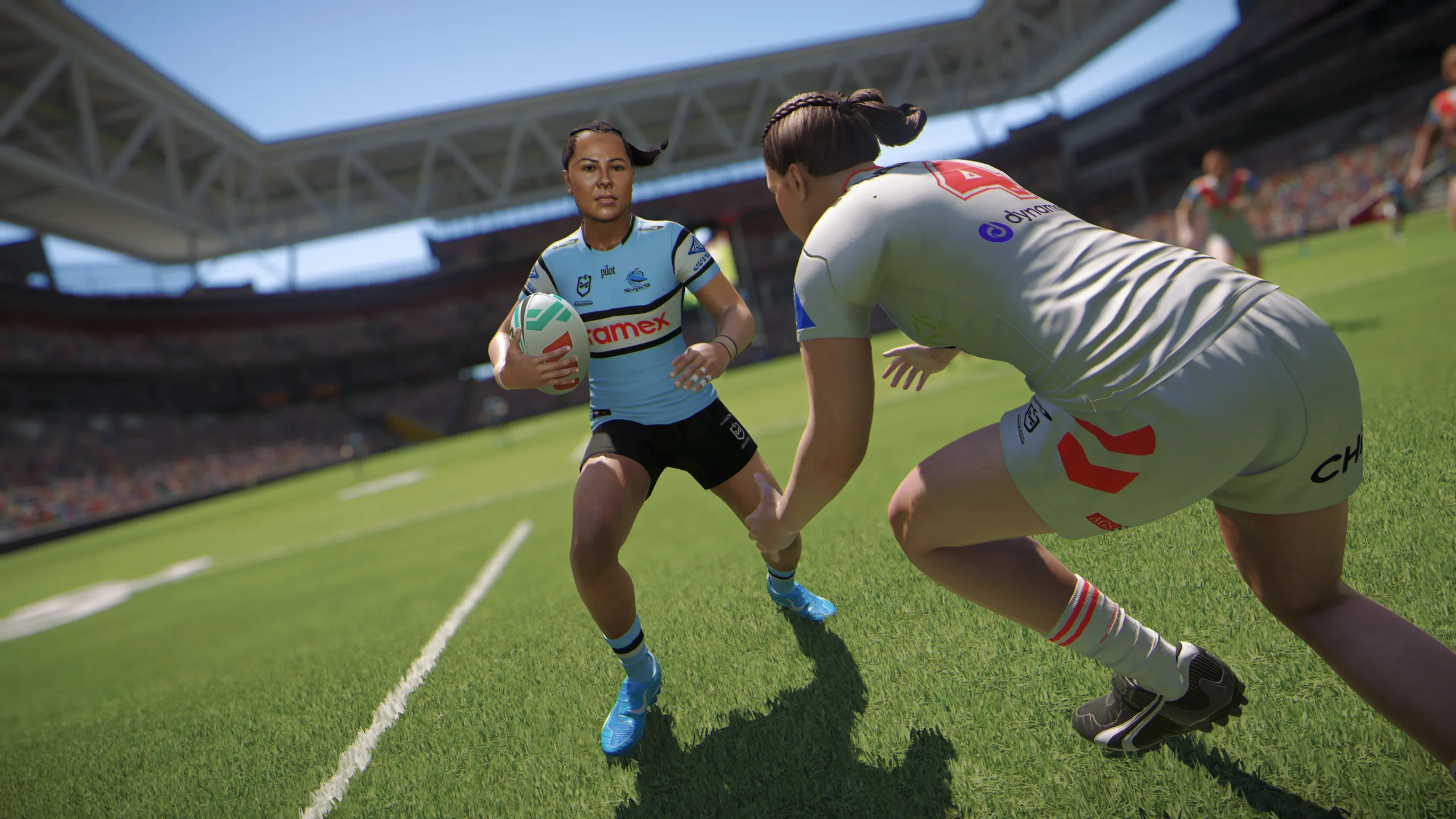
A bigger issue, and I’m hoping this is on the list to be addressed, though it’s not technically a bug, is how the passing works. At the end of a tackle, you have a moment to get your dummy half to select who they want to pass the ball too, with the option of using the controller buttons to set up plays and cut out players for a long pass. However, very frequently, I’d accidentally tap the control stick and send the dummy half into a solo run instead, and that would typically result in me not getting much distance at all. Passing in general lacks the kind of forward momentum and slick speed that professional League players do so well, which was also an issue with Big Ant’s recent take on Rugby Union. I would like to see more fluidity in the play going forward. This is, however, my only real issue with how the game flows. Runs feel good. Tackles feel like a good contest between the players, and while it’s tough to break down a line of defence (as it should be)
Meanwhile, I don’t expect we’ll see the AI improve much. Big Ant has delivered a series of difficulty settings that do indeed get more challenging with each level up, but that just means the stats running behind the engine start to weigh more in favour of the AI. It continues to play in much the same way just… with better results. Additionally, all individual players behave the same way on the field, so there’s very little distinctive personality from one team to the next. I get that AI is difficult, but Big Ant sits on such a wealth of licenses with its properties. It would be great if playing against the Dragons felt different to taking on the Raiders, or the English leagues felt like a different experience to the Australian ones. The look is very much there. It would be nice if the gameplay matched the look a little more.
None of this is to undermine the fact that I had a lot of fun with Rugby League 26, and it’s not even a sport I follow closely. I have been playing Rugby League games from as far back as the Commodore, with E.T.’s Rugby League (no, not the Spielberg Alien). As I said, the sport lends itself to big hitting, arcade-like fast play, and Rugby League 26 delivers this, and will continue to improve as the patches roll in.