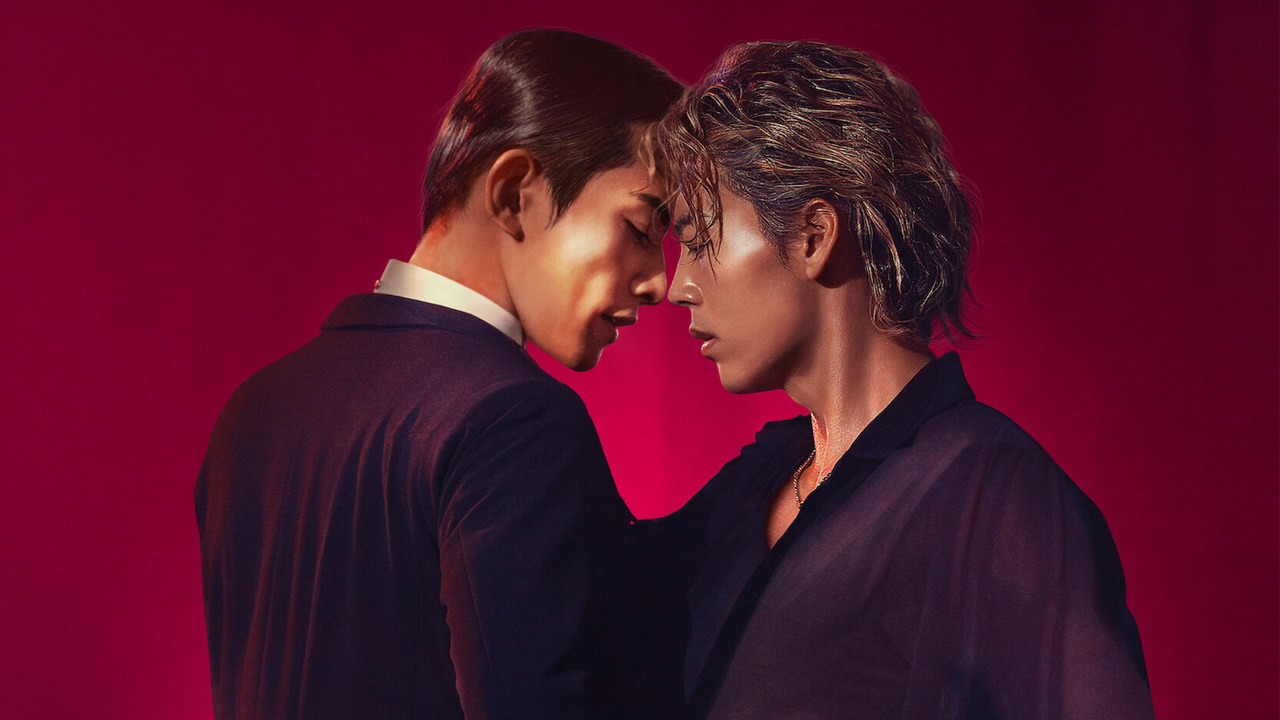


There is a massive problem with filming a Dancesport film: Unless your cast are actual Dancesport athletes (and they are typically poor actors), then it’s going to be hard to make the dancing look good. 10 Dance, a Netflix-published film by the director of the Rurouni Kenshin films, is quite possibly the best Dancesport film we’ve seen for the effort that the entire production went to to get the dancing right.
Consider a Football, Baseball, or Tennis film: You need to get the athlete to run around authentically and swing the bat or racquet as correctly as possible, but with a couple of months of training they’ll be able to get that “look” down. Then, with the right camera angles, stunt doubles and edits, you can make it look convincing that they’re better at the sport than they might be in reality. Everyone knows how to run, after all. Would they have the explosive power and dynamic balance of real athletes? No, but that’s what a close-up of an actual athlete’s boot can convey.
Dancesport is different. To hit a ball in Tennis or Baseball, you swing at the right time and… that’s it. Having played Tennis at a high level, there is, of course, plenty else to consider, like weight between two feet, follow-through and recovery, and actual athletes train very hard for a reason, but here’s what a Dancesport athlete needs to do for the first three steps of a Natural Turn, the most basic of all steps of the Waltz, which is just one of the ten dances in Dancesport:
Connet to the partner through rib-to-rib contact, both hands, and the inside of the lead’s right leg and follow’s right. Take a preparation step for three counts, involving a step to the side and a couple of degrees forward, an additional turn of the top-line beyond the foot, and then a replacement with a further shape in the opposite direction at the end of the third count. Use the standing leg to push forward across the floor, through a split-weight position with the body suspended directly between both legs for count 1. Transfer weight to the forward leg and “draw” the body in through the knee and then repeat the “step” action with the now swinging back leg between the follower’s legs for count two, with both sides of the torso also moving forward, however the left side moving at approximately 1.5x the speed to create shape, sway, and move the follower off the line of the leader. Step through and continue to rise into count three, bringing the trailing leg into a closed position, while keeping the hips soft for movement into the next figure and allowing the follower to drive forward into the sway. Do all this within a single bar of 3/4 Waltz music, adjusting movement slightly to respond to the unique qualities of whatever piece of music you’re dancing to.

I’ve probably bored you with that paragraph so don’t feel bad if you glossed over it. The point here is that the simplest steps in Dancesport involve multitudes of different technical elements and a very specific way of moving that is, firstly, inherently unnatural and takes decades to become comfortable with. There’s just no way to actually fake any of that on camera.
Which leaves filmmakers in a quandary: How do you hide the fact that your talent hasn’t been learning all these movements and techniques for decades? I’ve seen Dancesport films where the competition scenes try to convince you that the very amateur (at dancing) actors are of the same standard as the professional dancers that the filmmakers hire as background dancers. This, as you can guess, looks ridiculous. Other films try to hide it by using a lot of dramatic closeups and edits. It makes for some exciting, even inspired filmmaking, but you don’t actually see much proper Dancesport dancing when they do that. Still others try and find dancers that do cross over into acting more easily (typically Ballet dancers), but ballet dancers are not trained in Ballroom technique and while they might be better at faking it, you’re still in a situation where the dancing is just not going to look authentic.
10 Dance went another direction, and it’s a simpler and yet massively more intimidating solution: They put their actors through the most rigorous crash course in Dancesport as they possibly could. I cannot begin to fathom just how much training would have had to go into this, given that to the best of my knowledge, neither lead actor has a Dancesport background. But it is very (very) clear that at every level of this film there were a team of professional dancers acting as consultants, training coaches, and choreographers. Do the actors end up looking fully professional? No, they make mistakes that a trained eye is going to notice. Dancesport athletes could point to how the Ballroom guy has an issue with being backweighted in his movement, which creates stiffness through his top line and would limit his ability to move. Or how they had to really slow down the Cha Cha music to allow the Latin guy to approximate the body and hip movements that the highly technical dance traditionally demands at speed.
However, to the layperson, these dance scenes are going to look like gorgeous choreography, danced to a very high standard, and ultimately authentic. This is a rare Dancesport movie where there is actual Dancesport shown, and while the actors are “only” of a standard of very high-quality amateurs, the fact that they got to the point where they look like they would belong on competition dance floors shows that there was so much respect for the sport in this project.
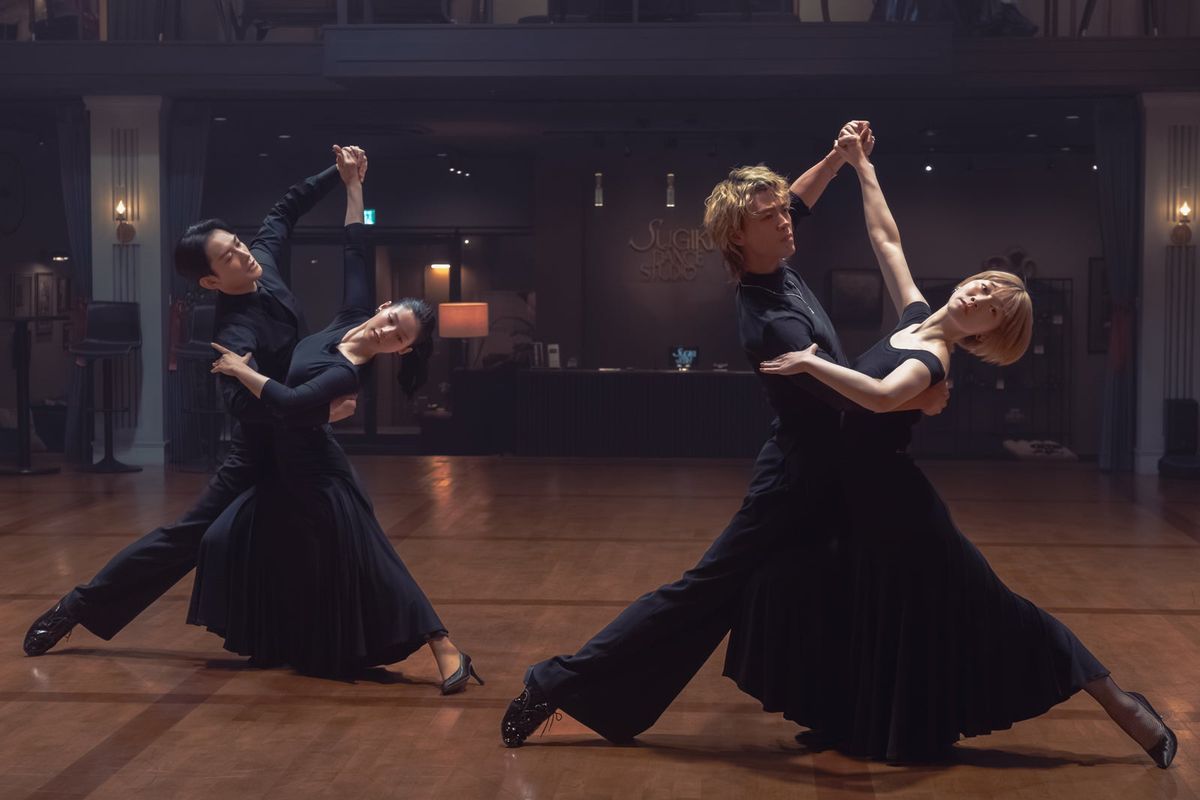
All of this is supported by some absolutely breathtaking cinematography and access to real dancesport venues. A significant chunk of the film takes place at Blackpool in England (the Wimbledon of Dancesport), and it is such a gorgeous venue to shoot. Again, it is very clear that everyone involved in this film took the sport seriously and wanted to do it justice, rather than just use it as a backdrop for the character drama, and as a dancer, I really love this production for that.
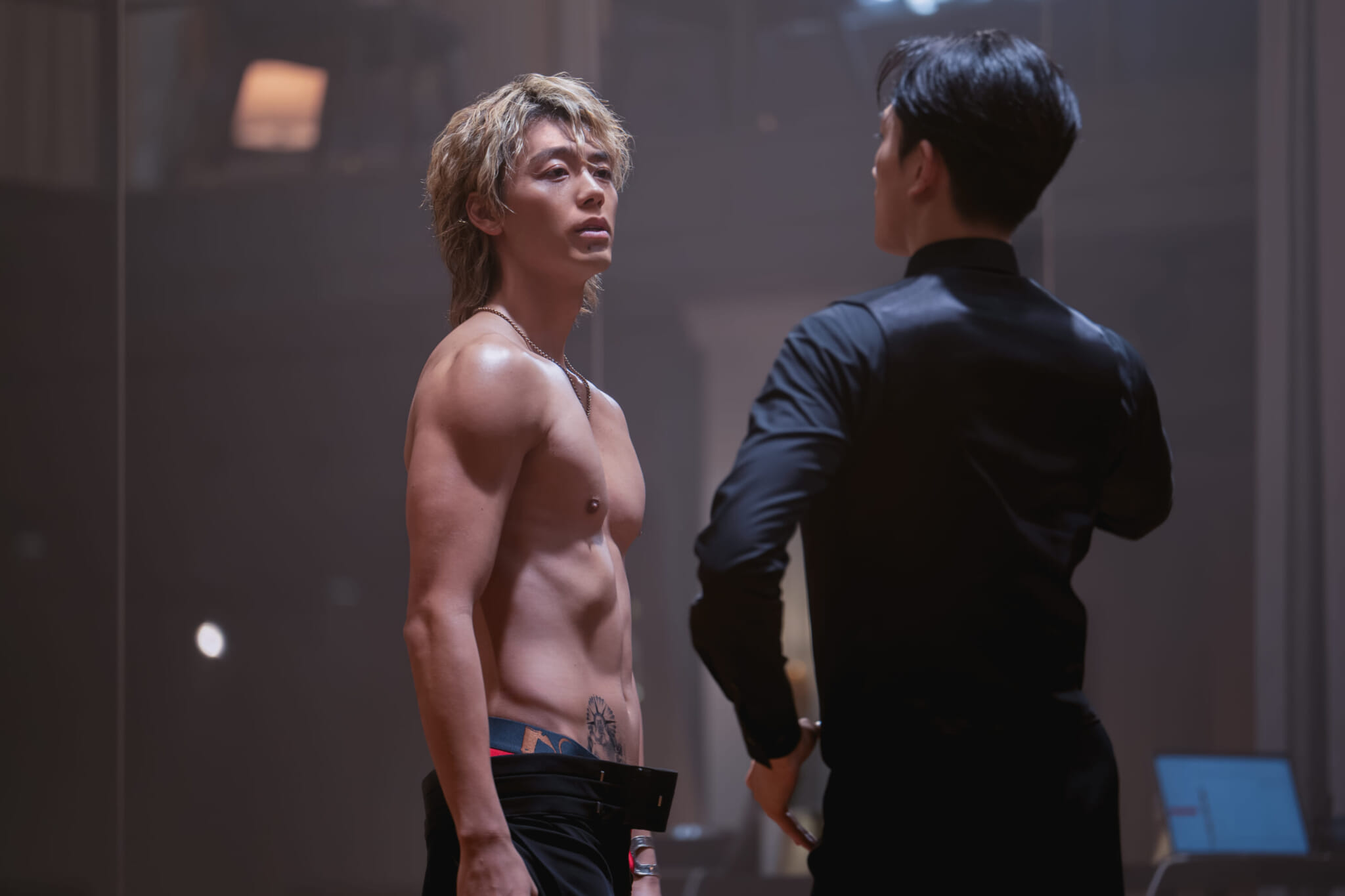
With all that being said, 10 Dance is, also, a character drama. Specifically, it’s a film based on a boy’s love manga series. Two men – one a Ballroom dancer and one a Latin dancer, agree to train one another (and their partners) so they can compete in 10 Dance – the endurance form of Dancesport (most competitors focus on Ballroom or Latin, very few have the time and skills to dedicate to dancing all ten dances across both styles in competition). Along the way, they develop a heated passion for one another, even as they work through challenges and conflict within their lives (and struggle with their relationship to dance itself).
This film has some extremely steamy scenes – turning the heated sexuality that many see in Dancesport right up to 11 and beyond. I was concerned with this at first. Most people from outside of the dance do tend to assume that dancers are sexually involved with the people they dance with due to the closeness of contact in the sport, and I don’t think Dancesport needs yet another film to reinforce that stereotype. It is of course true that sometimes it happens, but there are plenty of dancers that don’t become involved with their partners and treating Dancesport like it’s some kind of activity for people looking to score does disrespect the sport behind it – much like how too many people treat Beach Volleyball as a place to go perve on women in swimsuits rather than a challenging and wonderful sport in its own right. Thankfully in 10 Dance, while the male-male relationship does very much head down that path, the female partners of both men are neither interested in the men (who do both also have interest in women as well as each other), or each other as they also dance and train together. The women in the story serve as a reminder that dancing doesn’t have to be inherently linked to sex off the floor, and that is yet another layer of understanding and respect for the sport and the reasons why people do it. In most cases, however their personal lives and relationships pan out, most professional dancers are there because they have a burning need to dance.
Off the floor, the acting performances are universally excellent – and again, they really do bring the heat. There are several scenes in this film that are as erotic as anything you would see in a 50 Shades of Grey, and while it occasionally veers into melodramatic areas, it’s also clear that the manga artist who wrote the story originally understands dance, and the personal tensions that can become roadblocks to the high-performing people in this sport. There’s a lot of psychological depth to these characters, which makes them fascinating puzzles to sort out over the length of the film.
I recommend watching Ballroom Dancer, a documentary from 2011, before or after 10 Dance. It follows the story of the notoriously difficult (yet brilliant) Slavik Kryklyvyy and his efforts to take a new dance partner to the highest levels of professional dance. You’ll see echoes of his frustrations and personal demons in the protagonists of 10 Dance, and there’s probably no better proof of how authentic this film really is than how it mirrors an actual documentary on the sport.
Looking over social media, I’m naturally seeing the LGBTQ+ community in love with the film (and they should be – I might not be part of this community, but the film does seem to do them justice), and others talking up how hot and steamy it is. That is what most people are going to take away from the film, and that’s fine, because most people aren’t invested enough in Dancesport that they’d go and make video games and documentaries about the sport themselves. I do think that 10 Dance is excellent at that side of things, but I think it’s worth keeping in mind as you watch that it is excellent because it also does try and do right by Dancesport. It didn’t need to. It’s not like Football where the mainstream understands enough about it to notice if the performances of the sport were amateur.
But authenticity matters, and in a sport this niche, the fact that dance studios (especially in Japan) have been putting posters up and using the film to promote the sport tells you something: This has been a rare opportunity to introduce people to Dancesport. I think they’ve done enough respect to the sport that they might just find one or two people looking up where their nearest dance classes are. I might be the only review that’s coming at this film from a dancer’s perspective, but I love it for that, and hope people do appreciate the work that went into getting that right.






Thank you for your review. I have zero background on dance but I always want to appreciate them from that aspect, aside of the romance and acting. It’s nice to see the perspective of professionals about them. I hope we could see them again in the sequel