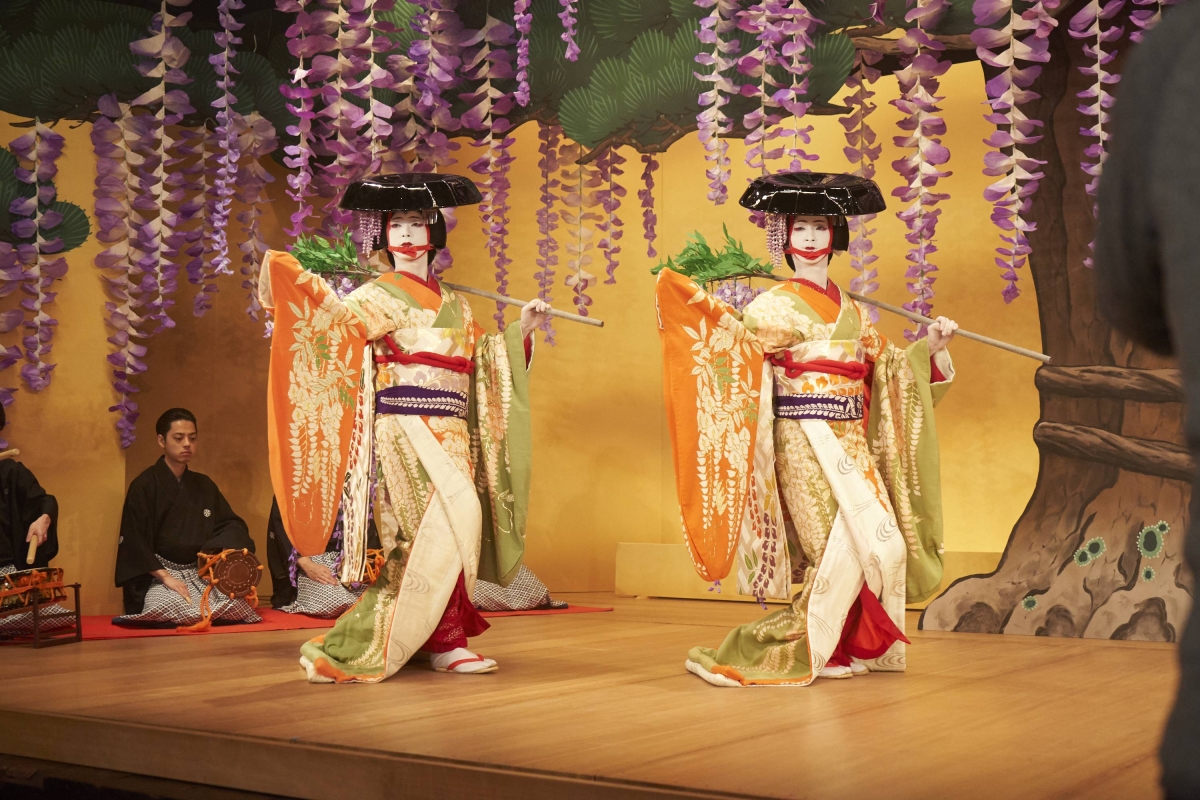


I don’t often write about films these days, but I recently saw something at the Japan Film Festival in Australia that was powerful, profound, and haunting enough that it has since occupied all my thinking. Kokuho, directed by one of Japan’s most noteworthy art film directors, Lee Sang-il, is, as we enter an era where AI is undermining the very foundations of the arts, the argument for why humanity’s role in art is irreplaceable. It is a deeply human and heartrending reflection on what art, performance, and greatness really means, and why the effort to try and short-cut it can only ever fall short.
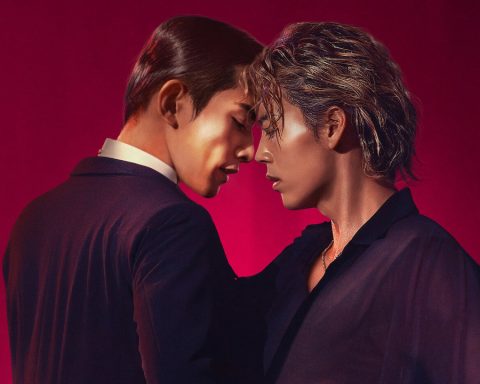
Based on a book (sadly not yet translated into English) by Shuichi Yoshida, Kokuho tells the story of two men who specialise in the role of Onnagata in kabuki theatre. To cut the long history of kabuki short, women were not allowed to perform on stage back in the formative years of the theatre, so men played those roles, and over time it became playing such roles became a specialisation of its own. Once you were an Onnagata, you very rarely (if ever) played male roles again.
One of this story’s two Onnagata is the talented son of a yakuza mobster who watches as his father is killed in front of him. He’s then adopted by a kabuki legend, and starts to train and perform with that legend’s own son (the other protagonist).
What emerges from there is a story of an obsession for the art form that both builds and breaks both men throughout their careers. The natural talent of one causes a meteoric rise and subsequent crash when gossip causes him to fall from grace, while the other is unable to handle the fame of his friend and becomes a recluse for years, only to emerge and find himself suddenly the one in demand. The story then starts to take an even darker series of turns, with layer after layer of tragedy smashing over both men.
Both prove resilient to it, in the sense that giving up the stage was never a question, and indeed, their obsession with their art overrides all other good sense. While it’s never vocalised, at no stage are you in doubt that this is what they live for… or indeed all they live for. They have extracirricular activities in that they indulge in the fame, play with women, end up teaching and pursue other things, but the stage is always there as the lure, and something nether of them could get away from, even if they wanted to.
Neither man is a sympathetic victim of the fates. They are deeply, irredeemably flawed human beings. For example, one outright ignores his child daughter, who would be inconvenient to his career. Right through to the end, there is no easy redemption arc as they push through horrific circumstances to deliver that one perfect, defining performance, or their aim towards a legacy as a Kokuho (Japanese for “Living National Treasure,” and a title of peerless respect to artists and craftsmen in the country). That perfection on stage, something so deserving of total admiration and tuned over decades of work and relentless training, involves some very messy and uncomfortable circumstances off stage, and the film doesn’t shy away from this sharp contrast. These are not heroes. They are just people driven to the mastery of their art.
It’s the kind of story that’s going to strike a chord with anyone who has spent years at the grind for something that can’t be achieved easily. Japan, like the rest of the world, is seeing traditions that you work on improving at over a liftetime be undermined by the immediate nature of fast culture, viral celebrity, and instant generation, consumption, and gratification. Why would you want to spend a decade learning how to deliver the careful tics in the body to properly articulate a kabuki performance when you can do a quick dance on TikTok and earn the same (and likely much more)? Increasingly, we’re being asked “why bother performing at all when you can just prompt an AI to do it.” Kokuho has the answer to that: Because the AI will never be able to capture what it’s like to work on something every day for decades. It might get the basics, but mastery is not something you can quickly type into a chat window.
Kabuki is a form of theatre where the most subtle in its shifts in tone and movement can make all the difference. That’s a skill that can’t be achieved or delivered in an instant. It isn’t meant to be consumed and forgotten. The film never explicitly explores this contrast (not least because the vast bulk of it takes place in the time period following World War 2 to the late 80s), but it does ask us to consider the value of the arts when we as a population are at risk of losing all, and take a moment to consider whether instant gratification is all there is, or whether there is value in mastery.
One of the most memorable scenes in Kokuho comes when the old master injures himself, and demands that one of the two protagonists takes his place. Through an extended sequence, we see the master become furious at the youngster, who is, mechanically, delivering the lyrical lines that he’s meant to say, but it’s not enough. The youngster is simply not convincing enough in his role as a woman, desperately terrified of death, yet resolved to die alongside her lover. The youngster punches himself in the face, then spends a long time searching his feelings. The next thing that comes out of his mouth is the same lines he was just struggling with, delivered in the same way, superficially, but with a different resonance. He’s tapped into the full depth of agony, terror and love, and at that moment we see him grow as an artist.
And that’s just one of the moments that we, the audience, are meant to realise that, yes, there is more to the world than metrics and quick gratification.
Kokuho is beautifully, if subtly, shot. Lee Sang-il makes great use of close cameras to capture movement, but largely allows kabuki to stand for itself. Costuming is impeccable. The quiet soundtrack is melancholic and aching, though frequently just silent. In those long moments of utter noiselessness, I became keenly aware that the entire cinema – and there was not a seat left in the session I went to – was silent. There was not so much as a chip packet rustling. This is a film that demands your attention through its sheer intensity, and despite being three hours long, it doesn’t let go for a second.
Because I’m active on social media, in the two days since I watched Kokuho, I’ve seen dozens – in fact, likely hundreds – of AI-generated “artworks,” TikTok videos, and even a couple of Netflix films and TV shows. All of that, I forgot about a second after it left my feed or screen. The final line of Kokuho – I’m not going to give it away – continues to not just be in my mind, but also resonate with me to my core. Two full days later, Kokuho keeps me in a pensive and reflective state, and ultimately inspired by what it tells us about art. This was Japan’s entry to the Academy Awards this year, and if there is any justice, it will win them all, because it is the perfect agonised cry in response to what modern culture is doing to the arts… and what we as an audience are losing in allowing that to happen.