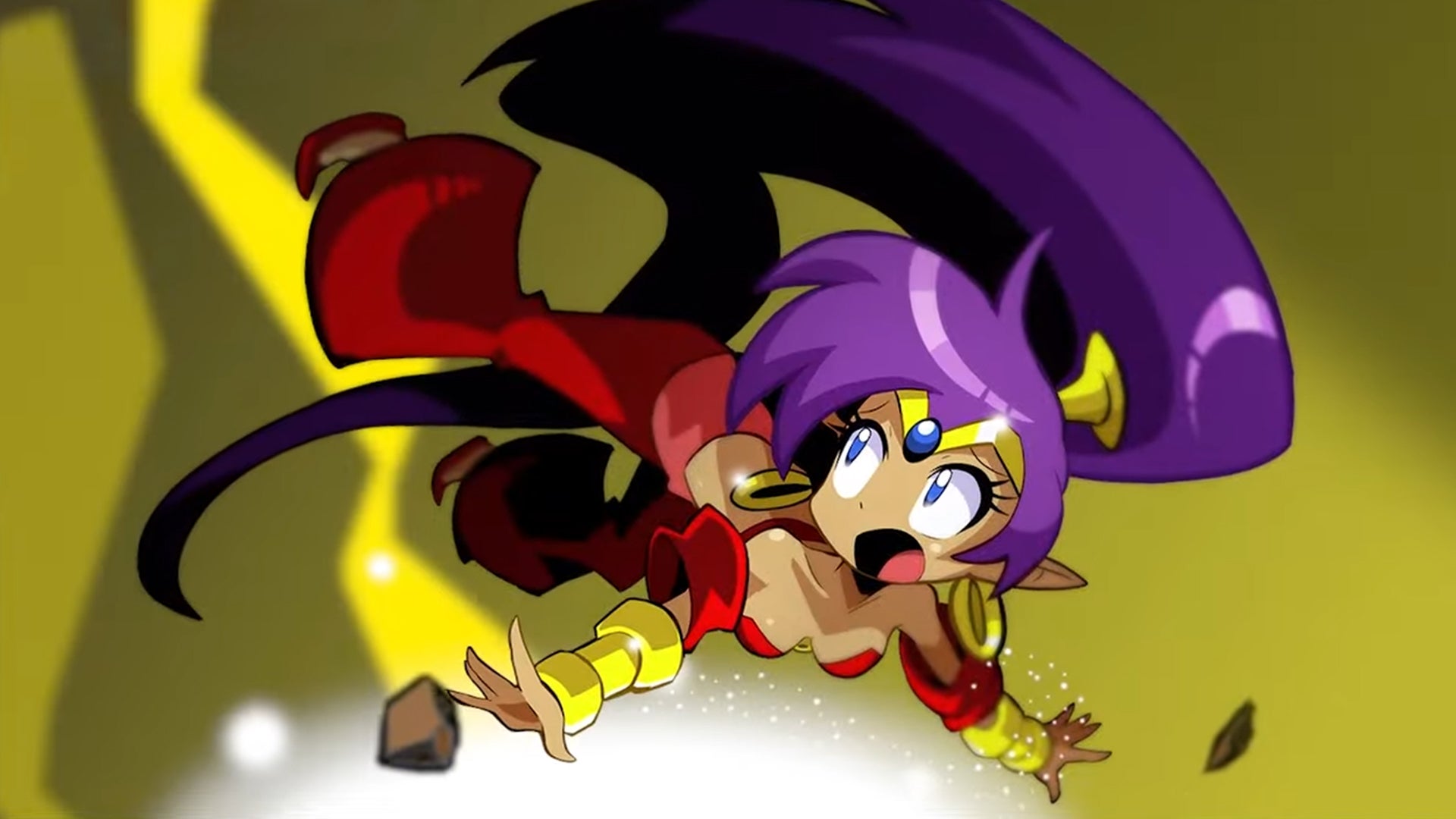


I love it when a lost project is dusted off and finished. It happens, rarely, and often it is attached to a project that was either so far ahead of its time that the money overlooked it, or was a real passion project of some artist who ran out of money or couldn’t get backing. This is the story of Shantae Advance: Risky Revolution, which is something of a vanity project for WayForward, but I’m very glad it exists.
To clarify: Shantae Advance was a GBA title, but it is only being released for the very first time now. For a brief history lesson: The original Shantae was a particularly expensive game to produce for the Game Boy Color, as it used a larger cartridge than most games, so it cost more to manufacture. When it didn’t sell particularly well, Capcom (the publisher) washed its hands of the half-genie and her adventures. WayForward set about on a sequel for the GBA, but spooked by the performance of Shantae, they were unable to find a publisher and eventually had to shelve the project.
Then the DSi came along, and WayForward saw an opportunity with Nintendo’s first digital distribution platform. A Shantae produced for DSiWare (Shantae: Risky’s Revenge) was a much bigger hit and allowed WayForward to start self-publishing. That was then followed up with Pirate’s Curse, Half-Genie Hero and Seven Sirens.

Now, six years after Seven Sirens, we have Risky Revolution, which is an interesting project given that it messes with the canon – WayForward made Risky’s Revenge the canonical sequel, so one imagines that WayForward had to do a bit of finessing to make Risky Revolution work within the overall series.
The narrative itself follows the style and timbre that we’ve become so familiar with for the series. Shantae is a bubbly bundle of energy, there’s plenty of sarcasm and a total lack of reverence in the humour, and of course, plenty of highly cartoonised fan service. Every time I play one of these games, I can’t help but wonder if I could put WayForward in touch with Koei Tecmo to have Shantae guest in Dead or Alive, if another of those would ever happen. Shantae has almost exactly the same sense of humour there. It’s also an excellent fit for the 1001 Arabian Nights theme that goes with genies and harem costumes. We don’t get many games that use this setting at all, and while Shantae isn’t exactly authentic to any of the stores from that collection of novels and associated storytelling traditions, aesthetically, she fits the theme nicely.
As a package, WayForward has poured a lot of love into Risky Revolution. You can choose to play the “Classic Mode” with GBA-era sprites and presentation in place, or there’s the modern mode, which features high-quality HD character portraits and UI (though it maintains the pixelation of the action itself). Even better than that, however, is a competitive multiplayer “bonus” that is a fast and frenetic single-screen platformer where you and the other players try to knock one another into spikes. It’s no Smash Bros, but it’s a whole lot of fun and a near-perfect bonus.
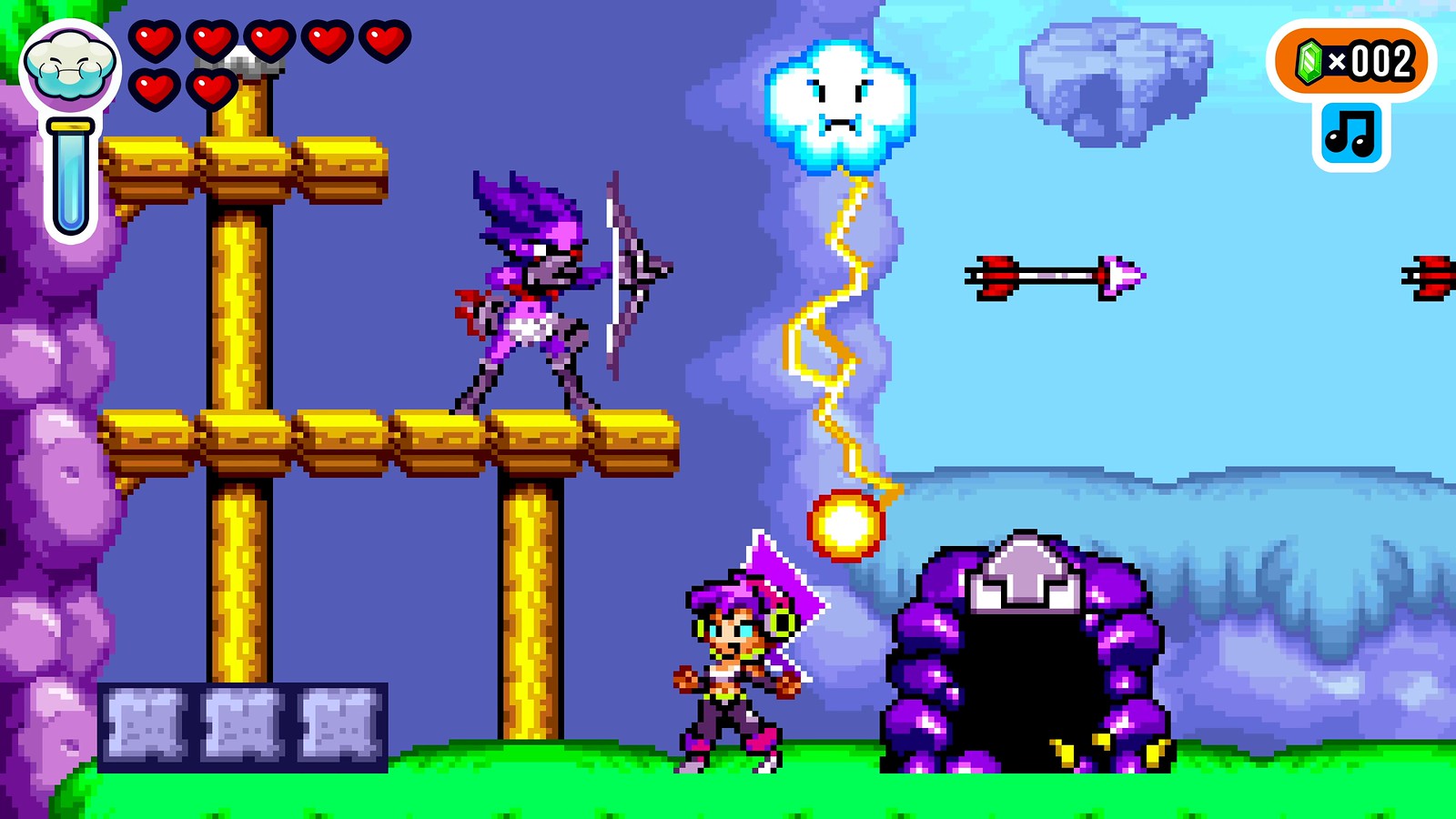
Unfortunately, Risky Revolution does show its age in other ways. The game is relatively small and modest in scope, so while it’s a Metroidvania like most of the rest of the series, players may find it to be a little “limited.” The positive side of that is that Shantae does accumulate abilities at a cracking rate, and there are almost no lull moments throughout the entire experience. It just doesn’t come across as quite as ambitious as it would have been had it found a publisher back in the day.
In fact, it’s so small in scope that it’s a Metroidvania that doesn’t have a map, and it’s still entirely playable. Were a more modern and modern in scope Metroidvania do that, I’d be rioting, but as it is, it is manageable. It’s not that Risky Revolution is “plain” or generic, mind you; level design is good and there’s a fun world-flipping mechanic that helps turn environments into puzzles. It’s just that sometimes you need to remind yourself to go easy on it for being an old Shantae game, rather than a “new” one.
As a big-time Shantae fan, I’ve loved having the opportunity to fill in the gap for the game in the seies that we very nearly didn’t get. It’s more a curiosity than something essential – more recent titles in the series are definitely better, but if this continues to breathe life into the series, then I’m all for it.