

I am a little surprised that there aren’t more “Monster Hunter-like” games out there. Dark Souls spawned an entire genre that just about everyone else seems committed to aping. Meanwhile, Capcom’s uber-challenging monster battler has only really inspired Koei Tecmo, which first produced the two Toukiden games, which were excellent, and now Wild Hearts. I missed the original release of Wild Hearts, but now it’s on Switch and I’m caught up. I really like this game.
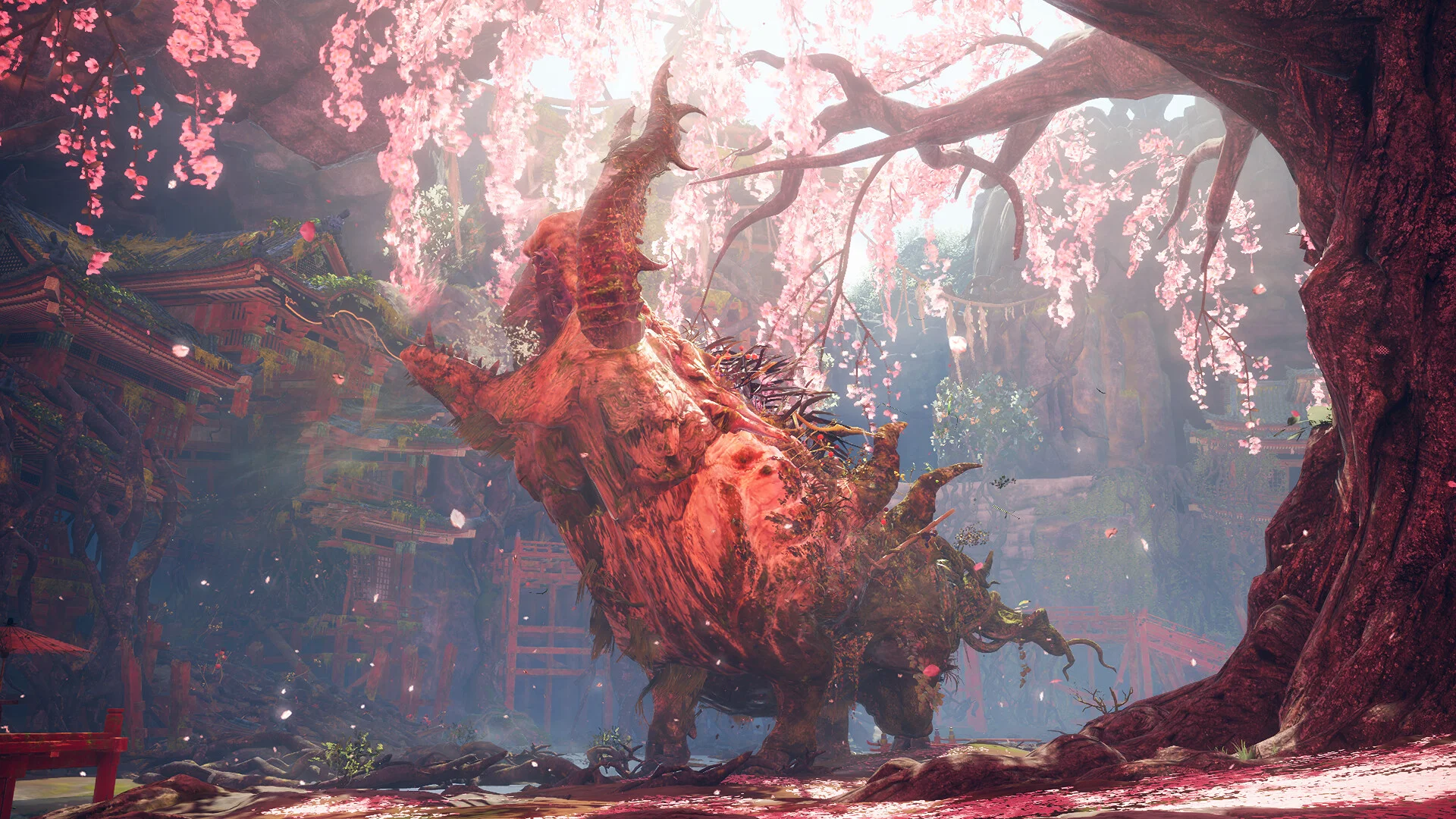
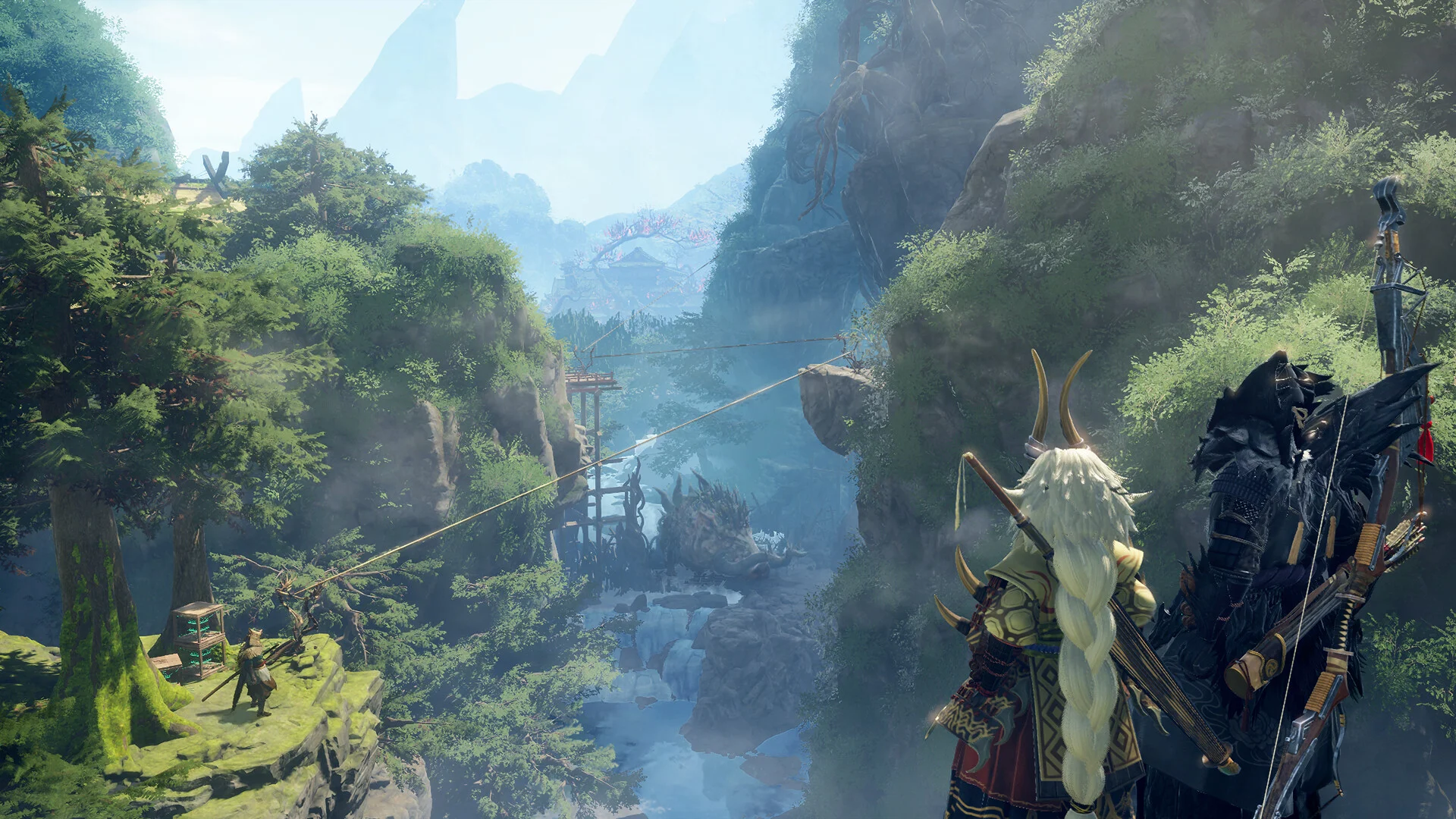
The basic execution of Monster Hunter and Wild Hearts is the same. You’re thrown into a big, beautiful world (and it really is beautiful… I’d be hard pressed to think of a Switch 2 game that is MORE aesthetically pleasing in terms of the art direction than this one right now), and told to wander around finding gigantic monsters to slay. Taking these beasts down is a combination of perseverance and tactics, with battles lasting close to an hour at times. Those same beasts hit incredibly hard, so if you’re not fast with the dodge and clever with the evasions, you’re going to find this as hard as trying to button mash your way through Elden Ring.
Also, just like in Monster Hunter, you have a lot of different weapons to choose between. You’re forced to use a standard sword to defeat the first beast (a very, very big rat), and that did suck because I’m really not great with swords in any of these games. Immediately afterwards, however, the variety of weapons starts to open up. I was able to craft myself a bow and didn’t look back afterwards. Each weapon has a distinct playstyle, and I wouldn’t say that any of them are superior. It just comes down to your individual preferences and skills.

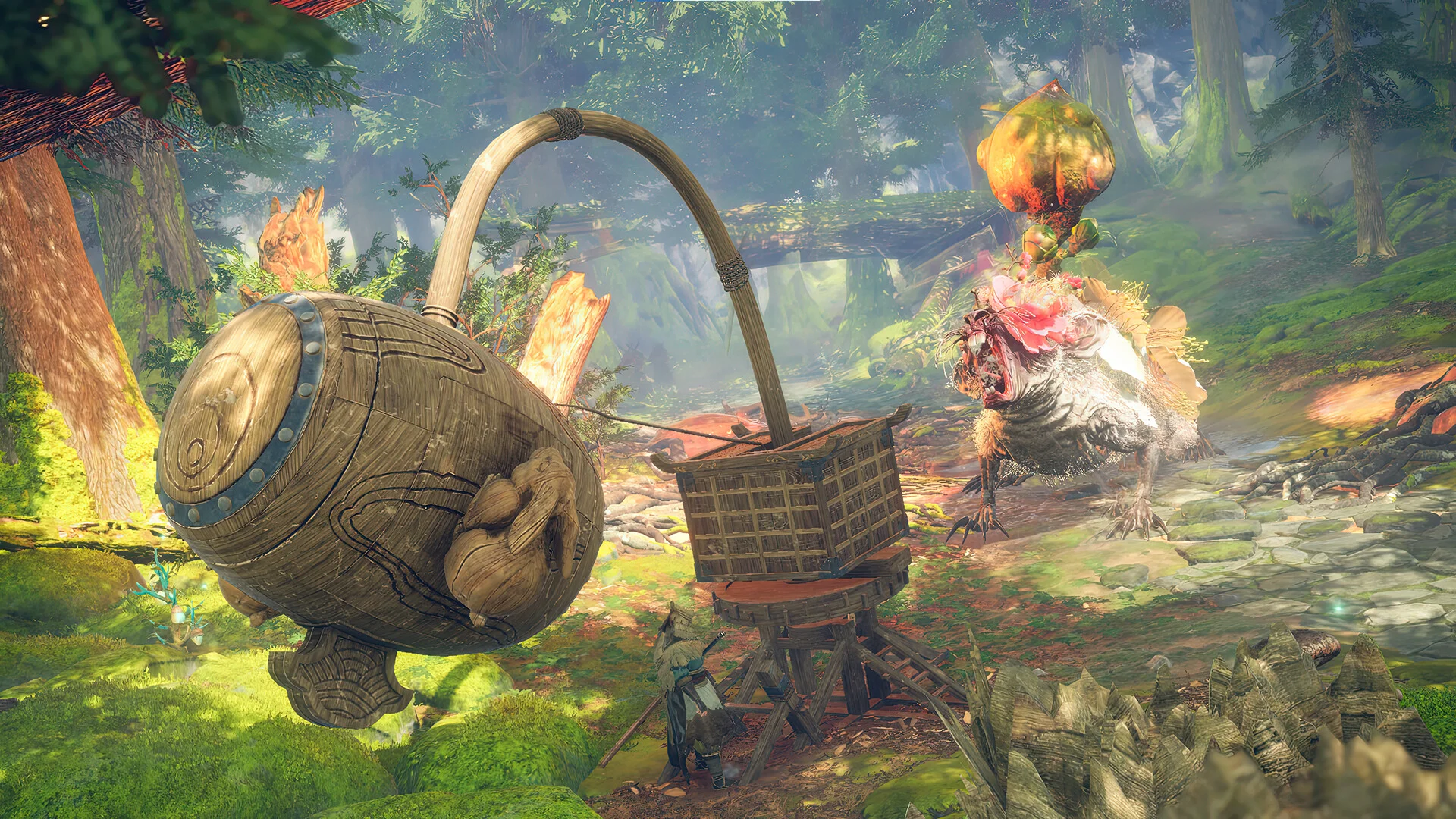
What IS different to Capcom’s own beast killer series is a mechanic called “Karakuri”. This mechanic allows you to rapidly build basic structures in the middle of a battle which can give you a tactical edge. For example: While the first two monsters in Wild Hearts follow the Monster Hunter rulebook to a facidious degree, the third one is a very big, and very angry boar. At points when you battle it, it will start to paw at the ground, representing a charge that it is about to make. You can try and get out of the way, but the beast is huge and surprisingly agile in tracking your movements during this attack. It’s very likely that trying to dodge conventionally is going to get you thrown into the air for some eye-watering levels of damage.
That’s where Karakuri come in. You can use a supply of special magical threads to string together a wall of boxes so that, when bad Mr. Pig does his charge, he crashes into the wall and stuns himself. From there, you get a precious few seconds to whittle down some of his health.
That’s the simplest application of the Karakuri mechanic. Later monsters require you to use a much broader array of mechanical tricks to get an advantage over the monster. This is a really good, clever system overall, which helps to keep each battle distinct in its challenge. It also helps to slow the pace of combat right down. I admit it has been a while since I last played a Monster Hunter, but I have a distinct impression that Wild Hearts S is a fair chunk slower and more methodical. Far from a bad thing, though, I found the pacing in this game to be near perfect for me, where I find Monster Hunter a little fast to keep up with sometimes.
Wild Hearts S does fall into some of the same traps as Monster Hunter. For one thing, you do have to do a lot of grinding and going back to re-fight older monsters time after time when you need resources to upgrade your gear. Given that the monsters can take so long to defeat, it can be quite an exhausting experience when you try and marathon your way through it, and when you take your time with it, it can feel like entire sessions of play go into the most incremental of improvements.
Offsetting that a great deal is multiplayer, and really, much like Monster Hunter itself, Wild Hearts S should be barely considered a single-player game. For the solo adventurer, Koei Tecmo did put a tiny bit more effort in than Capcom, in that there’s a decent enough narrative in this one, but even then you’ll really want to make your way through it with at least one friend… and ideally even the full four. Each new player adds additional tactical opportunities and makes fighting the big monsters an even grander experience. It is, as it was with Monster Hunter, excellent.
When it works. Unfortunately, I’ve had a fair few instances of drop-outs and disconnections. I don’t think it’s my Internet connection, as my co-hunter and I were able to immediately give up on the game and go play Gamecube, Pokemon, Mario Party, Ticket to Ride, Wingspan or whatever else together. I think it’s an issue on the Wild Hearts server side, and just imagine how frustrating it is to get to the final stages of a half-hour-long battle (if not longer), only for the game to drop out on you. It’s one thing to have a short game drop out on you, but to have an entire gaming session go up in smoke is incredibly frustrating.
One other small issue is that with some of the particularly epic battles the Switch 2 does show its limitations, as there is a tiny bit of slowdown. I can’t recall a time when that actually affected me, but given how important timing and precision is to a game like this, I realise I got lucky and some people will have been hit by a freight train attack by a monster that the frame rate drop messed up their rhythm on.
The issues with Wild Hearts S are minor enough that I’ve been more than willing to put up with them to enjoy the greater context. This is an excellent take on the Monster Hunter formula with stunning production values, an excellent and challenging range of monsters to track down, and, ultimately, a satisfying world to inhabit. It’s just incredible to now also have it in a portable format.