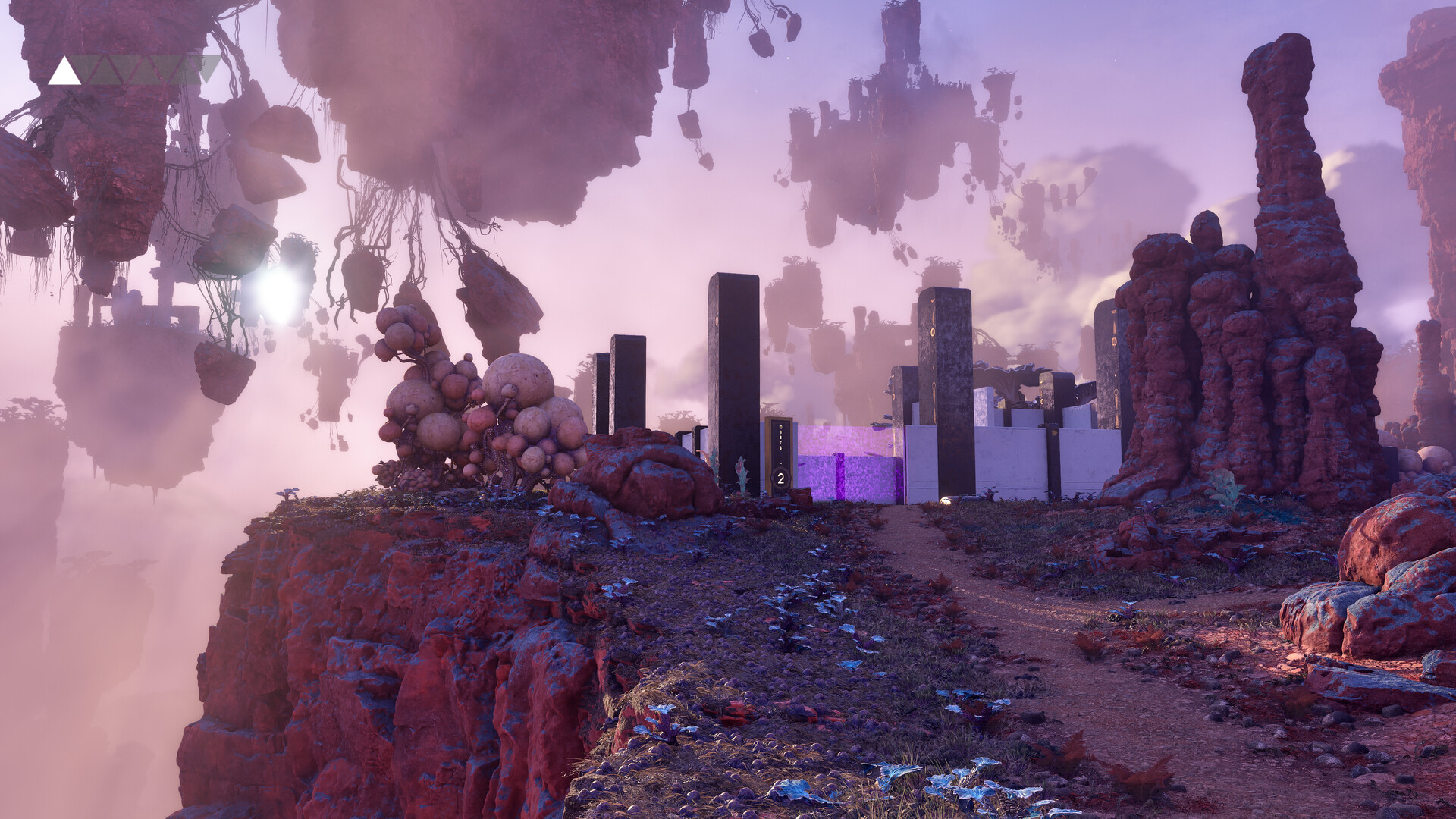


The Talos Principle has always been a series that asks far more of players than simply solving puzzles. Across its first two entries, Croteam’s philosophical sci-fi series has used artificial intelligence, memory, faith, society and consciousness as the framework for something much more human: a meditation on what it means to exist, to choose, to build, and to continue. With The Talos Principle 3, the team is now bringing that long conversation to its conclusion, turning its attention to death, immortality, and what Verena Kyratzes describes as “the last part of the human experience.”
Ahead of the game’s release, we had the opportunity to run a Q & A past Croteam’s Davor Hunski, Jonas Kyratzes and Verena Kyratzes about the challenge of designing new puzzles for a third entry, the trilogy’s evolving philosophical structure, the role of religion and theology in this final chapter, and why the series’ reflections on AI have not been dramatically altered by the rise of large language models.

Is it a challenge to continue to come up with interesting puzzles, now that we’re into the third game in the series?
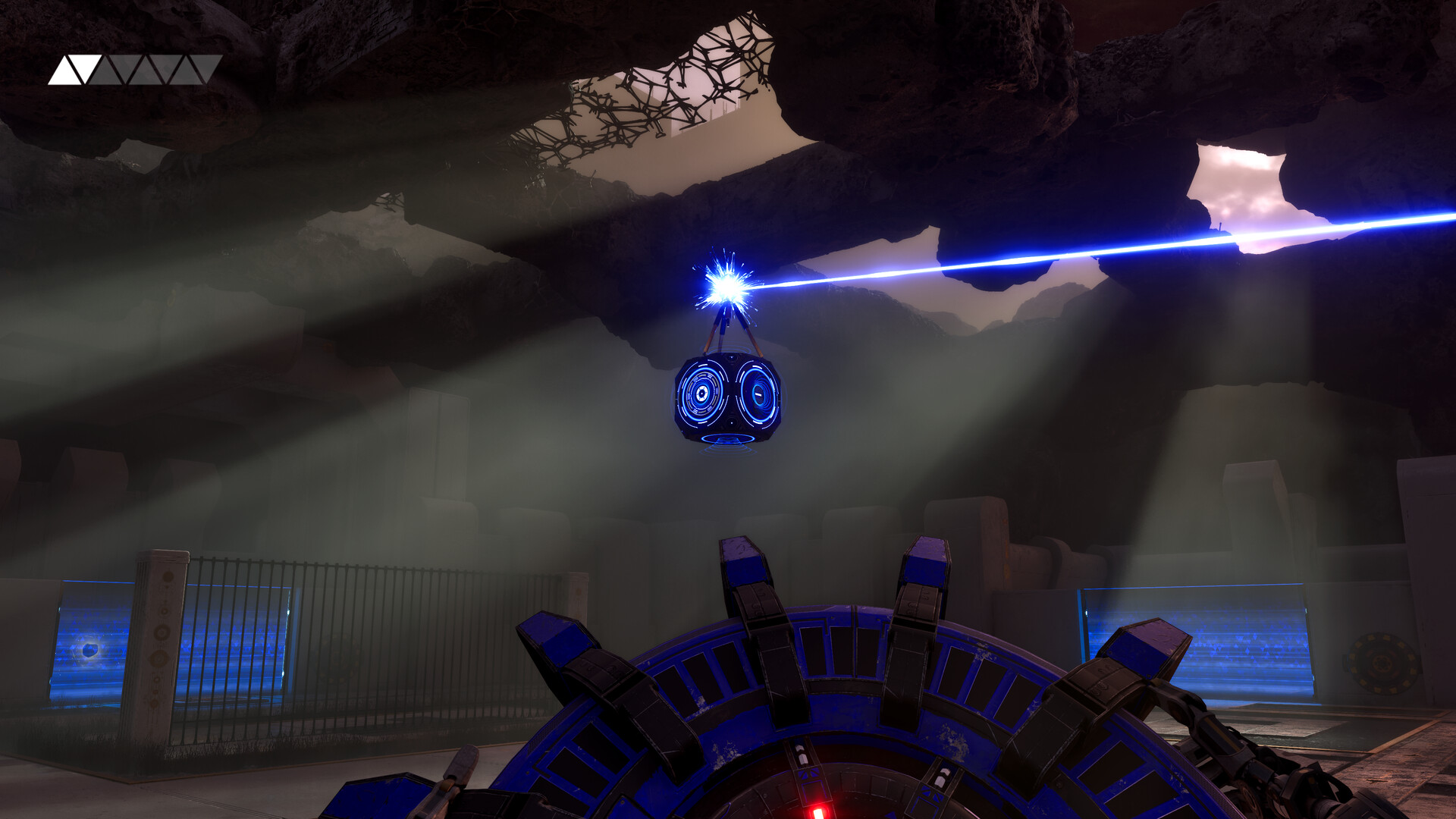
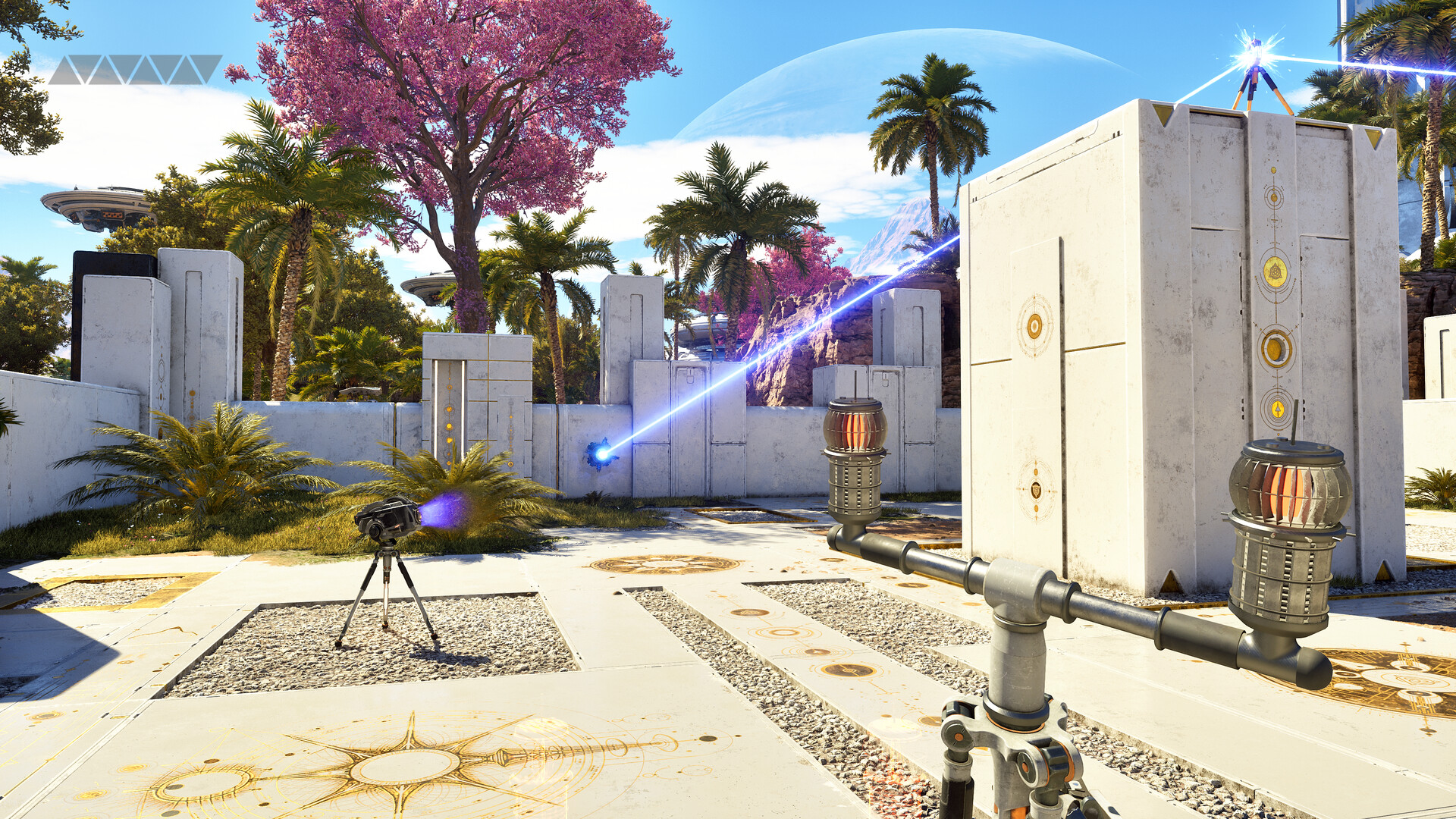
Davor Hunski: We initially expected that creating new core game mechanics and puzzles would be a significant challenge. However, once the design process for these mechanics began, everything became much easier, and new puzzles flowed quickly. We typically develop two to three times more puzzles than necessary, allowing us to select the best ones and organize them to suit the game’s requirements for progression and difficulty. In fact, after playing the puzzles in The Talos Principle 3 myself, I feel that these are probably the best puzzles that we have ever created.
2. The series has always circled questions about consciousness and purpose without resolving them, but now we’re heading to a resolution. How has that shifted your approach to storytelling this time?
Verena Kyratzes: It hasn’t, at least not from a certain point of view. We try to approach each game differently, depending on the demands of the narrative, but always as part of the greater whole. The first game is about the self, so it has a very limited cast of characters, while the second game is about society, so it has many characters. The third game is about life, death, and the Sublime, so it has different narrative demands than the first two. The change doesn’t necessarily spring from our desire to reinvent ourselves, or from this being the third and last part of the series, but from the needs of the story.
Jonas Kyratzes: The way I see it, each of these games contains both a central thesis and a set of tools for thinking about it; and overall the entire trilogy forms a thesis statement about humanity, but one that (being a narrative and not just a work of philosophy) is made up of different parts that connect and echo off each other in a complex way. One of the inspirations for this structure is William Blake’s Songs of Innocence and Experience, in the way the poems echo each other and provide different perspectives on the same ideas. So the entirety of Talos is structurally dialectical, but that doesn’t mean it isn’t built on a set of coherent principles and ideas. It has to be, or it would be dishonest.
3. After nine years between the first two games and now a much faster turnaround, what’s driving the urgency to finish the trilogy now?
Davor Hunski: The timing has always depended on the maturity of the core design concepts on which the game is built. We view the experience as resting on four main pillars: puzzles, narrative, art direction, and musical score. Once we were confident we knew how to proceed on all four fronts, it made sense to start working. It also made production sense with our other projects, which is always important.
Jonas Kyratzes: It’s probably also fair to just say that we were making other games, and games take a long time to make!
4. With AI having moved from a philosophical thought experiment to being something we are now actually grappling with as a society, has the meaning of what you’ve been writing changed underneath you?
Jonas Kyratzes: The primary reason the games have been built on a premise relating to artificial intelligence is so they could discuss materialist themes: not what would happen if a machine became intelligent, but what it means that we are biological machines. As such, LLMs don’t really have much impact on our storytelling. There is currently not much in the way of evidence that LLMs could produce artificial general intelligence, but if that should change, it would just force humanity to confront the same ideas the games explore: what if these lives we have is all there is?
5. Where do you draw the line between honouring the mechanics players love and genuinely surprising them in what is, for many, the most anticipated entry in the series?
Davor Hunski: Our approach to game design is built on creating mechanics that are intuitive and easy to grasp, ideally requiring little to no explanation for the player. Each new element has to integrate seamlessly with existing systems and create meaningful interactions. We often compare this process to introducing a new piece to a chessboard: while its individual movement is simple, when combined with everything else it opens up a huge number of new gameplay scenarios. That’s all that matters: it has to be simple, it has to lead to complexity, and it has to be fun. We don’t worry too much about the rest.
6. The Anomaly is framed as a place where some see heaven and others see hell, so is TP3 engaging more directly with religious and theological ideas than the earlier games did?
Verena Kyratzes: I don’t think I’m spoiling anything when I say that the third game is about the last part of the human experience. In the widest sense, Talos 1 dealt with birth, Talos 2 with life, and now Talos 3 deals with death – and immortality. I think edging closer to actual discussions about the soul, the afterlife, and religion in general is inevitable when faced with this theme. So that’s a yes, I suppose. But the first Talos Principle was literally a retelling of the Garden of Eden creation story, and Talos 2 and Road to Elysium have a central theme of resurrection and salvation… so this is hardly the first time Talos has dipped its toes into religious thought and imagery.
7. Croteam also makes Serious Sam, which is almost the philosophical opposite of Talos, so do those two creative identities ever bleed into each other or are they kept completely separate?
Davor Hunski: While I would say these two titles are completely distinct without any direct overlap, they reflect the dual nature of the Croteam developers and designers. We find equal enjoyment in wild, crazy combat VS aliens and in diving into philosophical debates about existence, art, theology, and the role of technology and science in our future. A normal conversation between Croteamers at lunch usually involves Talos Principle ideas and Serious Sam jokes.
Jonas Kyratzes: I think most people in their daily lives tend to go back and forth between the really profound and the really daft. Life is often both.
8. Fragmented memory returns as a narrative device, so what does it allow you to do dramatically that a player with full recall simply couldn’t give you?
Jonas Kyratzes: Talos 3 is concerned with a life that’s been lived. You don’t play an unborn or newly-born character as in the first two games, but someone who’s already had many experiences, who is looking back to figure out who he was. This is crucial, because the story is about humanity reasserting itself, building a future, and our protagonist has to become more and more human to reflect that progression. At the same time, the game is about uncertainty and struggle, about confronting how confusing our struggle with the big questions can be, and struggling with memory is thematically part of that.
Verena Kyratzes: Maybe it’s worth pointing out that it’s not just the player who has a degree of amnesia. Everyone you meet on the Anomaly will be facing similar issues, struggling with faith and uncertainty. It’s up to you to put the pieces together.
9. The game spans more than a dozen worlds, which is a significant scale increase. How has that adjusted your approach to both narrative and game design?
Davor Hunski: I really believe this game will offer a magical journey. It is a genuine sci-fi spectacle, the kind of project we, as lifelong science fiction enthusiasts, have wanted to work on for decades. We feel really lucky to have had the chance to bring these worlds and characters to life.
Jonas Kyratzes: The game certainly feels enormous, but in some ways it’s actually more intimate than Talos 2. The narrative certainly touches on big ideas, and depicts moments of a vast future history, but it does so through a personal lens. So the ways in which this scope has affected design and narrative are more subtle and complicated than if we’d suddenly turned it into a MMORPG or something.
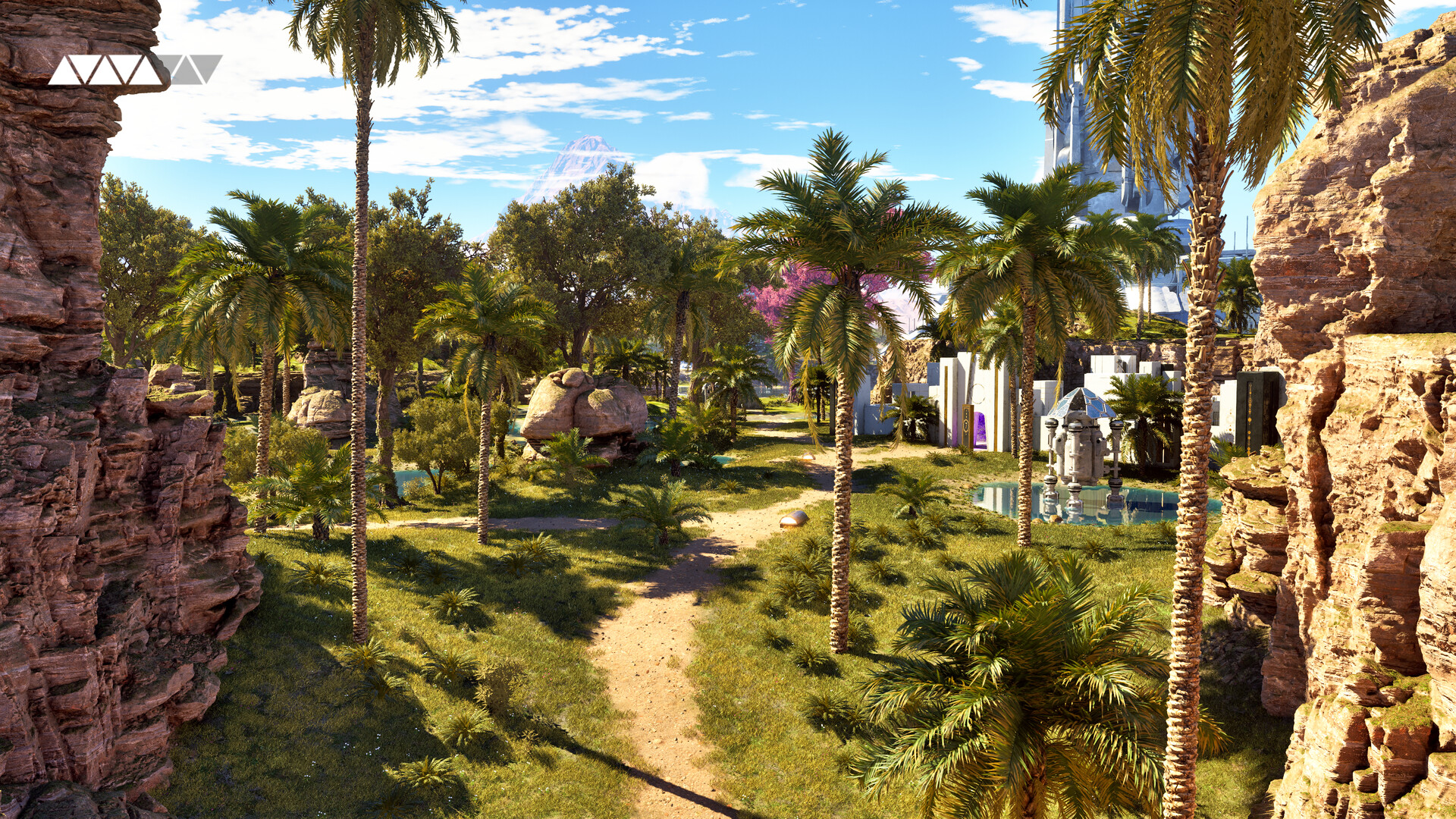
10. A decade after the original, what do you think The Talos Principle has ultimately meant to players, and how has the games industry shifted over the years?
Davor Hunski: It is difficult to articulate our gratitude we feel when we encounter the reviews and messages from our fans. The feeling is beyond words. The feedback we receive daily is very personal and deeply moving, and it hasn’t stopped coming in since the first game was published. Although we obviously poured our hearts and souls into every minute of development, we never imagined this series would resonate so deeply or become so significant to our audience.
Jonas Kyratzes: The business side of games is becoming harder, with a heavily saturated market and ordinary people’s purchasing power slowly collapsing. So we’re very grateful that we’re still here and that people still care about Talos. As to what it’s meant, I think the reason we’ve had this wonderful response that Davor mentioned is that these games are a paean to humanity, a celebration of the fact that being human is a wonderful thing, even when it’s difficult, and it’s important for art to remind us of this fact.