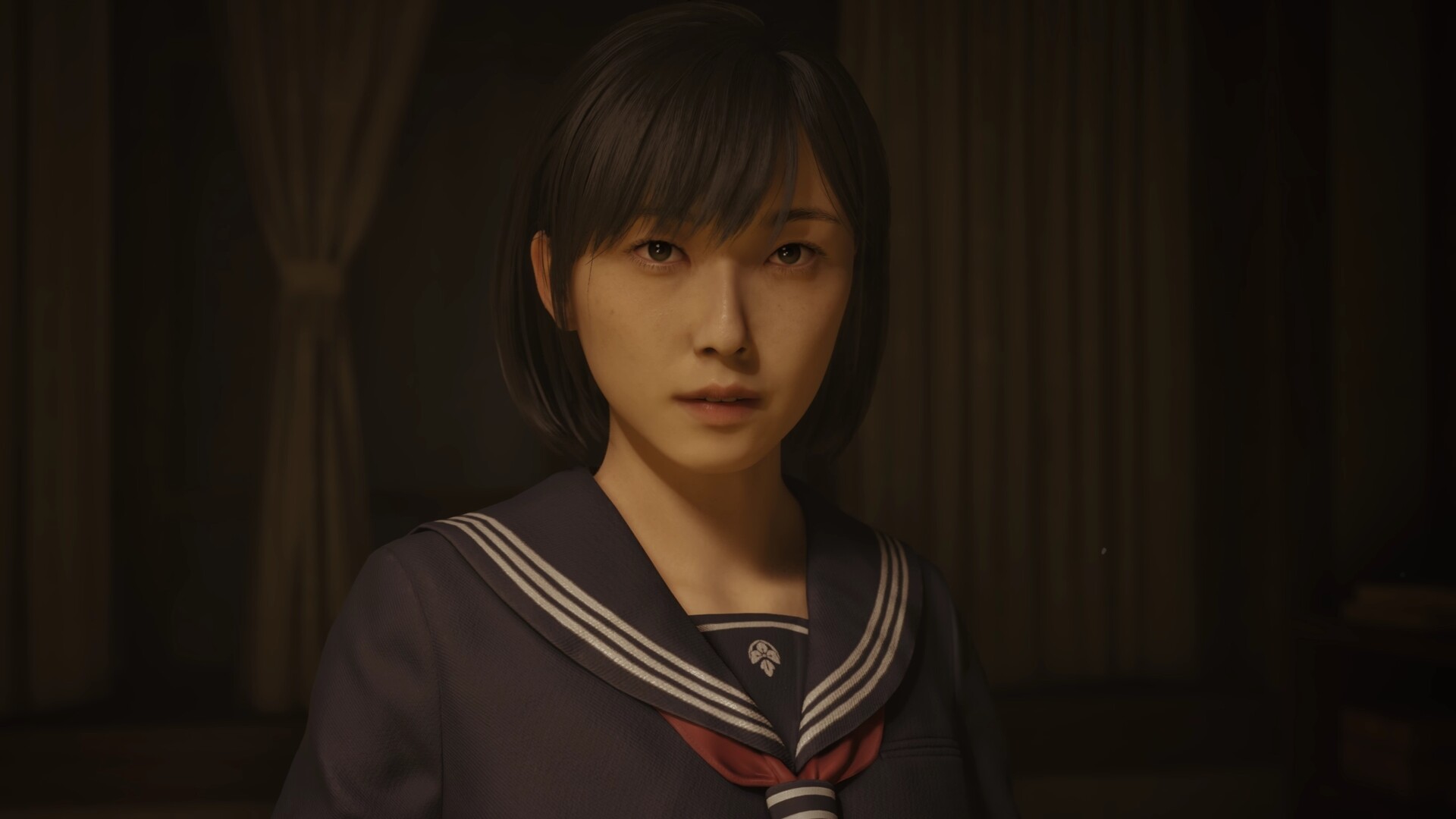


I would argue that Silent Hill f is the finest game in a series that has produced some classics, if not masterpieces. A big part of that comes down to it simply having a setting and protagonist that resonates better with me, of course, and it’s certainly no slight on the quality and depth of Silent Hill 2 in particular, but for a game that I had all-but dismissed as a cheap cash-in on the success of the SH2 remake right up until I actually played it, Silent Hill f has had a really big impact on me.
Silent Hill f tells an intensely feminist story. Written by Ryukishi07 (a doujinshi – self-published – writer very well known in those circles for the exceptional Higurashi and Umineko visual novels), it is also why you’re going to play this game, because everything is built around it. And it is an unnerving, uncomfortable one right from the outset. You play as Hinako, a young schoolgirl in Showa-era Japan. She comes from a truly broken home, with an abusive father, and an enabling mother. She’s also the subject of ridicule and jealousy among her friend group, because she has a close friendship with a boy, and girls just don’t do that.
Over and over again, the game takes a heavy hand in reminding that to girls and women, the oppression by social forces is as heavy, dense, and dangerous as the physical fog and monsters that weigh on Hinako. A society that turns a blind eye to sexual assault (which happens off-screen, but is strongly implied). A society that pushes women into arranged marriages. A society that takes Hinako’s sister and only source of comfort from her. Throughout her nightmarish adventure, utterly horrific, grotesque things happen to Hinako, and it’s always metaphoric for what happens to women. Perhaps the most brilliant piece in it all is the setting, with the Showa era being just long enough ago that we can say that society has moved on, but at the same time just modern enough that we can also see shades of modernity in it too – society has not moved on enough.

I realise that in writing those two paragraphs, there is going to be a group of people who will either be mad at me for writing about the “politics” of a game that is not remotely subtle about actually having a point. Or alternatively, they’ll be mad at the game for having a point. Either way, it’s refreshing that the massively risk-adverse Konami is actually willing to back a game that dares to behave like a proper artwork, and the fact that it’s written in such a beautiful, near literary manner is the icing on the cake. Perhaps more developers should recruit quality visual novel writers for their horror, action, and adventure stories, though of course, there aren’t many of the calibre of Ryukishi07, either.
Even if you put aside the themes of Silent Hill f, it also works, and has some significant impact, as a straightforward entry into the Japanese horror canon. For those who haven’t been exposed to too much of it, Japanese horror tends to be rooted in tragedy. There are still monsters, violence, and the grotesque, but it’s often, if not almost always, put in a context where the audience can also feel deeply sorry for everyone involved. Even the monsters. And that’s why it tends to elicit a strong response from the audience, because it’s tugging on the empathy strings that make it personal in a way that Western horror often forgoes.
Most Japanese horror can be traced back to one particular story and Kabuki play written in 1825: Yotsuya Kaidan. It, like Silent Hill f, is a fundamental tragedy in which a woman is victimised and then returns as a spirit to haunt her tormentors. The story is also a reflection on the severe repression of women and social unrest during the Bunsei era (about a dozen eras before Showa). So, while most Silent Hill games (or, at least, the best of them) are all definably Japanese horror (even when they don’t take place in Japan) for their tragic tone and the way they tend to detail guilt, repression, and other such key themes, Silent Hill f is the most traditionally Japanese horror story for the series yet, and perhaps video games in general. It’s not just the setting (which is a stunning visualisation of small-town Japan for the time), but also its themes and writing style.
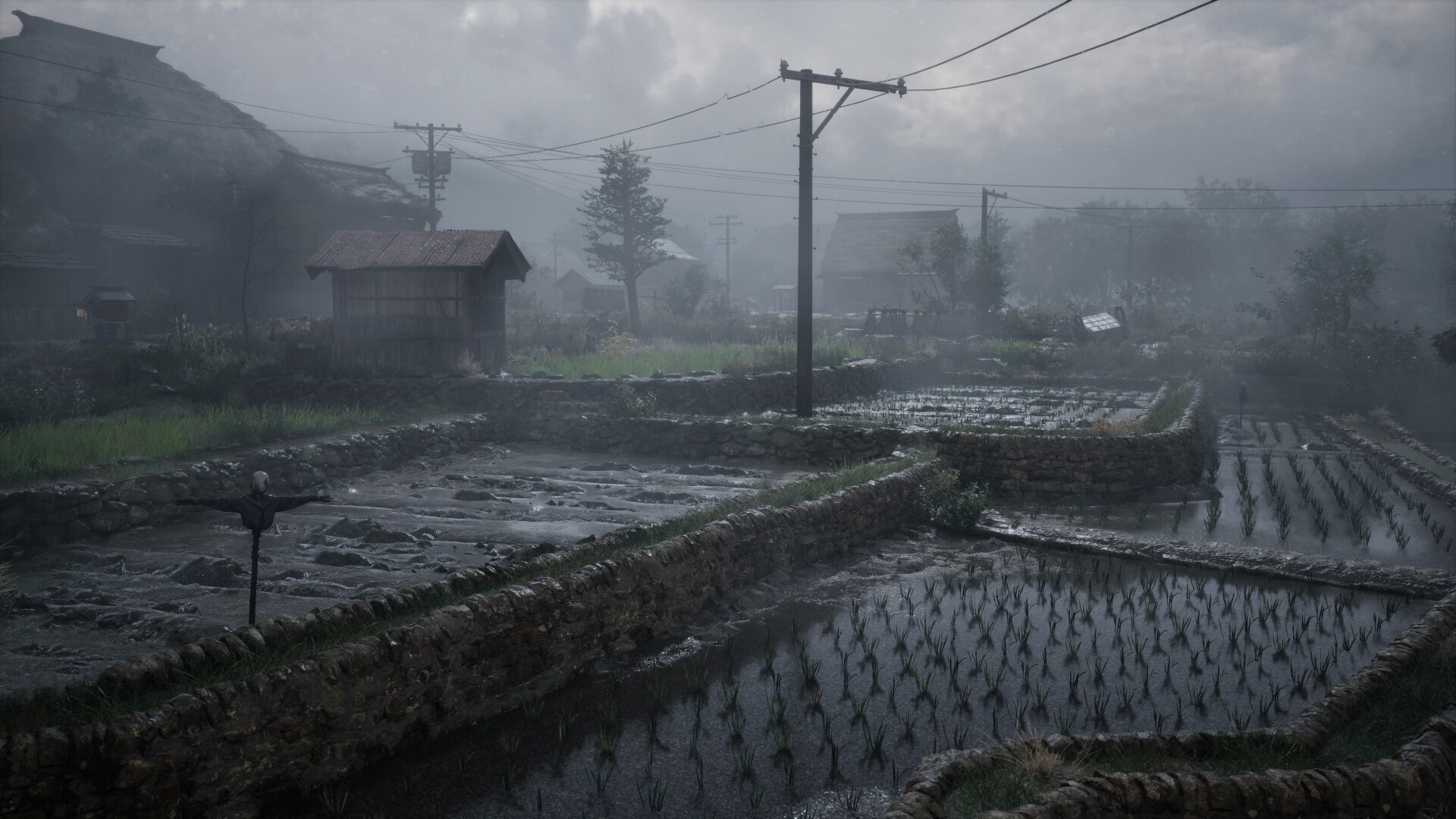
Moving on from the narrative, the gameplay in Silent Hill f is… surprisingly good, for a series that’s never really been that focused on combat in the past. The developers clearly took the opportunity presented to them to use the shift in setting to also take a new look at how combat should work, and ran with it. At first it does almost break immersion, because this combat system allows Hinako to be a mobile and effective fighter, in a way that has shades of the Soulslike combat style, and that is at odds with her being a young and innocent schoolgirl, who has no reason whatsoever to understand how to use weapons and dodge enemy attacks. But then you’ll realise that it works as a metaphor for her taking a baseball bat (or metal pipe) and unleashing the frustration that she feels about her circumstances.
This combat system isn’t as intricate as an actual Souls game, but it is designed well enough that you’re only going to be very rarely frustrated by it. A few times, the camera struggles to give you a proper perspective of the threats around you, but that’s it.
Meanwhile, the game is also filled with puzzles, as is the norm for Silent Hill. By nature, these slow the action right down, and it’s impressive just how unsettling most of them are to ponder through as you try and solve them. I’ve never been a massive fan of the puzzles in horror games, as they’re usually little better than roadblocks that slow me down on the way to the next revelation, but in Silent Hill f, they’re critical to the storytelling experience and I found myself savouring the change in pace.
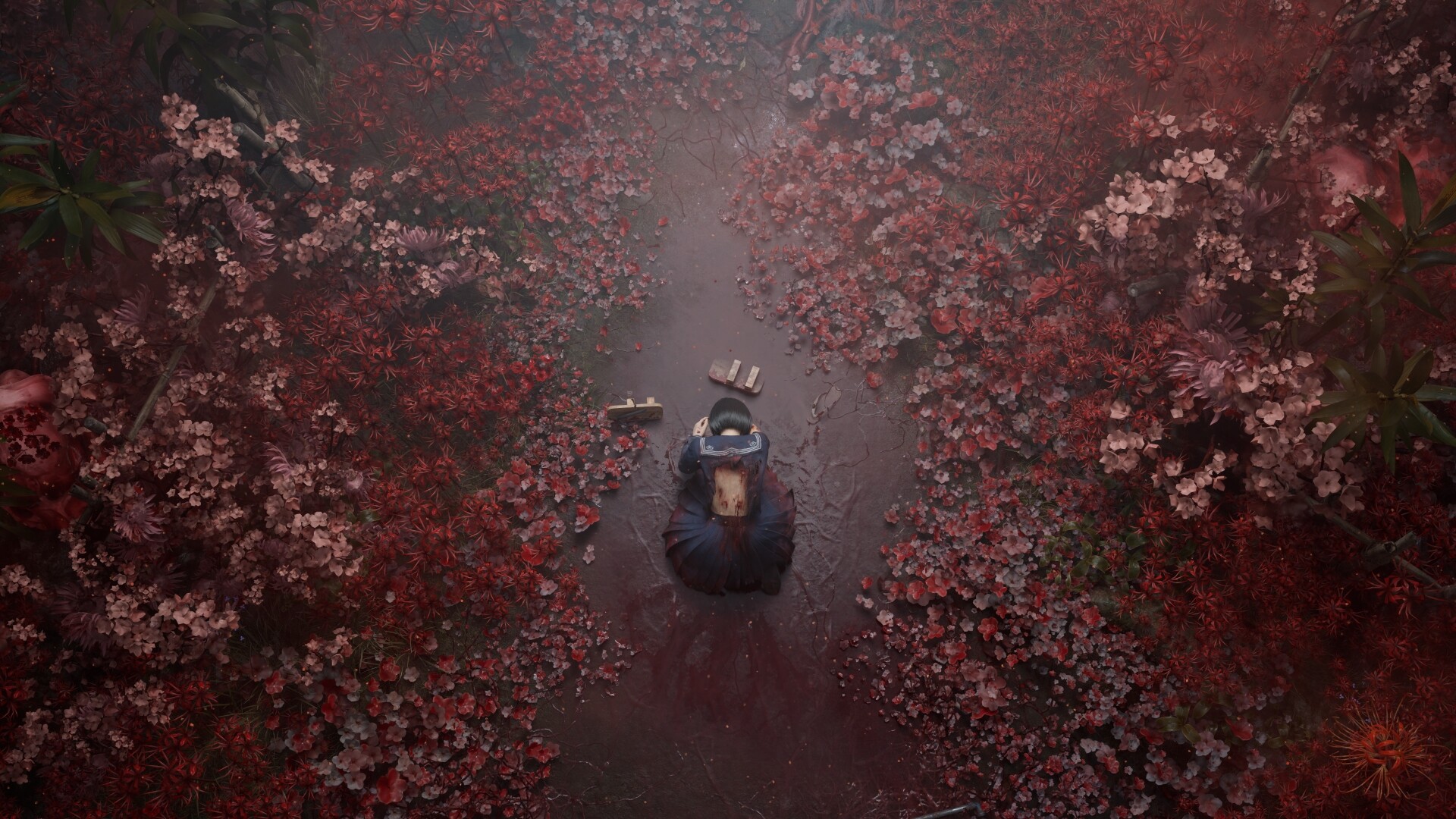
The long and short of it is that Silent Hill f is brilliant. It’s an exceptional story told exceptionally well, with a depth of theme and artistic heritage that makes it worth actual study. That is backed up with an entertaining blend of well-designed combat and intelligent, challenging puzzles. Silent Hill f will – or at least should – make you uncomfortable, and it will haunt your thoughts long after you’ve stopped playing. And that’s the hallmark of a truly special horror game.

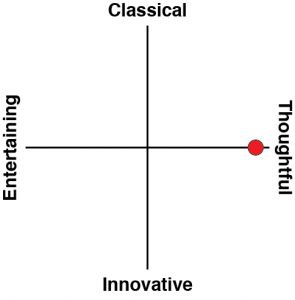





I can’t agree with everything.
Firstly, this game also exemplifies why hiring visual novel writers isn’t always a good idea. The game’s plot is overloaded with themes and doesn’t fit within the game’s length, requiring multiple storylines. This requires playing the game 4-5 times, as alternate endings only unlock after completing the “normal” ending. This is common in visual novels, and this isn’t the first horror game to employ this approach (though the main plot information doesn’t change depending on the route), so it’s perfectly fine… Assuming players are motivated to replay the game, which they might not be.
This brings us to the second point: the combat system. I find the game inconsistent, as I’m encouraged to be aggressive, but Hinako easily takes damage (of which there are several types). The attempt to recreate some of the fundamentals of Soulslike won’t appeal to everyone, and in my personal opinion, I prefer options in horror games that eliminate the need for frequent combat. There are some rooms here that you can’t escape from before escaping the monsters. And I don’t really like the “Hinako is fighting her fears in her head” explanation, because it’s clearly incomplete to explain the illusion of what’s happening… And I personally don’t find that satisfying.
And third, Hinako sometimes directly talks about the symbolism of certain moments (or writes in her diary). Which, to me, is awkward—like in the second part, they don’t explain the meaning of the labyrinth to us… And the assertion that Hinako has clear external circumstances doesn’t quite work, because the alternate endings also show that Hinako isn’t entirely honest with herself or perceives the situation correctly.
I can’t help but point out a number of other interesting points:
1) Despite a more open discussion of “women’s issues,” SHf turned out to be somewhat more moderate than Silent Hill 3. Let me explain: in the third game, we have a tomboy who is being forced by a sinister cult to give birth to God (who is essentially an “unwanted child”), a bunch of monsters are metaphors for sex and birth (I mean, there’s a giant worm shaped like a male reproductive organ), she has an abortion with pills, and ultimately fights God (whom she essentially carried in her womb for a long time). Everything is straightforward, and there are no nuances (even the “dark side,” in the form of Alessa’s Memories, wants to kill the heroine out of fear of God’s birth—she’s so against it). Here, we have a tomboy who resists gender norms and an unwanted marriage. And the game seems to be on her side and warmly supports her. However, even when we get the “conditionally positive ending,” Hinako is still visualized as a teenager. And the girl in the fox mask represents the side of Hinako who wants to be treated like a woman, is considering marriage… and has even begun to fall in love—and without this, Hinako has a harder time growing up. And achieving the Golden Ending requires reconciliation with this side, and the realization that she’s been viewing many things incorrectly—her mother turns out to be the complete opposite of her perception and the true head of the family; her father… is still a bad person, but also appears in a different light. And so on. So yes, the game is more moderate. Perhaps this is because in the third game, all the feminism was subtextual, and here it’s part of the text—either because Japan is much more “holding on to femininity,” or perhaps there’s another reason. Overall, I prefer this approach… But there’s a nuance. The game emphasizes Freedom of Choice, and I don’t mind—but people tend to exaggerate their own free will. Plus… I personally prefer to see character goals, and Hinako ends up saying she’s now free to choose… but she hasn’t chosen anything yet. I’d like her to have a goal… or for the player, after completing the game, to make a specific choice in favor of Marriage, a profession, activism, combining two people, and so on.
2) Paradoxically (or rather, embodying the laws of dialectics), the most “Japaneseized” part also turns out to be the most “pro-Western.” Let me explain: while SH2 is the most popular in Europe and the US, it was a bit confusing in Japan, and the first and third were more popular. The third one features Heather’s fear, but it’s tailored to specific circumstances (very strange and confusing). In the first game, the protagonist is simply searching for his adopted daughter and doesn’t struggle with guilt or social injustice. There’s some psychological depth, but it’s built around Alessa and largely relegated to subtext. The Room isn’t popular, and again, the protagonist isn’t the bearer of a Great Trauma—he simply inhabits the wrong room. These games weren’t united by battles with demons within their own minds—all the monsters were creations of the Order and their God. Ultimately, there were two storylines: the “Great Trauma” storyline and the Order storyline. The former allowed the series to gain a cult following outside of Japan, while within its homeland, many continued to consider it a game about a cult. However, in the end, the First Line supplanted the Second.
And here’s my final complaint: the game is too mechanically different from the other games, and the mythology barely makes any sense (except for the white flowers… but how are Inari and the Elder Tree Deity connected to the God of the Order?). Essentially, we got a game inspired by Silent Hill, but going in a different direction. The direction that Western fans were expecting.
Nevertheless, I feel more positive about it than the remake of the second game, which overdid it in its “modernization” and “reimagining,” ultimately losing its context. Here, we have something unique, albeit not entirely original, yet coherent (even if I’m picky about some things).
These are some good and detailed counter-points that have certainly given me plenty to muse over. Thanks for sharing your thoughts! Glad that you enjoyed the game even through your issues with it. If nothing else, it IS nice to see Konami really investing in Silent Hill again.