


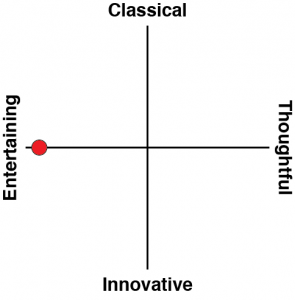
I’ve struggled a great deal with how to approach the review of GTA VI. The game has been in development for more than a decade. The budget for the thing has been estimated at over $1 billion. As far as reviews- as buyer’s guides- go, it’s almost pointless to write about GTA VI. No one needs to be “made aware” of anything in this game. No one is going to be convinced, one way or another, by reviews. I’ve given the game a score because DDNet scores games, and we’re on Metacritic for that reason, so I’m required to. But that score really only reflects the fact that a game that cost a billion dollars to make happens to tick all the boxes that make a “good game.”
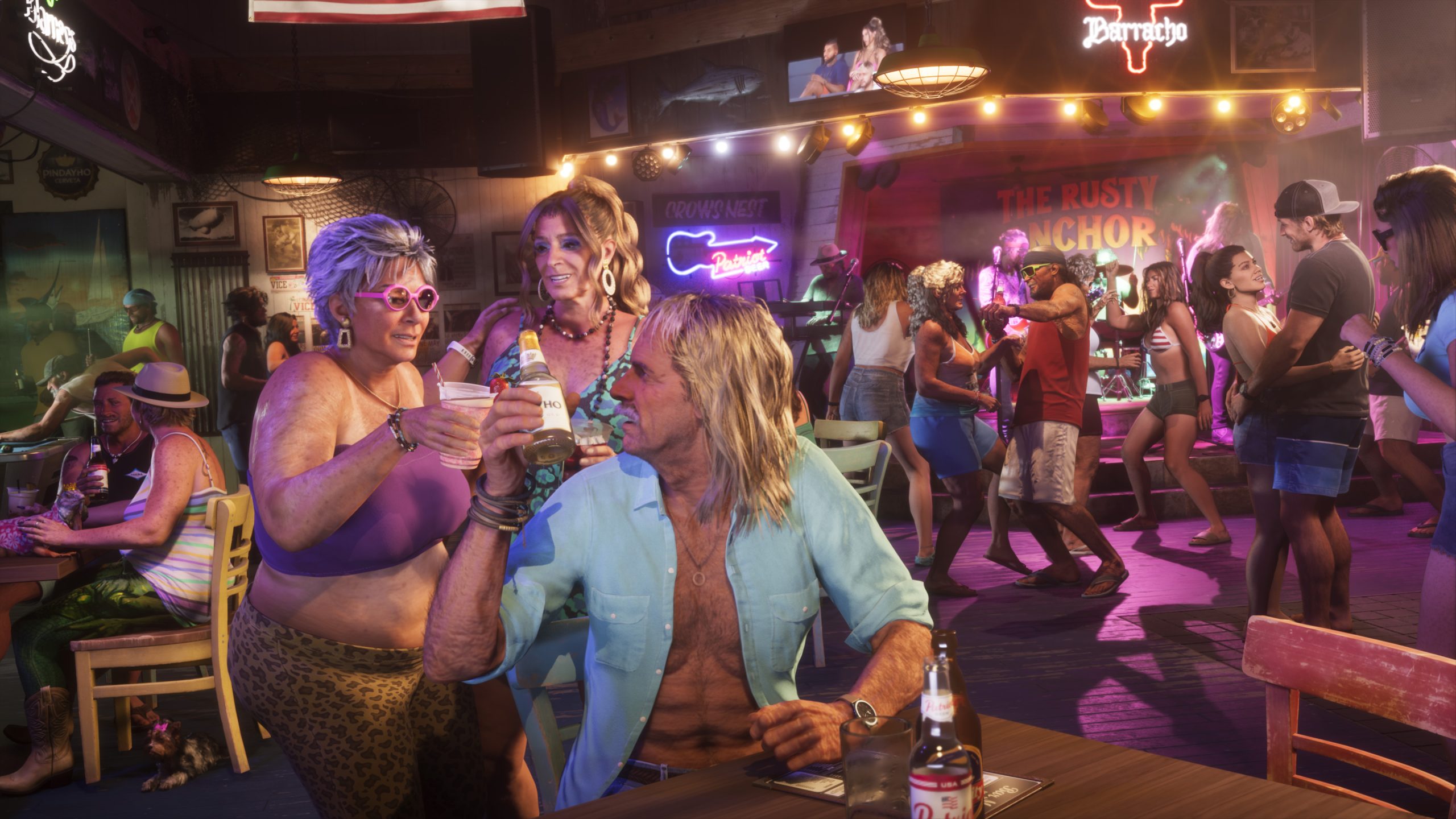
And of course GTA VI is a good game. It feels great to cruise around the horrifically large map, moving from the countryside to the city and back again as you pursue a mammoth range of things to do. I was actually surprised that the number of icons popping up on screen for the first couple of chapters seemed restrained, even limited. You were out in small satellite towns to Vice City and there just wasn’t that much to do other than pursue the main narrative. Of course, then the next chapter shifted the protagonists to base themselves to Vice City itself, and I was drowning in icons then. It’s almost overwhelming just how many mini-games and side stories there are… but there’s always minigolf to chill from the pace when you need it (I love the minigolf in GTA VI).
Of course it’s great to get into gun battles, grab cash, and outrun police and gangsters. Of course it’s fun to scout out particularly valuable rides and end up with a Lamborghini of your very own. In true Rockstar fashion, there are plenty of emergent moments that are just fundamentally cool. For example, early on I got into my first major chase. Naturally, I flicked the in-game radio over to the rock channel, and on came the Sisters of Mercy. Like, outrunning cops to Lucretia, My Reflection is just cool. There’s no other word for it. (And incidentally, the depth and breadth of GTA’s radio network is incredible. My Apple Music playlist grew by a dozen or more tracks thanks to it.)

Another time, during some downtime, I found myself pulling up next to a truck that was being picketed by protestors. Wondering what the fuss was about, I headed over to discover that the truck was transporting a polar bear to some zoo or another, and the protestors wanted to rescue the animal. “Fair enough,” I said to myself, and the truck driver needed only my gun pointed at his face to scurry off. The protestors opened the truck, only for the bear to leap out and maul the lot of them before running off and disappearing.
Now, look, I know that’s a mean-spirited joke at the expense of conservationists (and for the sake of balance it’s worth noting that there’s an entire radio station which is basically an Alex Jones clone, and that is inherently funny because that guy’s a nut). There’s a truck transporting a wild animal to a zoo, a gun-wielding criminal intervening in a protest, and plenty of potential for commentary on all of that. But the punchline is that the conservationists are apparently so carried away by their own idealism that they forget a polar bear is, well, a polar bear. It’s a stupid joke, but I laughed anyway, just as I laughed at the Alex Jones-clone, which was also a stupid, self-evident joke that clearly aimed to go no deeper than “this guy’s a nut and that’s funny”. And I laughed out loud all over again when, many hours of gameplay later, a radio news bulletin gave me an update on the missing polar bear. I then had a run-in with wild animals myself when, stepping in to help a delivery driver whose truck had malfunctioned, I had to drop a package at a rich person’s gated compound. They set their “dogs” on me, which turned out to be tigers. So the game has a joke in there about the libertarian types too (side note: that was an escape that somehow felt more terrifying than the cops).
I could go on like this for hours. Rockstar has used the past decade not just to build a monumentally big world to commit crimes all over, but also one so detailed and responsive to your decisions that, by the 30th or 40th hour, it feels as though the game remembers everything you’ve done, down to the most seemingly inconsequential detail. Rockstar bought that with a billion dollars, and it is a blockbuster achievement in the truest sense of the word. GTA VI would be impossible for a small, mid-tier or even most large studios to hope to achieve.
The score at the bottom represents the fact that, at the end of the day, the money delivered. The words above this sentence are my “review”, as such.
I want to spend the rest of the article looking at GTA VI as a work of art. Because if the impact that GTA V had is anything to go by, this new title has a decade or more ahead of it as a defining influence on the medium. It’ll be the game cited in the mainstream as representing video games. It’ll pick up mountains of awards. It’ll influence developers left, right and centre. Academics will write essays on it.
However, as a likely de facto representative of video games, I have grave issues with GTA VI as a work of art.
I want to talk about satire, and first of all I want to remind everyone that “satire” is not the same thing as “humour”. In fact, satire doesn’t have to be funny at all. GTA is funny; like I said, I laughed outright when the radio gave me updates on the polar bear attack I had inadvertently instigated. The main story, meanwhile, is so laden with hyperbolic nonsense that it’s as laugh-out-loud funny as it is frequently crass. And yes, as that polar bear encounter demonstrates, GTA VI has its moments when a story beat has a target of the humour, making it satire in a fashion. But those moments are almost invariably incidental. They’re little jokes, minor encounters and observations about the absurdities of American life. When it comes to the game’s central themes and the meat of its story, however, I’m not convinced that Rockstar is satirising much at all. And that distinction matters, because a lot of what GTA VI has to say is extremely, irredeemably messed up if you look at it from the perspective that its primary messages are either not satire, or a failed effort at it.
So let’s look at satire. According to basic literary theory, there are three broad traditions that are useful for understanding what I’m getting at here:
- Horatian satire: Easily the most familiar form of satire, and the one most closely linked to outright humour. Horatian satire uses humour to ridicule a person, institution, behaviour or other target, often with the suggestion that the subject might be capable of improvement. Everything from Jane Austen’s Pride and Prejudice to Zoolander and on to The Office can be understood through a Horatian lens.
- Juvenalian satire: This one’s a bit darker. Okay, a lot darker. Juvenalian satire is the kind of social commentary that’s the equivalent of a biting laugh; the author is angry or frustrated about something and decides that the best way to deal with it is to tear it a new one. 1984 is a classic example. So are Starship Troopers, RoboCop and Showgirls (Verhoeven is a master of this stuff). Or Fight Club. Or American Psycho. Or The Boys. In fact, name just about any satirical work that blows up on social media every so often because someone argues that it’s sincere and aspirational rather than dystopian. It’s probably got a strong Juvenalian streak.
- Menippean satire: This one’s a little more complicated. Rather than simply attacking a person, institution or behaviour, Menippean satire is interested in pulling apart entire ways of thinking. It takes philosophical assumptions, political ideologies and the things people believe to be self-evident truths, and puts them through the intellectual equivalent of a blender, often using absurdity, fantasy and wildly exaggerated scenarios in the process. Monty Python’s The Meaning of Life is a useful example. So is Barbie. Or South Park. Or Jojo Rabbit, which takes the ideological absurdities of fascism and expresses them through a child’s imaginary friendship with Hitler. It’s a broad field, and not everything that satirises an ideology automatically qualifies as Menippean satire.
There’s one other work I’d like to bring into this discussion: Vladimir Nabokov’s Lolita. I find that Lolita is an enormously useful point of comparison to GTA because they share some central themes. And I’ll get further into that in a second.
The traditions of satire can, of course, cross over, and I’m not being prescriptive. Starship Troopers is Juvenalian, but it’s also targeting a big theme (militarism), so it has a Menippean edge. Jojo Rabbit has plenty of Horatian fun to go with its more substantial ideological point-making, and you could argue that as much as The Office makes fun of business culture and Michael Scott as an individual (both Menippean and Horatian satire), it’s also taking a big ol’ Juvenalian clowning swing at the misery of corporate life.
The point isn’t to put every text into the correct box. It’s to understand the different ways satire can work and the kinds of arguments artists can make with it. Or to put it simply: there are plenty of different types of satire, but they share one thing in common. They are techniques of criticism. A satire, regardless of its target and whether it uses humour or savagery, invites us to question something about its subject.
I would argue that instead of doing that with its primary narrative arc and key themes, GTA VI instead ultimately reinforces the values at the heart of its own story. Yes, its writers and directors recognise how absurd its subject can be, and the game can be very funny in its observations. But when it comes to the ambitions that drive the central narrative, I struggle to find a meaningful critique. It performs the gestures of satire without following through on what those gestures might imply.
This is the contrast between GTA VI and Nabokov’s Lolita — see, told you I mentioned it for a reason. Both the game and the book have Americana as the central theme that the protagonists relate to. Nabokov’s depiction of Americana is not, in fact, entirely dissimilar to that of GTA VI. There’s the same overbearing sense of consumerism (“[Lolita] is … the ideal consumer, the subject and object of every foul poster”), and an interest in the way American individualism can become an excuse for some pretty horrific things. In Lolita, it’s a man abusing a young girl while manipulating the society around him to let it happen. In GTA VI, it’s the joyful ability to trash an ankle bracelet and blast up an entire hospital, evade multiple squads of police and then, one cutscene later, be resting up with the expectation of privacy in a hotel room before you set out to do more crimes to further your own interests over the health of the community around you…
Actually, come to think of it, Humbert Humbert found himself hotel-hopping for the sake of “privacy”, too. This comparison runs deep. Except that Nabokov gives us the tools to see through Humbert’s self-serving account. For all Humbert’s attempts to romanticise himself, his own narration reveals that Dolores cries herself to sleep and comes to despise him. The gap between the story he wants us to believe and the reality he inadvertently exposes is essential to the novel’s criticism, and it’s how Nabokov observes and deconstructs Amerciana. How he so effectively satirises it. GTA VI, by contrast, presents its protagonists, Lucia and Jason, and the criminal networks they work with, as participants in a grand manifestation and celebration of the pursuit of the American Dream. The narrative rarely encourages us to question their interpretation of their own lives. They’re written with an extraordinary sincerity, and the world around them largely validates it.
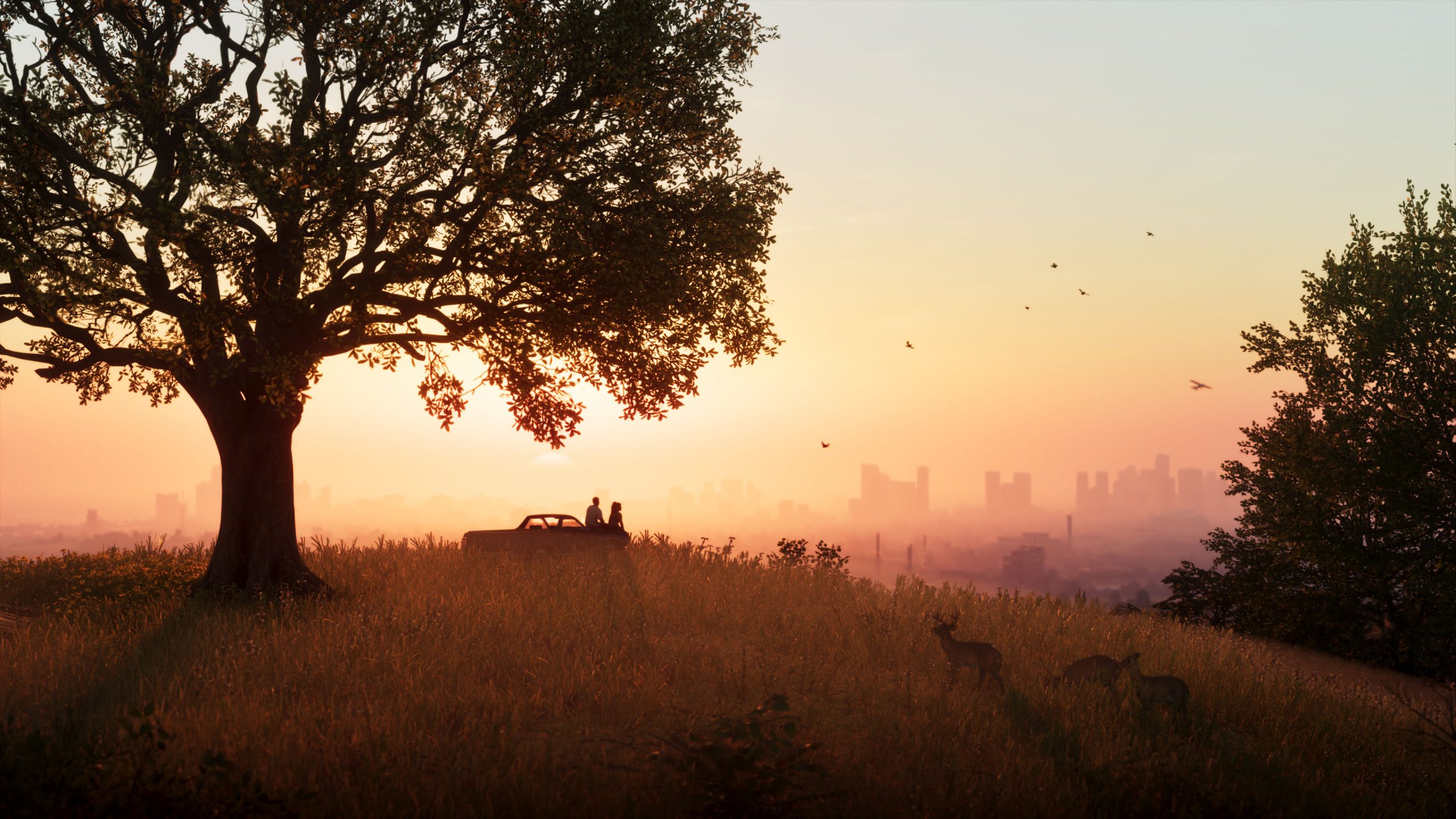
I have to be careful not to be too specific because of spoilers, and Rockstar’s embargo conditions prohibit critics from talking about vast swaths of the narrative. In fact, I need to make an apology here, but I had written out a near-perfect example to point to everything I have been talking about, only to find that it’s one of the “no go” plot beats. So what I can say is that there’s a plot arc tied closely to some essentially unique genres of music that are pure Americana, and the game depicts and lauds this music genre and the culture around it without any of the areas with which this genre can be critiqued: the objectification in the lyrics, the music industry’s exploitation of its artists, the consumerism and decadence of both the pursuit and deployment of wealth, and the celebration of individualism that comes with all of this. I’m really sorry I can’t be more specific about this. Perhaps once the game’s been out long enough I’ll return to the themes to give them a proper drilling.
That aside, the point here is that yes, the story arc is frequently very funny, but again, there can be humour in observation, and a funny scene or plotline isn’t necessarily satire just because it’s funny. The big moments are played for a combination of cool aesthetics and laughs, and then the game cuts to the next morning. Lucia and Jason get in the car and continue on their merry way, having taken another step up the rungs of the American Dream. The plot arc is delivered with uncritical approval, and, yes, there are laughs in how it is a hyperbolically exaggerated take on this subset of culture. But there was never an invitation to question the values that made this a success story in the first place.
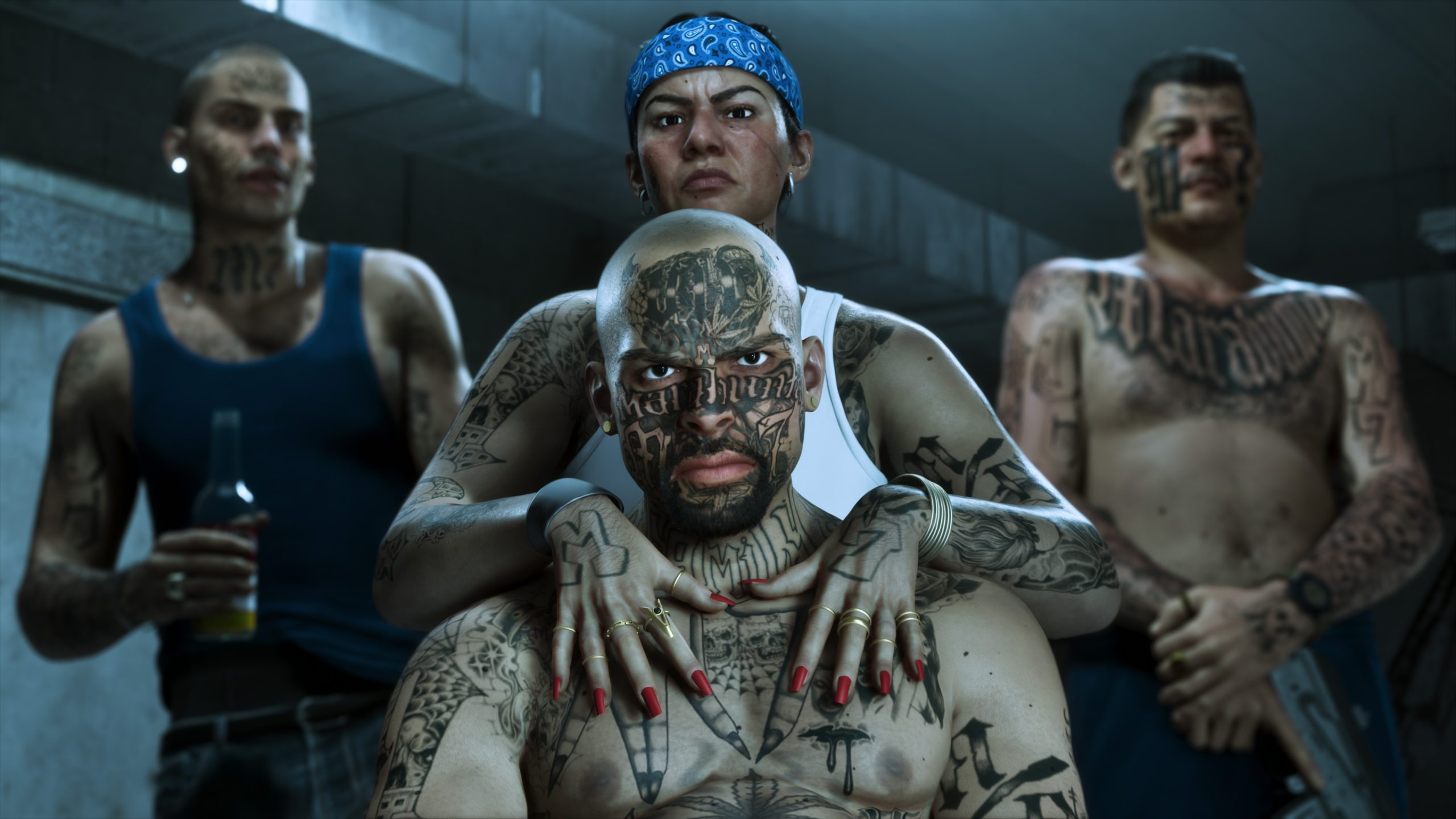
Time and time again, GTA VI demonstrates that it is heavily invested in the idea that a criminal life is a way to live free and die hard, on your own terms, having manifested your own destiny. And that, as deadly as this lifestyle is, it’s also liberating, even enjoyable, and good we’re meant to like and even think of the people that do it as heroic. Jason and Lucia are heroic protagonists. When there is a comeuppance to those around them, it’s too easy to shrug your shoulders and think, “Well, they had a great knock getting there, and hey, Jason and Lucia are still getting theirs anyway, and ultimately, their interests are the ones that matter to us.” Ultimately, I can’t think of a moment where the game is critical of any of Jason and Lucia’s actions and this, more than anything else, is what damns GTA VI as a work of satire. It never points an effort at satire at them, and therefore everything they represent also goes uncriticised.
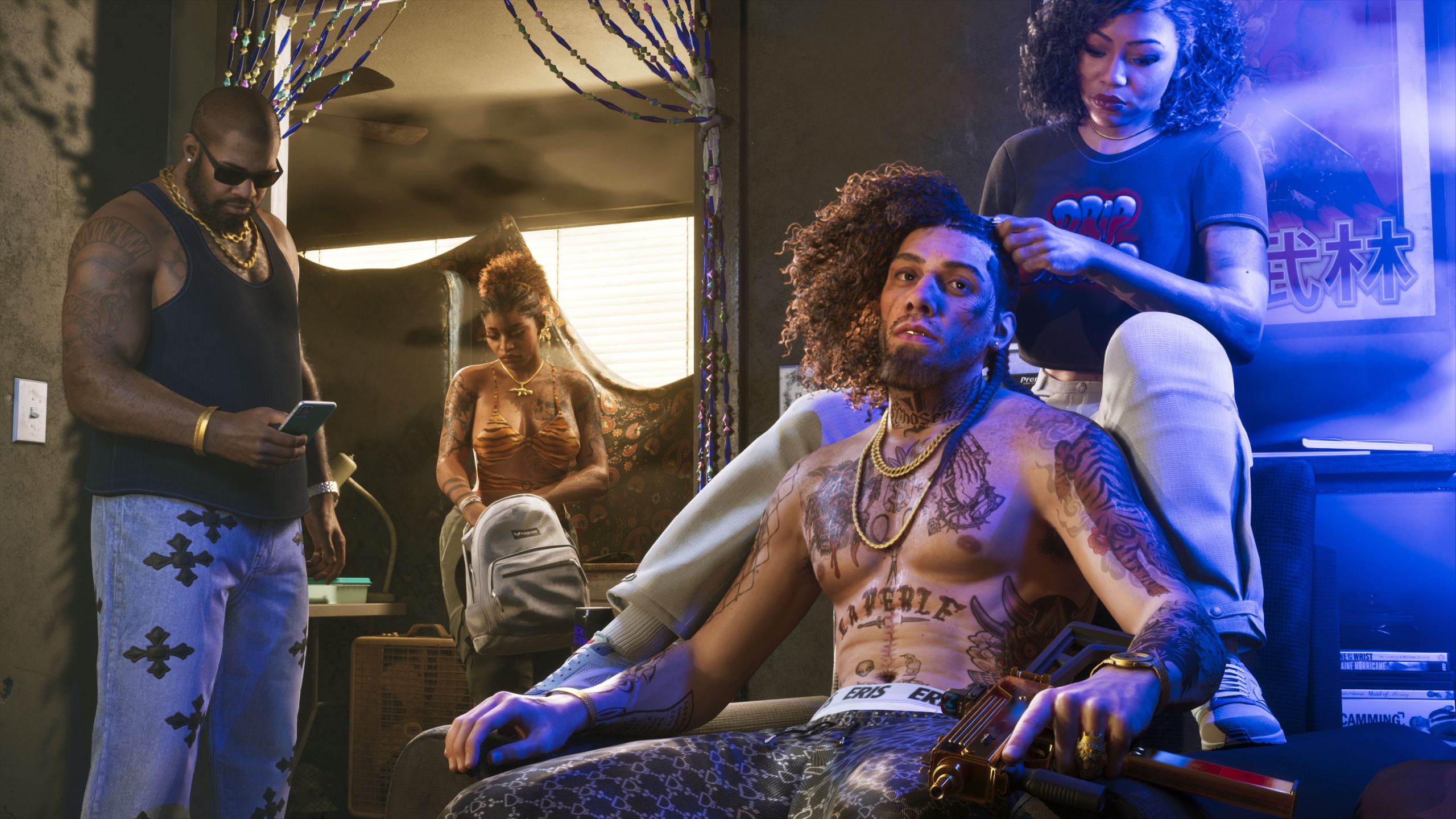
Now, there’s an obvious counterargument to all of this. A work can make us enjoy morally compromised people without endorsing them. Goodfellas and The Wolf of Wall Street, for example, make excess and criminality look exhilarating, and part of the point is that we’re seduced by what we should be questioning. It’s entirely possible to implicate an audience in a fantasy as a way of criticising that fantasy. I don’t expect GTA VI to make crime miserable or its protagonists unlikeable just to prove that it has something to say.
But, to repeat myself using different words, if that’s the argument in GTA VI’s defence, then I think it needs to answer a question: where does the game turn that seduction back on us? Where does it expose a meaningful gap between what Jason and Lucia want, what they believe about themselves and what their actions actually mean? Again and again, I found the game rewarding the fantasy rather than critiquing it. Even its most outrageous excesses are usually something to laugh about on the way to the next success.
I actually think a big part of what allows GTA VI to get away with this is how likeable its protagonists are meant to be. Sentimentally so in places. While we’re told that Jason and Lucia’s relationship was tough at first, by the time the opening cutscenes are done and you’re in control of the characters, they’re in a rock-solid partnership, if not a relationship. It’s a story of the two of them in pursuit of happiness, and them being defiant against the world. Who cares who they need to tread on to get there? There is a positive side to this. In a game that surely ran the risk of becoming the biggest manosphere bible in the history of video games, the developers actually pulled off a mixed-race relationship in which both characters are mutually respectful and contribute equally to their shared goals. The central relationship between the two is, dare I say, both wholesome and aspirational. And in a good way. Sadly we live in a world where even mixed race relationships are again the target of all kinds of bigotry, so we need that validation.

But that only further defines the story as incredibly sincere. I don’t believe there was ever an attempt to satirise Jason and Lucia’s relationship. That in itself is probably for the best, but what matters is the flow-on effect of that sincerity on the game’s broader claims to satire. Rockstar doesn’t just ask us to like these two as a couple. The narrative asks us to believe in their ambitions, too. Their criminality becomes a means to happiness, their pursuit of wealth becomes a pursuit of freedom, and their willingness to do whatever it takes becomes an admirable expression of self-determination. In other words, the game makes their pursuit of the American Dream genuinely aspirational.
And that’s the contradiction at the heart of GTA VI. It can give the impression that it’s mocking the absurdities of consumerism, capitalism and American culture all it likes, but when the underlying values of those things are precisely what the narrative celebrates, what’s really being criticised? The game ridicules the excesses of the American Dream while earnestly asking us to root for two people who want nothing more than to achieve it. It has fun with American culture, absolutely. It makes some wonderfully funny observations about it. But laughing at something isn’t necessarily the same as satirising it, and beneath all the jokes, GTA VI seems to believe in the very fantasy it claims to be tearing apart.
I realise I’ve written at length about satire and GTA VI, and some of what I’ve written is cyclical, but the series has long had its claims to artistic seriousness defended on the grounds that it is satirical. While I totally acknowledge that people can (and do) make that argument, I’m not convinced by it here. To return to what I wrote about the game itself at the start, none of this means GTA VI isn’t entertaining or worth playing. Clearly it is. I’m just not convinced that in redefining what a blockbuster looks like means that it’s an extraordinary work of art.

Then again, part of the social and cultural value of a work of art lies in the discussions it generates. I’ve spent much of this nearly 3,000-word essay discussing the artistic merits of GTA VI, the billion-dollar game that is also almost certainly going to be the most discussed game of the year. So perhaps it is good art too, after all.

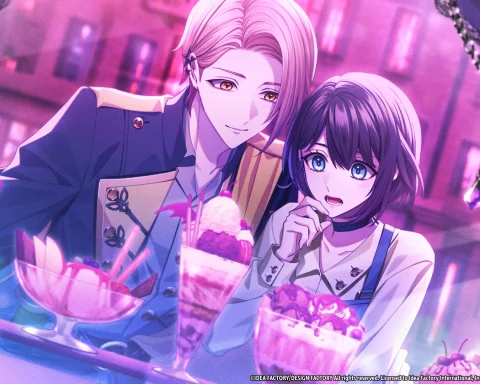




Giving GTA VI the same score as Pragmata and 9 R.I.P. Sequel is a stretch
You’re right. I totally should have recognised that I was giving GTA the same score as games I loved and adjusted its score lower. Thanks for the input, guy who clearly didn’t read the review.