

In recent years Tove Jannson’s Moomin characters — her motley crew of Finnish trolls, small children and assorted Grokes, Hattifatteners, Hemulens and, of course, Thingumy & Bob have been transformed into some solid games that remained faithful to the gentle nature of the source material. Games like Snufkin: Melody of Moominvalley and Moomintroll: Winter’s Warmth have done fine work expanding on Jansson’s books and comic strips and provided plenty of gaming fun along the way, even if they weren’t always 100% in line with the original works.

Moomin: Midsummer Madness is considerably more faithful to the original books while being even simpler and gentler.
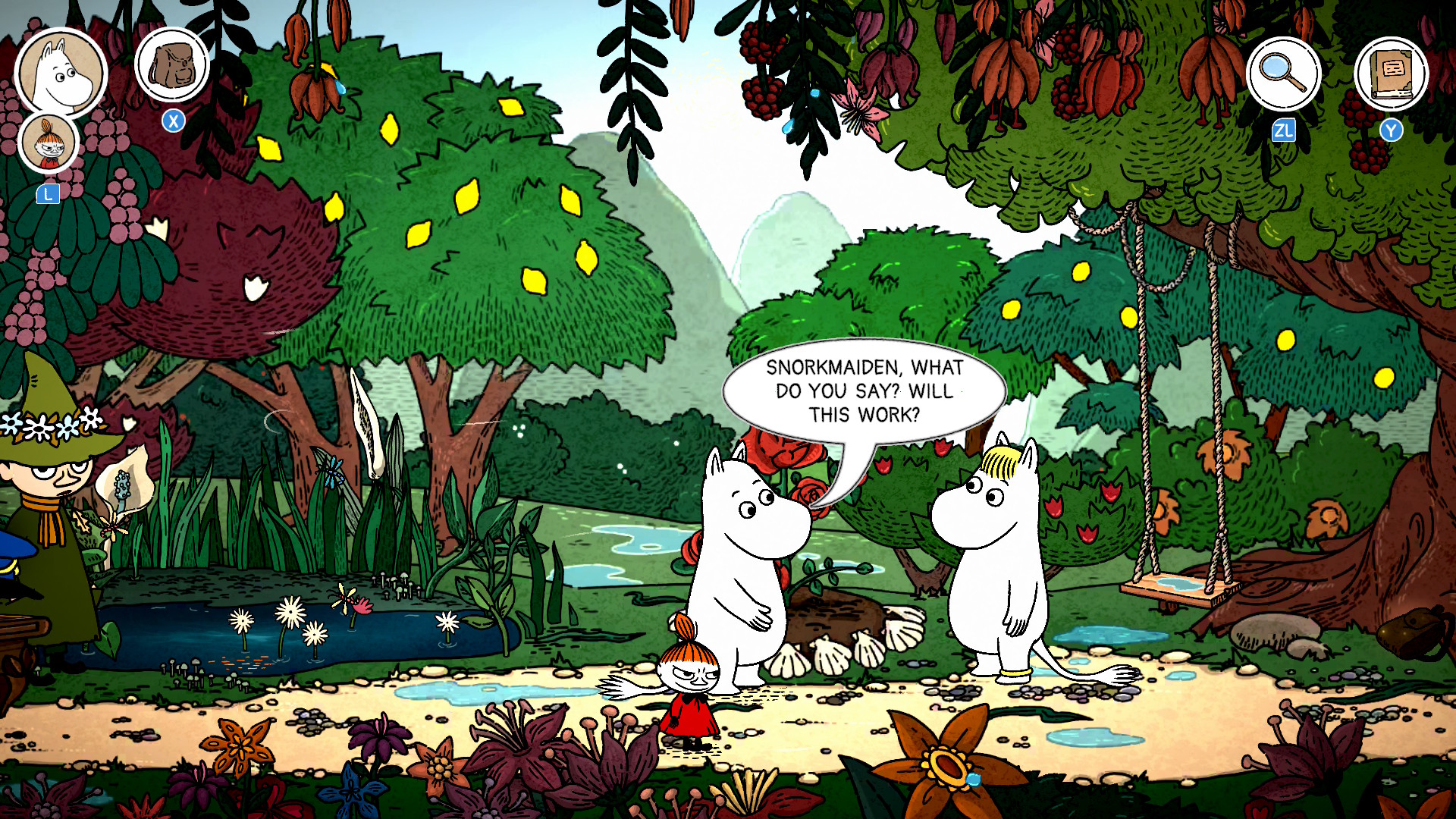
While it describes itself as a cosy point-and-click adventure game, it’s much more of visual novel with the lightest of point-and-click game mechanics, plus a few random mini-games thrown in for good measure.
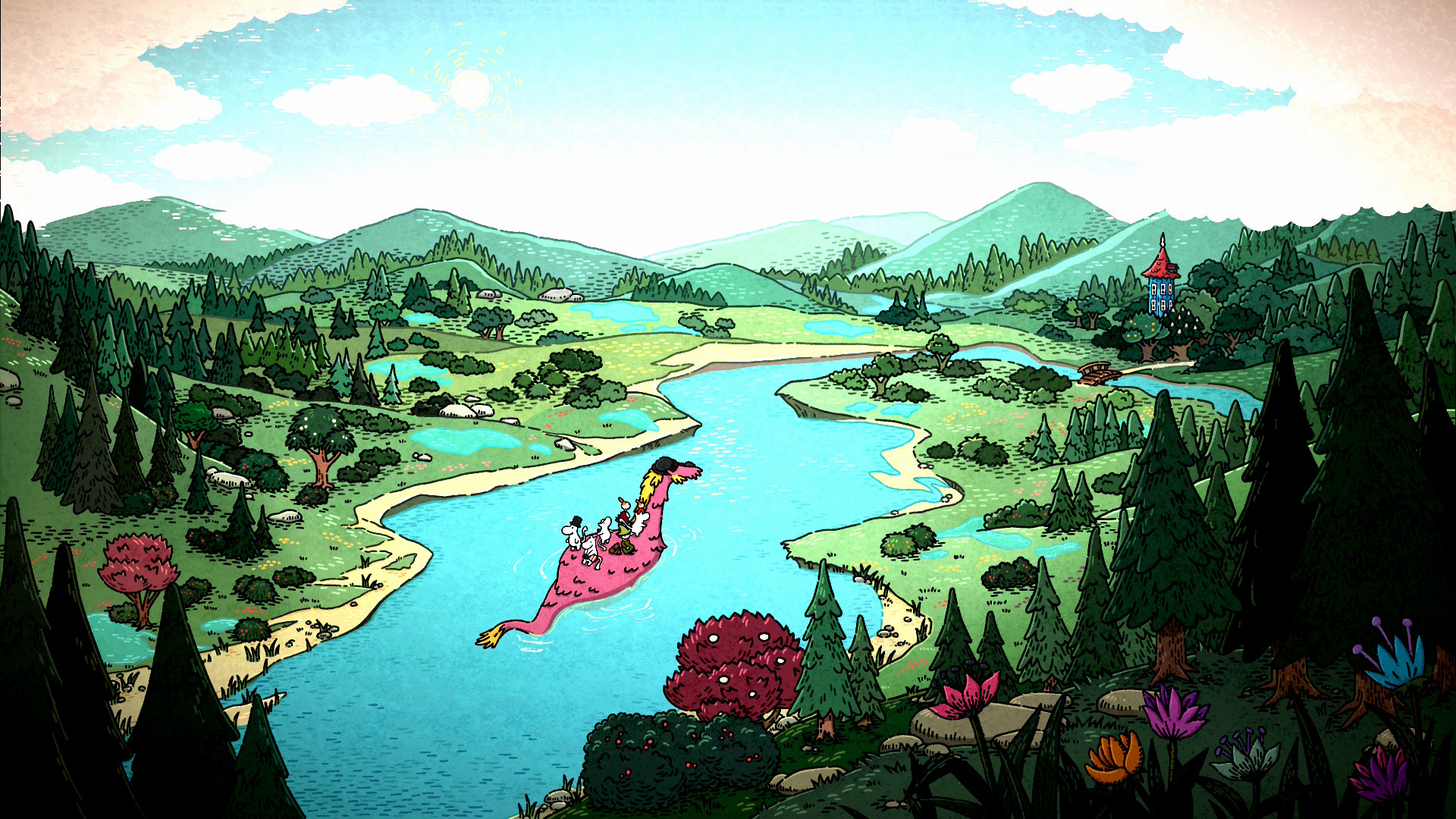
Moomin: Midsummer Madness is primarily based on the fifth Moomin Book, “Moominsummer Madness”, and it sees Moomin and his family displaced by a volcano that causes a flood that overwhelms Moominvalley and causes the family to temporarily abandon the Moominhouse in favour of a larger home that suddenly floats past… that turns out to be a theatre.
If you’ve read Moominsummer Madness (or in its original and much more fun Finnish, at least according to my lazy research skills, “Dangerous Midsummer”), then you 100% know every single story beat here even though they are very lightly remixed. While it’s very nicely presented in a storybook style, there won’t be any surprises in store here.
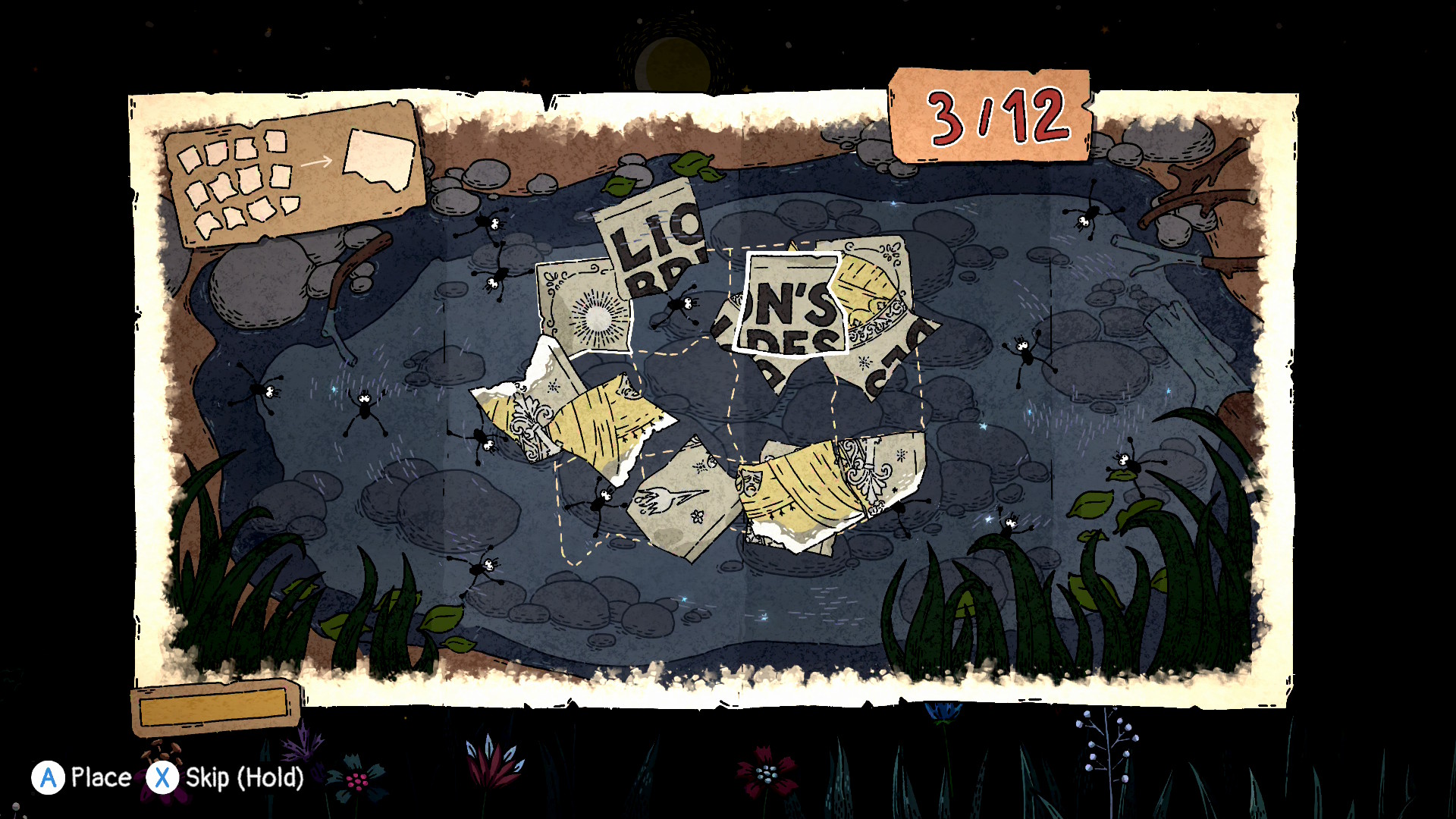
Developers Crossbridge Game Studios do try to mix matters up with intermittent mini-games, though mini is precisely the right term here.
They’re very light, mostly very simple and often not all that well explained, not that they have fail states to deal with anyway. One nice touch that’s been implemented here is that if you’re just here for the point-and-click adventure segments, any mini-game can be skipped at will with absolutely no penalty at all.
Moomin: Midsummer Madness’ approach to its point-and-click adventure portion is entirely linear, with a single correct and mostly obvious solution to any given puzzle.
The game is split up into six “chapters”, with each chapter effectively taking place on no more than about five scenes you wander through, and often the solution to one fetch quest will be as rudimentary as walking to the next scene along, talking to one character and getting the item you need.
The only real time I spent struggling with Moomin: Midsummer Madness was for a handful of puzzles that weren’t all that well explained, at which point I dropped back to the classic of the genre, namely trying to use every item on every interactive element until something positive happened and the plot could progress.
The moments where it was more obscure were few and far between, to be fair, but then that also invites the issue that Moomin: Midsummer Madness isn’t a particularly long game, or one that will reveal any new surprises on any subsequent playthroughs.
Games do not have to be long to be good, and it’s a huge mistake to think that breadth of content is a replacement for making good game design choices.
Here I’m somewhat torn, to be honest.
Moomin: Midsummer Madness is wonderfully faithful to Tove Jansson’s vision of the Moomins to a fault, and that plays out in the interactions between characters as well as their presentation.
Moomin is wonderfully innocent with just the right amount of both adventurous spirit and gentle pining for his friend Snufkin, the Snork Maiden is as vacuous as ever and Little My, who gets effective co-star billing with Moomin is the fabulous chaos gremlin she always was. In terms of being good Moomin content, this scores highly.
However, in straight line game terms, the entire package is rather slight. The mini-games are fine but few are all that challenging beyond a decent enough Sokoban clone that I could happily have played a few more screens worth of.
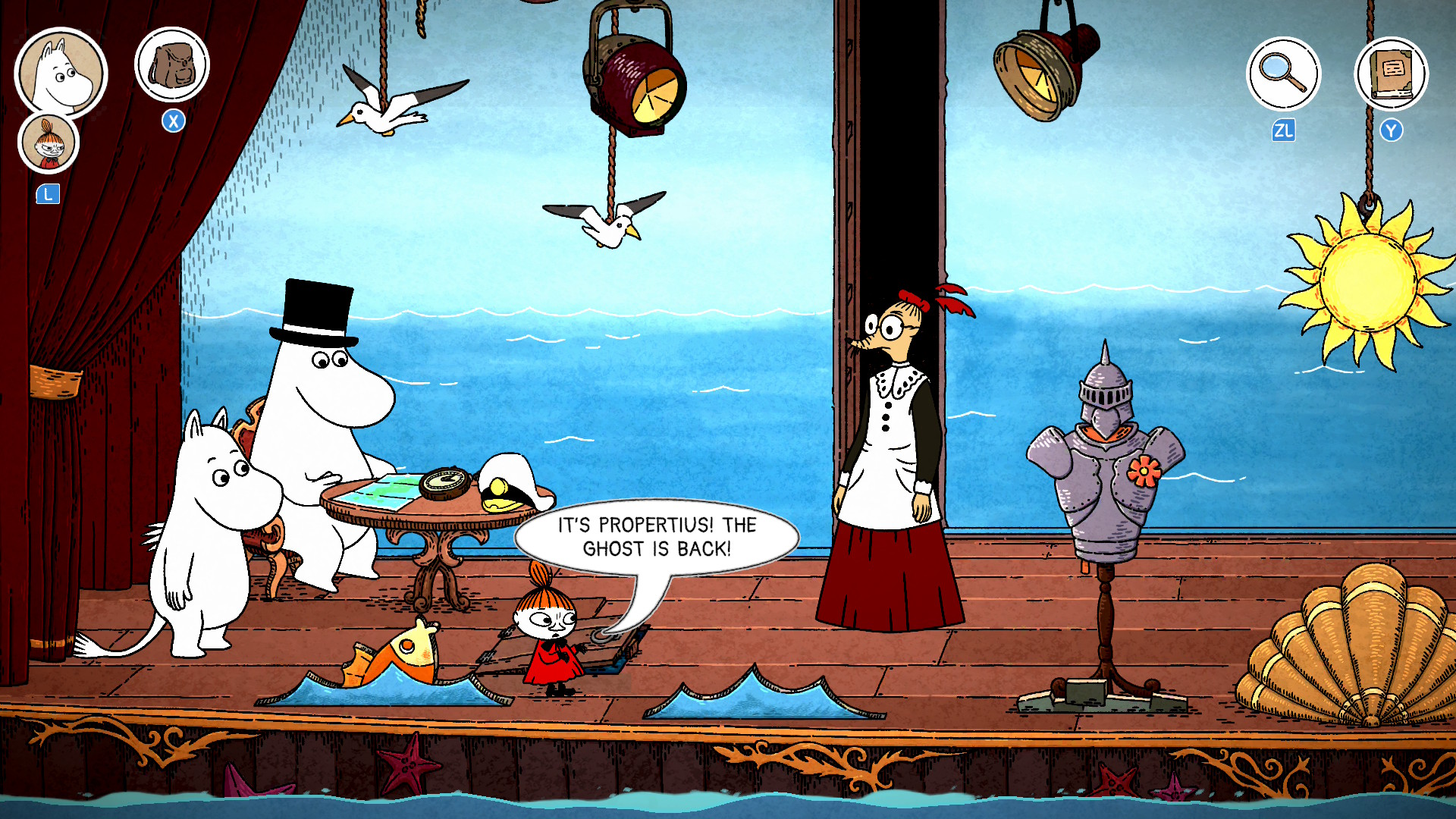
Some are barely challenging at all, and the same is mostly true of the way you interact with the point-and-click parts of the game. You’ve rarely got more than three items in your backpack to use as interactive elements, which means that the opportunities for creative play or individual discovery of solutions is basically nil.
Did I enjoy playing through the handful of hours it took me to finish Moomin: Midsummer Madness?
Absolutely, because it is a charming and gentle title that evokes the true spirit of Jansson’s world. However, I don’t know that I’d return to it as frequently as I do the books that inspired it, because there’s not that much of a reason for me to do so built into it.