
The “Harvest Moon” genre is not one that has really been associated with out-of-the-box thinking. Even the darlings of the genre, such as more recent Story of Seasons titles, or Stardew Valley, have largely kept to the aesthetic and narrative traditions of the genre. By that I mean they’ve been colourful, wholesome, and the right kind of twee. Village in the Shade upends that with an exquisitely gory death in the opening chapter.
In what is pretty clearly a spiritual sequel to the Yomawari titles (and developed by the same team at NIS), Village in the Shade takes all the beloved mechanics of the Harvest Moon-likes, and provides players with a beautiful and even serene picture of rural life to indulge the eyeballs with. And then makes it all very unsettling, very quickly. Where a Story of Seasons introductory sequence has you introduce yourself to all the other villagers with an instantly warm reception, Village in the Shade’s NPCs make it clear you’re not welcome. Where Harvest Moon-likes provide you with a farm as an exciting opportunity to get back to the earth, Village in the Shade makes it clear that you’re obliged to do the work. And then you’re hit with some enormously mysterious and arbitrary rules. And then you’ll spend the first night in your house as creepy noises wail outside.
Village in the Shade isn’t subverting the Harvest Moon genre. Not truly, at least. It plays with the tropes but is largely comfortable within them. However, it has definitely infused the infamously cozy genre with a thick atmosphere of horror and somehow, despite the tonal rift between these two ideas, that both work, and it is immediately engaging in a way that Harvest Moon-likes simply aren’t these days. We fans of the genre have played so many at this point that the opening chapter in any given new title is something that we very much play through just to get to the good bits in the game proper. With Village in the Shade I found myself hanging on every word, and that was just in the tutorial.

It’s when you start breaking the in-game rules that Village in the Shade starts to show that it’s a different kind of beast. Most particularly, there’s a rule about being outside late at night. It’s pretty obvious why, but it won’t be long before you’re tempted to do so anyway, and then suddenly you’re immersed in a world of yurei and other such horrors from Japanese folklore. This is where the Yomawari elements come in, and just like with those titles, this game is remarkably good at pushing a nightmarish atmosphere despite the art otherwise being so serene and cute.
I once read that one of the reasons that Harvest Moon and its ilk both came from Japan and have been so enduringly successful over there has to do with just how urban much of the population is. Many kids in Tokyo, Osaka and other major cities never really get a sense of what the “countryside” is like, much less understand what it is to be a farmer (or, in some extreme cases, where their food even comes from). I suppose this is a common thread across the world, but when you produce a game like Harvest Moon, you give the kids a kind of escapism from the concrete, city air, and the aesthetics of the built environment.
Village in the Shade has that, but also plays on another idea of rural living – the idea that you’re part of a tight-knit and somewhat insular culture, where everyone knows everyone else, and there’s something of a distrust of new people entering their spaces. This is particularly true as Japan’s rural communities continue to shrink and age – true or not, there is the perception that the little villages are fading places of old culture and ghosts of the past.
So, in a sense, Village in the Shade presents a less idyllic lens to the idea that rural life is idyllic. Again, it’s not really subversive. It’s just that the developers have opted to focus on a different set of perceptions that people who live outside of these little communities have of them.
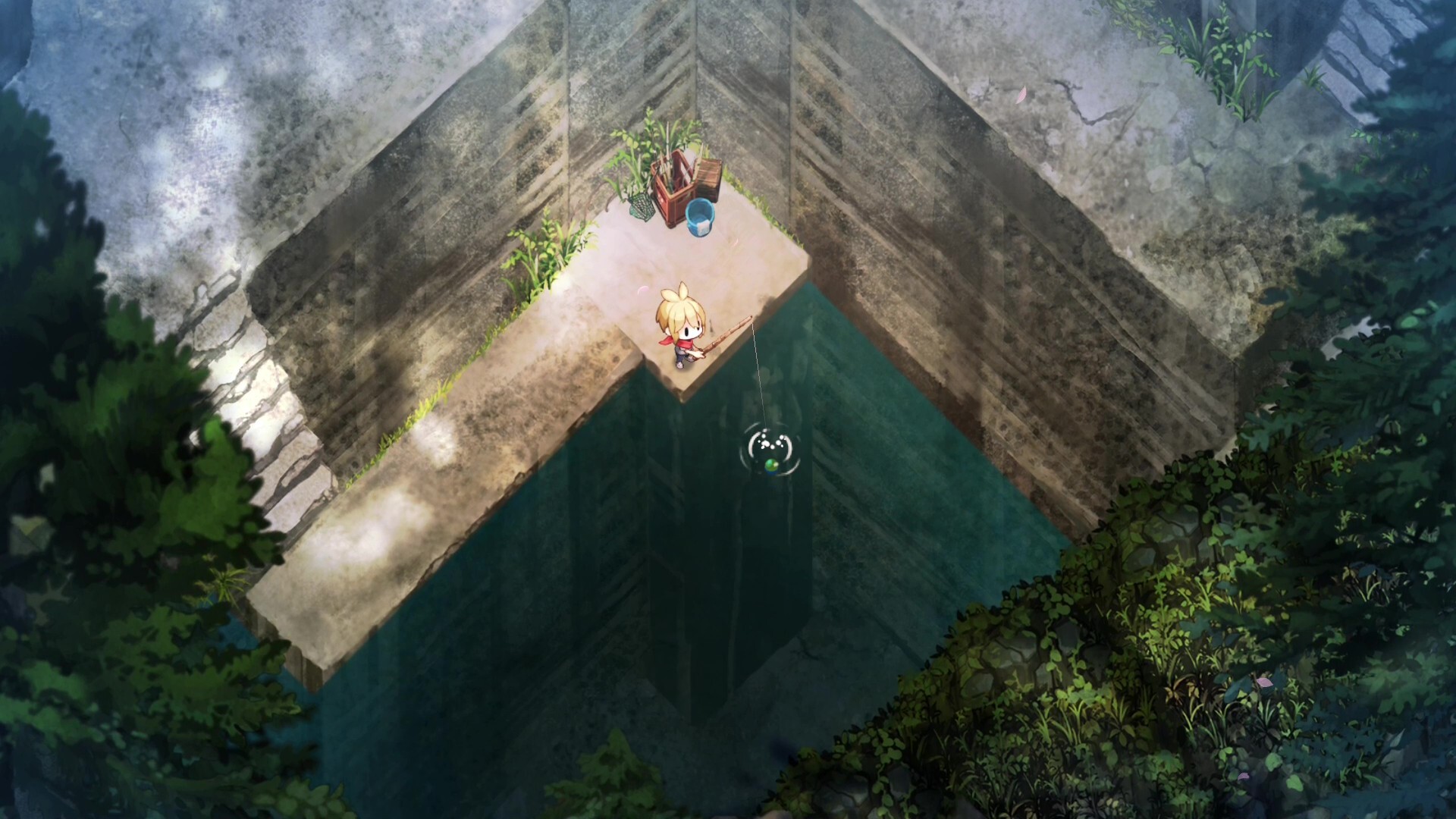
What I really love about the game, however, is how beautifully it works as a Harvest Moon title. I found myself falling into the same basic habits that I do with any game from the genre – watering the crops in the morning, heading into town to buy seeds or whatever, and then spending some time fishing before heading back and doing whatever crafting I need to do to expand my home or farm. The loop is as compelling as any other title in the genre. The atmosphere of horror that sits on top is additive to this (and indeed can even be turned off if you just want to do the farming bit), and again I find it fascinating how the developers managed to bring these two things together in a way that doesn’t feel forced. It implies that this farming game stuff is more versatile than developers have explored in the past.
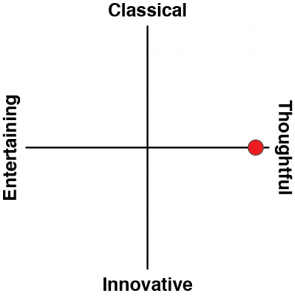
Village in the Shade is an ethereally beautiful game with a rich horror mystery that only serves to make it even more compelling to actually play. By making these heavily contrasting thematic genres work together, it’s also one of the most interesting entries we’ve had to the whole Harvest Moon genre in a very long time. Much like Yomawari before it, it’s almost doomed to be tragically overlooked in the West (though thankfully it has been a significant hit in its home country), but I can’t recommend this thing enough. It’s stunning.