

Lego Party is a Mario Party clone. Let’s not beat around the bush about that. It is what it is, and the development team at SMG isn’t for a second trying to claim otherwise. The problem is that Mario Party is a pretty challenging formula to get right, and… well, Lego Party isn’t quite there.
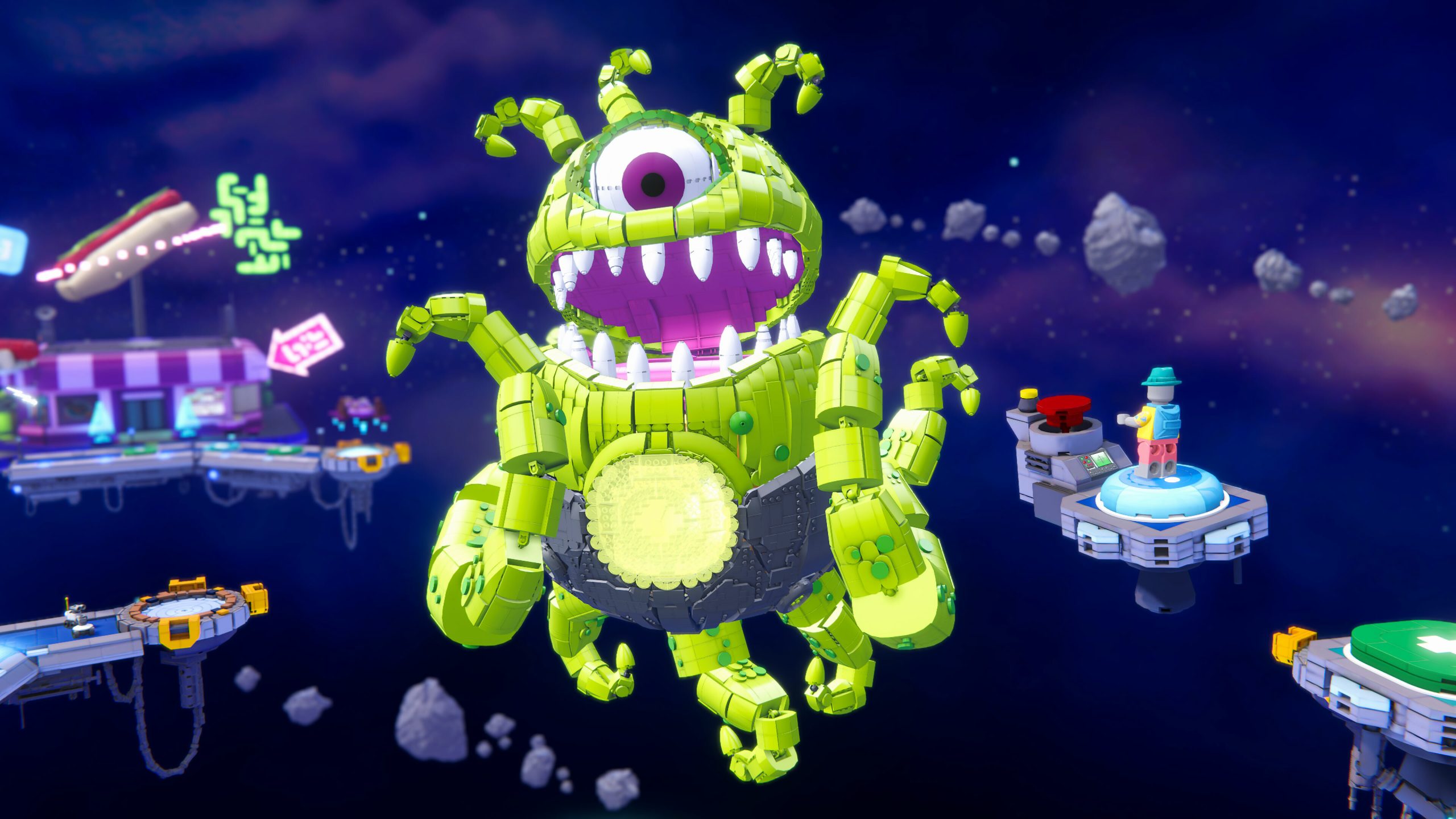
But the good first. There are four maps, and they are whimsical and silly in the way that Lego lends itself to. I also love how it’s a celebration of both the history and current state of Lego. As you move around the boards, you can earn treasure chests that I remember placing into my Lego castles back as a child. There are a few million (slight exaggeration, but only slight) minifigs that you can collect and play with, and some of those go right back to the earliest sets of Lego. Basically, anyone who has ever had a “Lego phase” will find something familiar and joyful here… and if you’re anything like me you’re going to be intrigued by a lot of the unfamiliar stuff in here too.
SMG has also tweaked the gameplay in some small ways that I love enough, I’ll be disappointed for their absence the next time I play Mario Party. The biggest change is the way turns work. With Mario Party, everyone goes in the same order, every turn. In Lego Party, the playing order is determined by the minigame at the end of the previous turn. So if you win the minigame, not only do you get a bunch of cash, but you get to go first in the next turn. This structure opens the door to situations where you can jump ahead of another player and get a golden block (the equivalent of Mario Party’s stars) where, in Mario Party, if they went ahead of you in the turn order, they were always going to come in first.

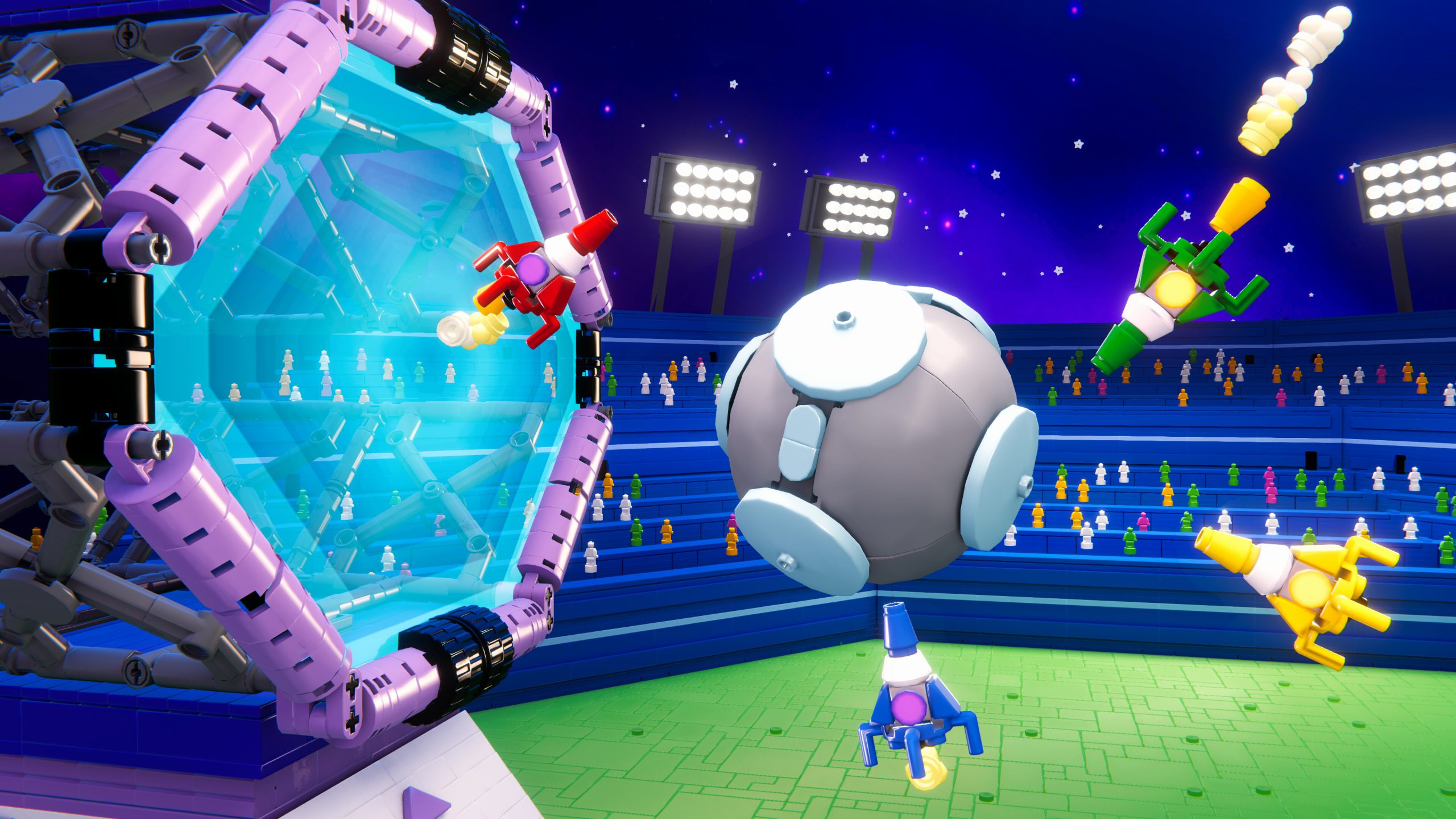
Another thing I really liked was the way the minigames are broken down. Because standard minigames determine turn order, they are always a case of every player for themselves. However, there are team-based minigames, which occur on special battle squares. The winner of these wins a free golden block, so they tend to be the most competitive and uproariously funny games to play, making a real highlight of the team-based stuff.
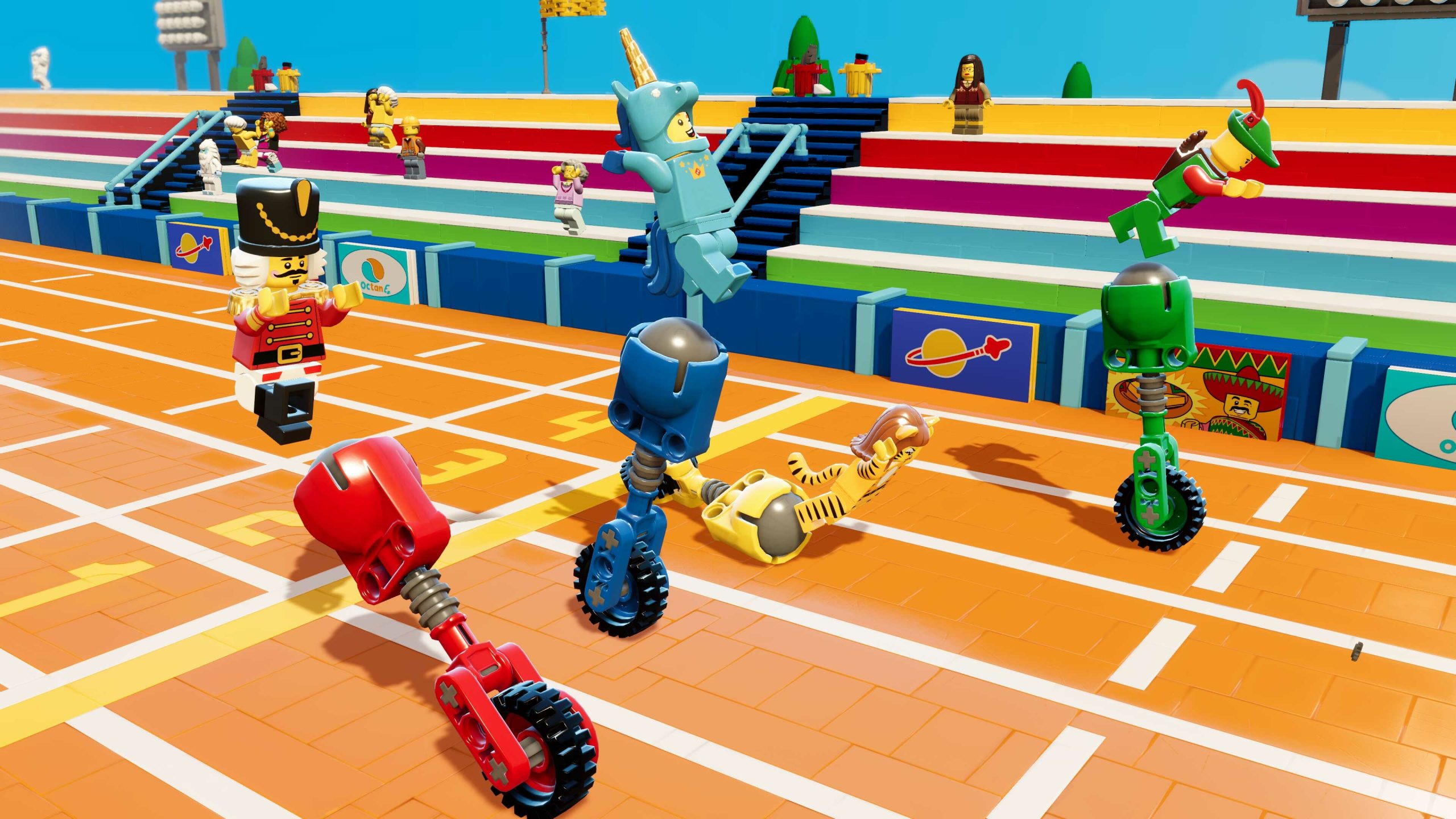
Speaking of the minigames, there are not quite as many as you see in Mario Party – 60 in total – but I tend to feel they’re better made overall and a bit more substantial. Like, there are no minigames where the entire objective is to cut a single wire and hope that Bowser doesn’t singe your butt hair for choosing the wrong one. These minigames all test some kind of skill and tend to run a bit longer, as well. Which is just as well as winning them does mean more to your overall performance in the game. You’re not going to like all of them (I am not a fan of the rope swinging minigames at all), but I appreciated the variety and there are even a couple that I would probably buy as a standalone game if it were built out that way. For example, there’s a “10 pin bowling” minigame that plays out more like a Monkey Ball level with winding pathways and the ability to “skillshot” some massive points by knocking pins into one another along the way. I’d pay money for that in full game form.
Finally, to round out the good, the catalogue of minifigs that you can collect and then play with is astounding. Dozens upon dozens of them, and like I said, they range right back to the very first minifigs. A Lego game always needs that kind of customisation, and it’s nice that the unlocks don’t come on too slowly. On the flipside, minifigs don’t have the same unique personality as Mario Party characters, but that probably won’t matter so much once you’ve found your favourite.
In so many ways, Lego Party gets so much right. But unfortunately, is has some really grating issues too that hold it back. For one thing, the range of maps is terrible. There are, in theory, four, but one of them (Pirate) is too small to be enjoyed more than once, and none of the other three offer particularly inspired board game design. They’re pretty, with some great themes, but the underlying mechanics of each of them is rather bland.
Secondly, the balance is out. When you start falling behind in Lego Party there isn’t much you can do to recover. When you are penalised currency – for example, landing on an enemy’s trap – you lose a big stash of cash, and even if you consistently win minigames, it’s hard to replace those losses. Meanwhile, random effects can result in your opponents getting massive cash bonuses, or items that allow them to steal your gold blocks far too easily. I’ve played a bit both in single and multiplayer and had the easiest level of opponent beat me (and outright win the games). Not because they keep winning minigames because on balance, I and the others I played with did that. Rather, it’s just that the monetary rewards for playing well don’t stack up to the way the game and AI can drain your account or boost themselves through sheer luck.
Finally, this is a superficial complaint, but it did lead me to turn the sound off while I played: The commentary track is painful. It’s trying to be fun in a way that the whole family can giggle along to, I know, and the dad jokes flow in thick and fast, but it also never shuts up and if anything, will distract players in the middle of a minigame.
As a result of these misfires, Lego Party finds itself in a position where there’s a lot to like about it and bravo to SMG for looking for ways to be creative while also producing a blatant Mario Party clone. On the other hand, it does show that where Nintendo has been producing them for decades now, this is a rookie effort. Perhaps part of the issue is that I played it on a Nintendo console, when I have the alternative sitting right there on the hard drive. On other platforms that don’t have a Mario Party, I can see this resonating more strongly. Unfortunately, though, I can’t see it being a particularly memorable experience for anyone in the long term.