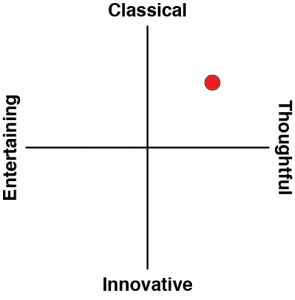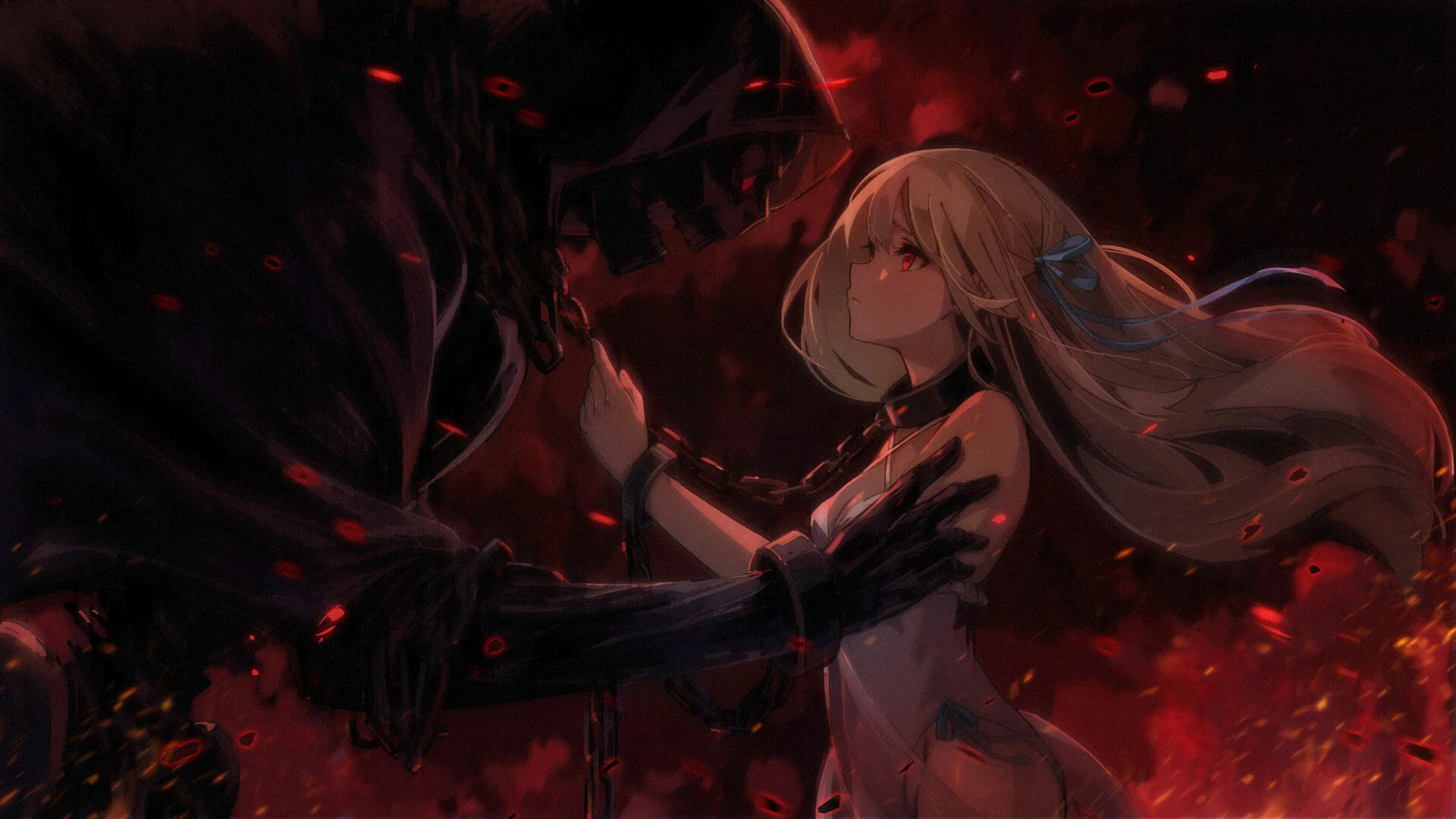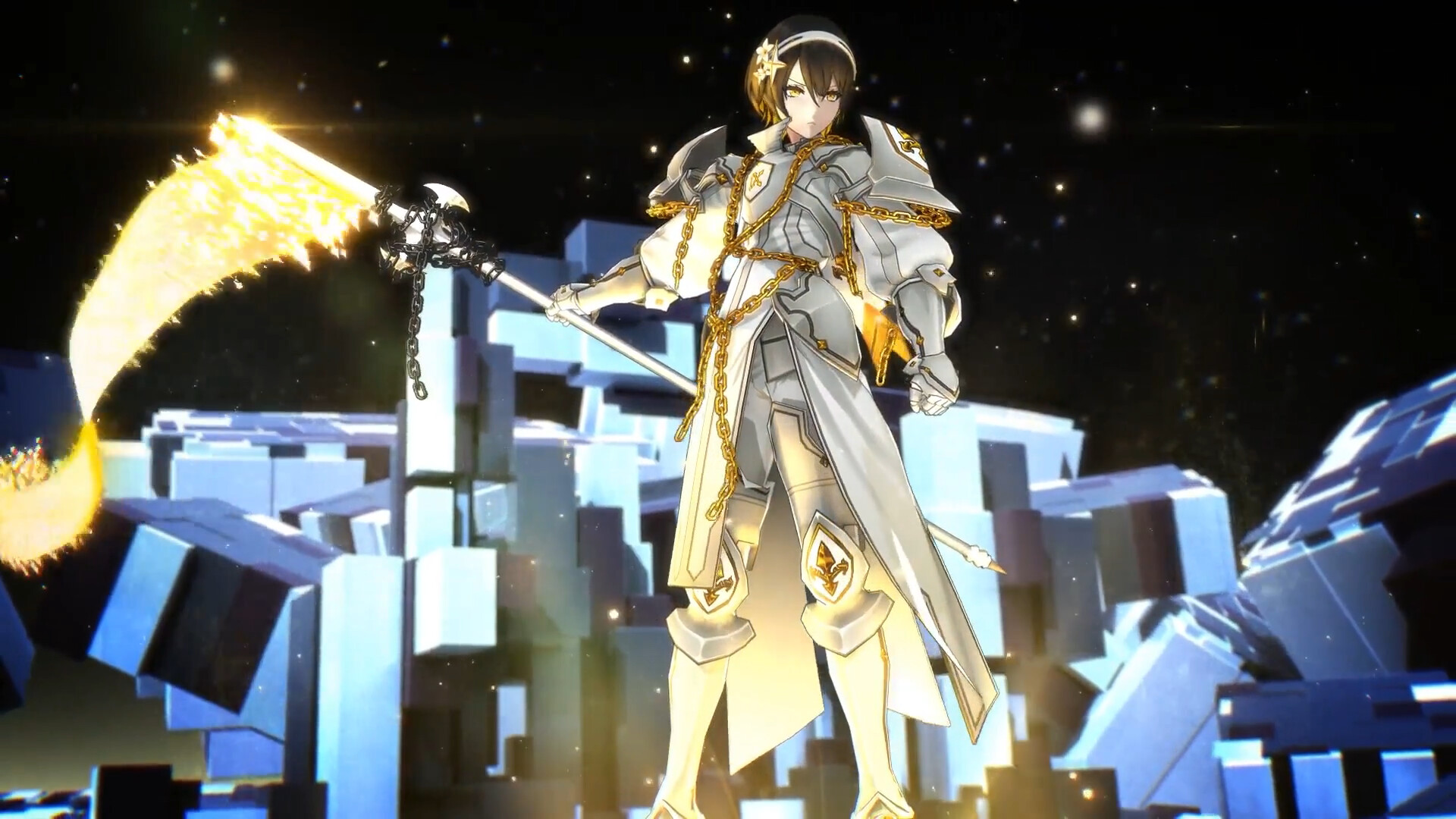


Let’s get this out of the way up front: Varlet very badly wants to be Persona. It’s a game about dungeons that form out of people’s wayward “desires”, and those desires just happen to offer an opportunity for personal reflection while casting a broader analysis on society. It’s not a patch on the quality of Persona 4 (which is, in particular, where Varlet finds its creative inspiration), but it does build a generally enjoyable JRPG around its concept.
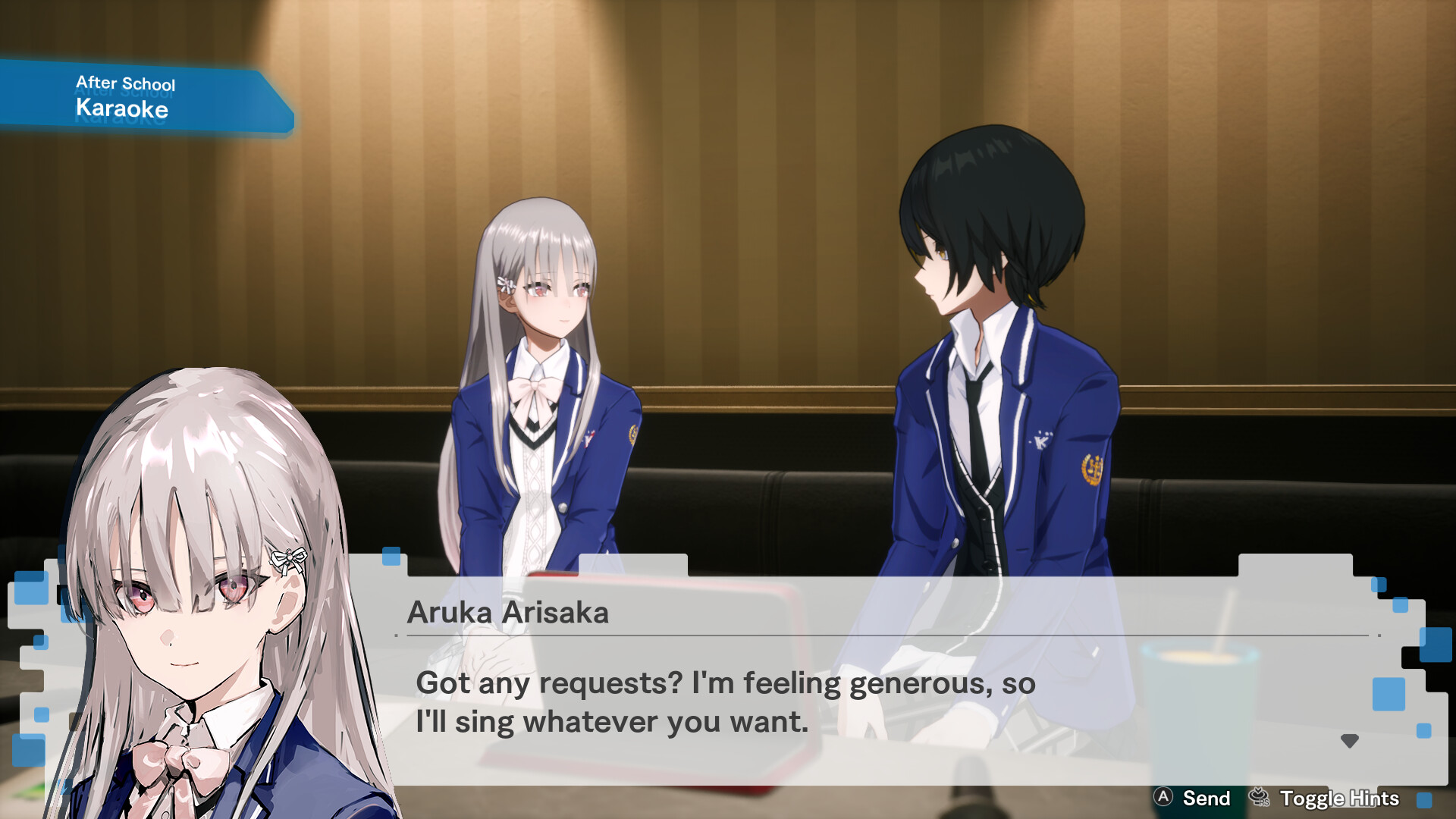
Varlet is set in a school. You start with a team of three heroes, and the first chapter involves you diving into “glitches” created out of the desires of a group of idols that happen to go to the same school as you. When you solve their little spat for them, and deal with the idol that has turned Very Bad, the innocent girl from the group joins you, and then the next chapter starts. Meanwhile, while you’re not delving into the “glitches”, you spend a bit of time wandering around the school, completing basic objectives, and then occasionally hanging out with your teammates, which deepens your relationship with them and results in longer-term benefits for the overall party.
Does that sound familiar? It should. It’s almost exactly how Persona works. The parallels between this opening chapter and Risette’s chapter in Persona 4, in particular, are blatant.

I should mention that it’s not actually a bad thing to ape Persona. Persona 4 is one of the most intellectually engaging games I’ve ever played in the way that it canvases spirituality, philosophy and tensions within modern culture. Varlet has all of that there, too. The base foundation that all the narrative stems from has to do with the impact that our increasingly digitised world is having on us. If you haven’t seen Keiichi Matsuda’s Hyper-Reality you should, firstly, watch it (it’s here). After you’ve done that you should have a long and hard think about the implications of the deepening connectedness between the digital world and reality, because it’s not totally utopic and not enough people are really talking through the implications of it. Varlet’s setting, where digital companions, apps, and interactions are everything and then become plagued by monsters, is an effort to be part of this conversation.
With that said, it doesn’t handle its themes as well as a Persona does, preferring to glance over the surface than try and leave something profound with the player. It’s not like this is a budget issue – The Caligula Effect and Monarch, both FuRyu-published games like Varlet – both have some intense depth, however you feel about how they ended up otherwise. Varlet skips along acknowledging that there’s something valuable to talk about without ever really doing more than making that acknowledgement.
Unfortunately, the game is also happy to skip through its gameplay too. Varlet has sound foundations – it’s a turn-based JRPG where each action moves you up and down the action order – using a powerful attack means that a character will get to act less frequently. Using weaker attackers or abilities allows a character to jump in and disrupt enemies when they load up a powerful attack, and so on. Timeline management is, in theory, an important part of Varlet’s combat system.
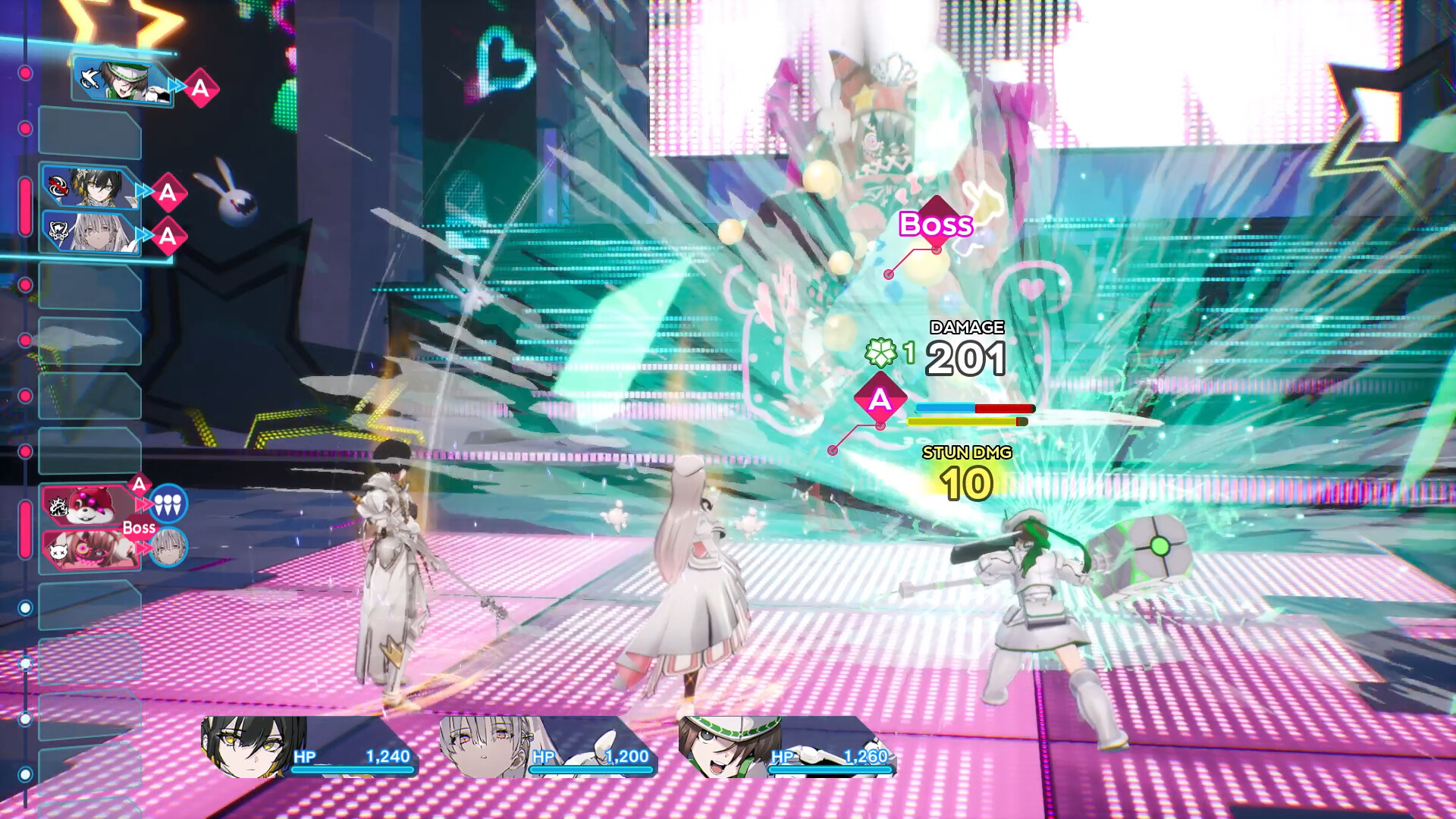
This is let down by a couple of things: Firstly, this game deserves to be the opposite of the game difficulty debate that pops up every time a new Souls game gets released. There is a point where a game is so easy that it’s just not engaging in the slightest. Valent is that, at its highest difficulty setting. The combat system is so filled with loopholes that make it effectively impossible to lose, even with the most difficult boss battle, that you’d have to really try to avoid using them. The amount of work that you’d have to put into making the game challenging for yourself requires that you effectively ignore every ability and character build.
Then there’s the lack of variety. There are only a handful of enemy types in the entire game. They scale as the game goes on, but as we’ve already noted they’re way too easy in the first place. Boss battles do show some creative Persona-esque design, but it’s a real slog to get to them.
It’s a pity that Varlet struggles to engage, because there’s so much I wanted to like about it. The school setting is such an overused trope at this point, but Varlet sets up an intriguing school setting, not least because Arts students are treated as the elite, and that’s a fantasy I’d love to buy into. Each of the characters are well-written, albeit efficiently so, and the art direction is stylish and interesting, despite the clear budget issues.
Ultimately, perhaps we do need to remember that this is FuRyu’s first self-published game, and the existence of Varlet at all is, itself, an experiment. We didn’t get the usual creative subversion that we’ve come to expect from the company behind the likes of Lost Dimension, The Caligula Effect, Crystar, and Reynatis, but in taking this step as a company, perhaps FuRyu will be able to protect its ability to continue to do those games in the future. Valent itself, unfortunately, is a game I wish I could love more than I did.